
A suite of fee-free short courses are now available for people looking to secure jobs or further their career in hospitality, as part of a new NSW Government program which aims to supercharge the sector and grow the economy.
Minister for Skills and Training Alister Henskens said the Kickstart Your Career in Hospitality program aims to alleviate labour shortages that are hampering the industry and provide pathways for people looking for rewarding and well-paid careers.
“Whether you want to be a barista or a bartender, this initiative will enable you to train for free and get the skills you need for a job in a local pub, club, café or restaurant,” Mr Henskens said.
“A strong hospitality sector is absolutely critical for NSW, now and into the future. This program draws on the NSW Government’s record skills budget and will help secure a brighter future for the hospitality industry and all those who depend on it.”
Minister for Hospitality and Racing Kevin Anderson said the NSW Government is continuing to work with industry to address crippling labour shortages, but also foster career progression and retention through scalable upskilling opportunities.
“These fee-free courses are designed to be short and quick, but also scalable so staff take up additional training opportunities, to develop further skills over time, as they desire,” Mr Anderson said.
“The program has been developed in partnership with the industry, to provide job relevant training and career development at pubs, clubs and restaurants across NSW.
“We also want participants to realise that there is longevity in the hospitality sector. Staff are encouraged to make the most of additional training opportunities to further develop their skills, and turn a job into a long term career if they choose to.”
ClubsNSW CEO Josh Landis said the initiative offers incredible opportunities for professional growth and development in the hospitality sector, particularly in clubs across the state.
“Someone who gets their first job in a club can go on to do amazing things. Clubs offer careers in cooking, hotel management, customer service, business operations and much more,” Mr Landis said.
“These aren’t just fee-free short courses, they could be your first step on a hugely successful and satisfying career journey, and we want clubs to be the catalyst for that journey.”
More information about eligibility criteria and enrolments is available online.
Author: admin
DELIVERING LABOR’S PLAN TO FIX AGED CARE
The Albanese Labor Government introduced legislation today to deliver our commitments to fix the crisis in aged care, and usher in a new funding model for residential aged care.
The Aged Care Amendment (Implementing Care Reform) Bill 2022 will require a qualified registered nurse to be on site in every residential aged care home 24 hours a day, seven days a week, ensuring older Australians living in residential aged care receive immediate care when needed.
The former Morrison Government ignored the Royal Commission’s recommendation that nursing homes should have a RN on site 24/7.
We are also delivering on our election commitment to improve transparency in the aged care system, with the Bill introducing measures to monitor the costs associated with aged care, placing greater responsibility on providers to be transparent and fair.
This will see the publication of more information about providers’ operations including what they are spending money on.
The legislation also delivers on our election commitment to stop the rorting of Home Care fees, by placing a cap on how much can be charged in administration and management fees.
This means home care users can be confident their money is going directly to care – not the bottom line of providers.
Also introduced today, the Aged Care and Other Legislation Amendment (Royal Commission Response) Bill 2022 contains nine measures to implement urgent reforms to the aged care system, and responds to 17 recommendations of the final report of the Royal Commission into Aged Care Quality and Safety.
The Royal Commission Response Bill provides the legislative framework for the new AN-ACC funding model for residential aged care homes, which will replace the outdated Aged Care Funding Instrument in October 2022.
This framework will offer more equitable funding, better matched to providers’ costs in delivering the care residents need.
It also extends the functions of the Independent Health and Aged Care Pricing Authority, which will lead to better price-setting for aged care homes.
Other measures enshrine transparency and accountability of approved providers, and improve quality of care and safety for older Australians receiving aged care services.
This includes the Star Ratings System, which will see the Department of Health and Aged Care publish a comparison rating for all residential aged care services by the end of 2022; an extension of the Serious Incident Response Scheme to all in home care providers from 1 December 2022, meaning increased protection for older Australians from preventable incidents, abuse and neglect; and a new Code of Conduct for approved providers, their workforce and governing persons.
The Prime Minister, Anthony Albanese said:
“We are wasting no time getting on with the job with fixing the aged care system.
“The introduction of this legislation is the first step towards delivering new funding, more staff and better support to the sector, while improving transparency and accountability.
“We are using this first sitting week of the 47th Parliament to take important first steps towards fixing aged care and protecting vulnerable Australians, while addressing the challenges in our economy. “
The Minister for Health and Aged Care, Mark Butler said:
“We’re delivering on our commitment to putting nurses back into nursing homes and improve transparency in aged care.
“ Every person with a loved one living in residential aged care expects, is the peace of mind in knowing aged care residents have access to clinical care from a qualified, registered nurse when they need it, 24 hours a day, every day.”
“This legislation delivers on the Government’s major reform agenda to protect the safety, dignity and wellbeing of every older Australian accessing aged care services.”
The Minister for Aged Care, Anika Wells said:
“This Implementing Care Reform Bill will put nurses back into nursing homes; it will put a stop to high administration and management fees for home care, which means more dollars go to care and support; and it will improve integrity and accountability for residential aged care homes.”
“We have introduced urgent legislation for a new funding model that will increase funding to aged care providers that was left languishing by the former Government because they couldn’t work with the Senate.”
“This legislation demonstrates our commitment to making public what aged care providers are spending their money on, ensuring a fair and transparent system for our older Australians and their families and carers.”
“24/7 registered nurses in residential aged care is a significant and much needed change to ensure high quality care for older Australians. This will be supported by the initiatives we have in place to grow and boost the skills of aged care nurses.”
“Publishing Star Rating for residential aged care homes will help people meaningfully compare services to make the right choice for themselves or their loved ones”
NSW public sector union welcomes DV leave being extended to all
The Public Service Association NSW has welcomed the Federal Government’s move to broaden the availability of Domestic Violence Leave to more than 11 million Australian workers, including casual workers.
PSA/CPSU NSW members have long had access to such entitlements, with all NSW Government employees now able to access 10 days’ domestic violence leave, unconditional on what other leave provisions they have used.
“We have been fighting for this leave entitlement for over a decade because we know it saves lives. So I am very pleased to see the federal government extend it to everyone,” said PSA General Secretary Stewart Little.
“One in four women have experienced some of violence from their partner, but leaving a violent relationship is not easy. We know it costs, on average, $18,000 to escape – and that’s not to mention the time and logistics.
“10 days paid FDV leave will allow many more women to change their lives, while retaining their jobs.
“We congratulate the whole union movement and the Federal Government on prioritising worker safety so early in its first term.”
In April 2010, the PSA/CPSU NSW tabled a clause at a forum at the University of NSW calling for 20 days’ special annual leave for employees experiencing domestic violence.
Since then, all Awards and Enterprise Agreements covering our members have incorporated domestic violence leave provisions, including the 2011 landmark victory by our union, forcing the State Government to grant five days’ special leave once other options were exhausted.
Australian Greens Statement Regarding Myanmar
Over the weekend, four democracy activists in Myanmar were put to death by the military junta, including hip hop artist Phyo Zeya Thaw who had close ties to the diaspora community here in Australia, and protest leader Ko Jimmy.
According to ABC News “the four men had been accused of helping militias fight the army that seized power in a coup last year and unleashed a bloody crackdown on its opponents.” They had been charged under so-called counter-terrorism laws.
Unfortunately, this is a part of many killings perpetrated by the junta across Myanmar. Extrajudicial killings, arbitrary arrests and serious crack downs on the freedom of expression and the media continue. More than 2,000 people have been killed and more than 14,000 arrested since the military coup in February 2021.
Greens Spokesperson for Foreign Affairs, Senator Jordon Steele-John said:
“It has been over a year and the Australian Government has continually failed to act in supporting the people of Myanmar. Instead, it has been revealed that the Australian embassy has spent $750,000 at a luxury hotel linked to the junta. Rather than uniting in solidarity with the people of Myanmar, the previous Government has effectively been funding the war against them. This is embarrassing, unjustifiable and inexcusable.
“Australia is a country which proudly opposes the death penalty. Minister Wong and Prime Minister Albanese must impose targeted sanctions on the military junta who have led the coup. Countries including the US, UK, Canada and countries in the EU have already acted. We must not continue to fail the people of Myanmar.
“To the people of Myanmar: My Greens colleagues and I hear your cries for help, and we support you in your struggle for freedom and democracy in your country. The Australian Greens will always champion your democratic rights and freedoms.”
National Centre for Vocational Education Research confirms Coalition’s strong record on skills
Data released by the National Centre for Vocational Education Research (NCVER) has confirmed the Coalition’s strong record on skills and training, with apprenticeships remaining at record highs in 2021.
The latest data from NCVER shows there were 349,235 apprentices and trainees in-training as at 31 December 2021, 16.8 per cent higher than at the same time in 2020. The number of trade apprentices in-training was also up 12 per cent over the year and hit 216,265, demonstrating numbers were at record highs under the Coalition.
Significantly, NCVER attributed the ongoing strength of the state of the Australian skills sector to the former Coalition Government’s policies when Managing Director Simon Walker said “the number of apprentices and trainees in-training remain higher than in recent years largely as a result of the Australian Government’s Boosting Apprenticeship Commencements wage subsidy.
The Coalition budgeted for ongoing record investment in skills this year including;
- $2.4 billion from 1 July 2022 to upskill apprentices by making employers eligible for 10 per cent wage subsidies in the first two years of hiring a new apprentice and a further 5 per cent in the third year;
- An extra $3.7 billion for skills training that could support an additional 800,000 training places through a new National Skills Agreement, and;
- The Skills and Training Boost, allowing small businesses with annual turnover less than $50 million to access a new bonus 20 per cent deduction for the cost of external training courses delivered by registered training providers.
Deputy Leader of the Opposition and Shadow Minister for Industry, Skills and Training Sussan Ley said NCVER’s official update was a warning to the Albanese Government to honour investments for skills, apprenticeships and trainees in full or risk these figures becoming a high-water mark.
“Today’s data demonstrates the Coalition delivered record high numbers of apprentices taking up trades, it shows we got the skills and industry settings right and it is proof-positive that Mr Albanese should keep our policies in place.”
“Mr Albanese’s plans to abolish our construction industry watchdog and balance his budget by cutting skills and industry programs are deeply concerning and will be catastrophic for our country’s efforts to meet the workforce challenges before us.”
Get involved in green makeover for local streets
City of Newcastle is encouraging local green thumbs to spruce up their neighbourhood by entering the new ‘Green Our City’ competition.
Green Our City will be running until December and encourages residents to take part in the Street Gardens program by offering the opportunity to plan and install street gardens.
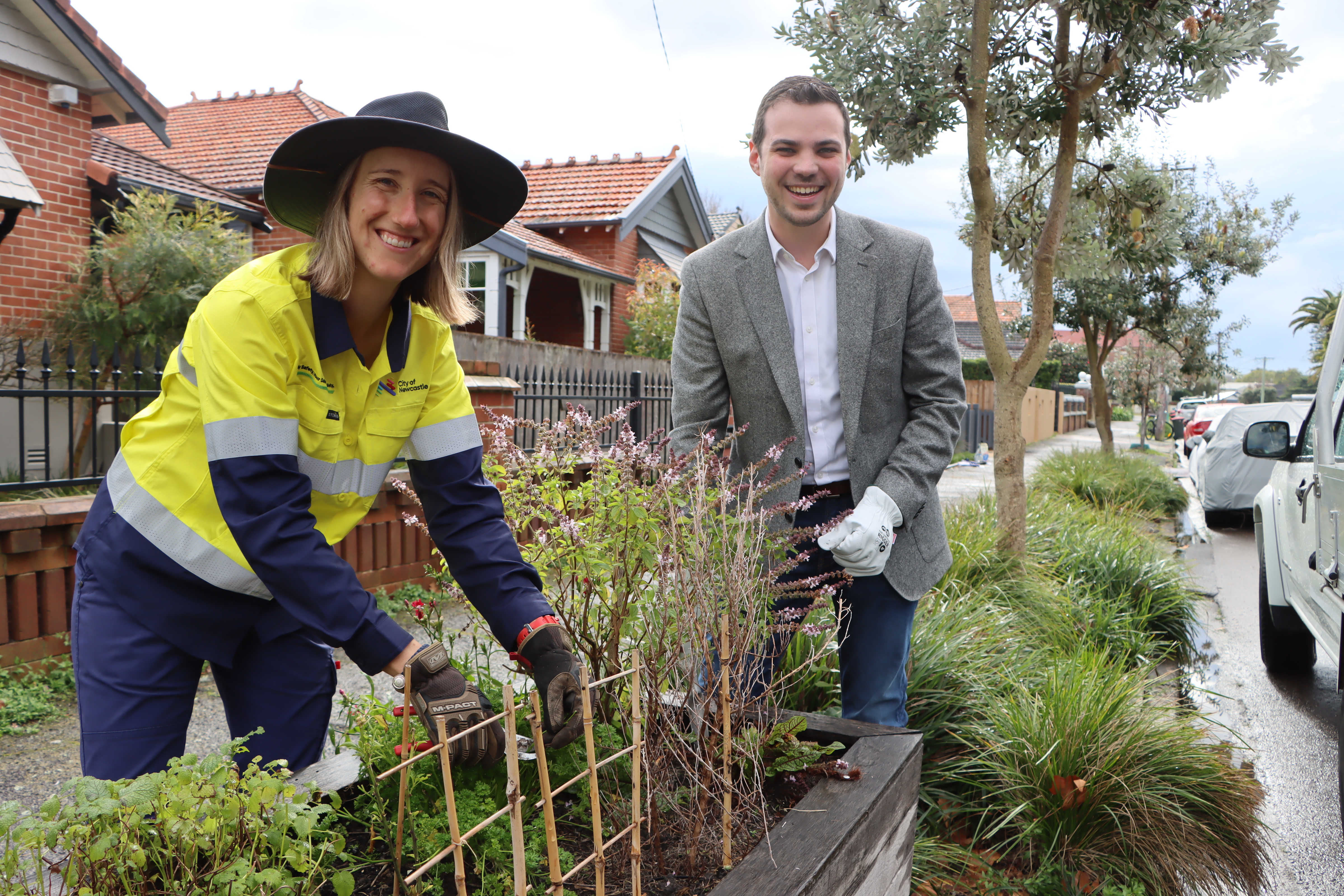
City of Newcastle Lord Mayor Nuatali Nelmes said the focus of the competition is on enabling and encouraging residents to be sustainable, show pride in their street and make a difference in their neighbourhood.
“Green Our City offers residents the chance to be part of an important environmental program, while at the same time improving and greening our streetscape,” Councillor Nelmes said.
“As well as being able to lay claim to having the best new street garden in Newcastle, the winner of Green Our City will also receive $500 to spend at a local nursery of their choice.”
The Street Gardens initiative provides step by step support and ultimately fast tracks the process of installing a street garden at your home. It includes guidelines that need to be met, information around optimal plant species, and the Street Garden Postcard can also be downloaded, which allows you to share your plans with neighbours.
Deputy Lord Mayor Declan Clausen said greening Newcastle’s streets has never been more important and the Street Gardens program empowers residents to make a difference in their part of the world.
“We want to work with residents to design, install and maintain street gardens because we know the benefits they provide,” Councillor Clausen said.
“Apart from simply looking great, street gardens also cool our streets, support pollinators, offer habitat, and filter and limit stormwater runoff into our creeks and waterways. There are also social benefits as it gives residents a way to meet other people and foster a sense of community.”
To be a part of Green Our City, residents will need to complete the Street Garden registration form by Monday 23 August to allow time for City of Newcastle to review. Once approved, eligible participants will be notified and will have until December to nurture and grow their street garden, before a panel of judges decides the winner.
For more information, visit www.newcastle.nsw.gov.au/streetgardens or call 4974 2000.
Distinguished scholars receive Keys to the City of Newcastle
Six distinguished alumni of the New Colombo Plan Scholarship Program who completed their studies at the University of Newcastle have received keys to the city in recognition of their work to promote Newcastle internationally.
Professor Cheong Koon Hean, Dr Khaw Boon Wan, Dr Peter Tay Buan Huat, Dr Tan Chin Nam, Mr Bill Chua and Mr Jaspal Singh were formally inducted as ambassadors of the City of Newcastle at a prestigious function at the Australian High Commissioner’s Residence in Singapore on Monday evening.
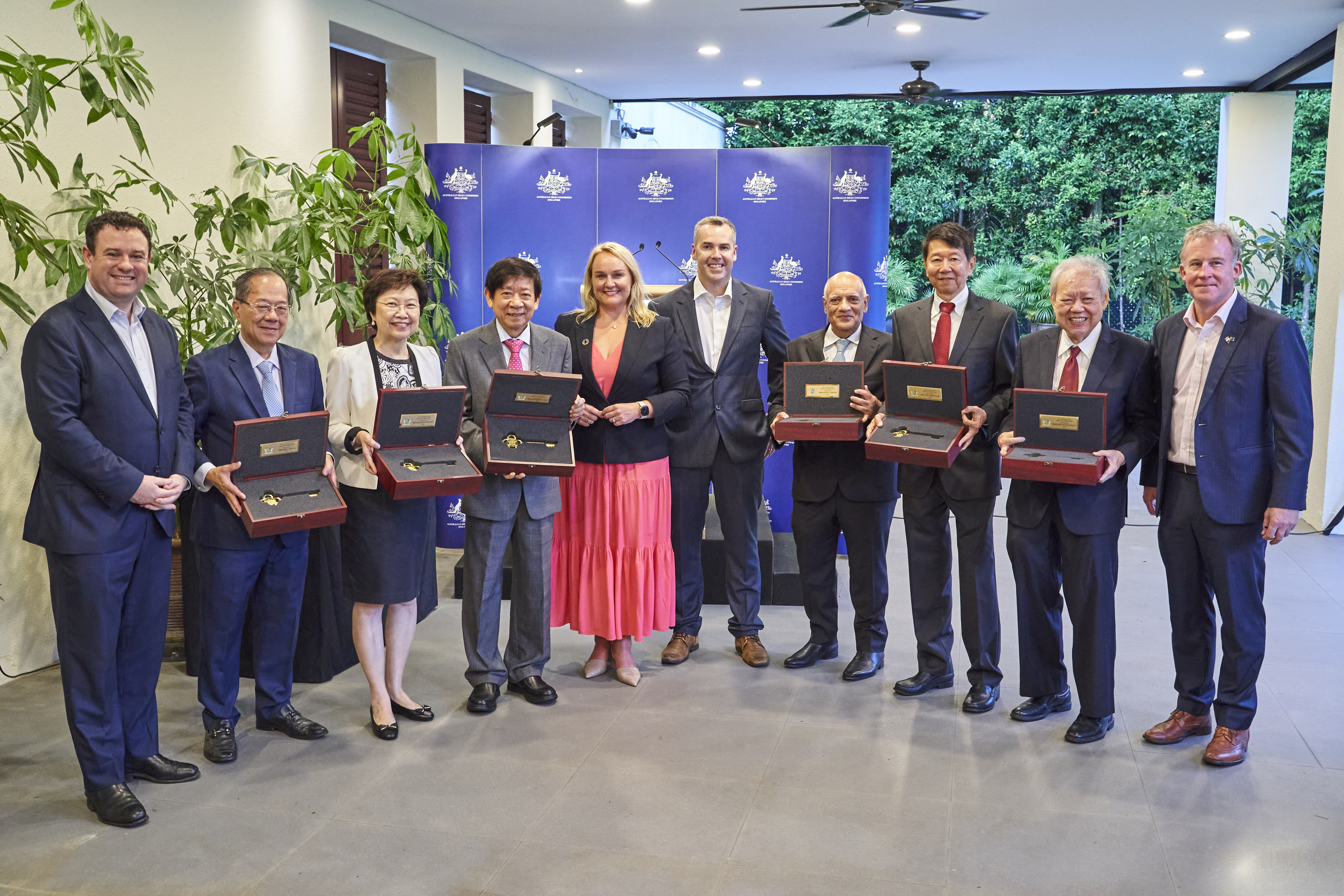
Newcastle Lord Mayor Nuatali Nelmes attended as part of a Hunter Regional Delegation to strengthen international ties and explore economic development opportunities.
The Lord Mayor said each of the Colombo scholars exemplified the City of Newcastle Ambassador Program, the purpose of which was to highlight the efforts of Novocastrians, both born and adopted, who resided in Newcastle and other parts of Australia and the world.
“Together, the Colombo scholars have many decades’ of experience and achievements spanning the political, business, housing, development and transport sectors, which have greatly benefited Singaporeans and citizens the world over,” Cr Nelmes said.
“Each of them reflect fondly on their time spent in Newcastle and attribute many of their successes abroad to this enriching experience, and for that the City of Newcastle acknowledges and celebrates their ongoing efforts to promote the city.”
An Australian Government initiative, the New Colombo Plan Scholarship Program is designed to strengthen ties between Australia and the Indo-Pacific region, offering recipients unique opportunities to enhance their learning and global citizenship.
The latest Keys to the City recipients join nine fellow Newcastle ambassadors, including Australian High Commissioner to New Zealand, Cook Islands and Niue, Her Excellency the Hon. Patricia Forsythe AM, and National Gallery of Australia Director, Nick Mitzevich.
Visit the website for more information on the City of Newcastle Ambassador Program.
Photo caption: The Hon. Stuart Ayres MP, Minister for Enterprise, Investment and Trade; Newcastle Lord Mayor Nuatali Nelmes and Port Stephens Mayor Ryan Palmer; and His Excellency The Hon. Will Hodgman, Australian High Commissioner to Singapore, with Key to the City of Newcastle recipients (L-R): Mr Bill Chua, Professor Cheong Koon Hean, Dr Khaw Boon Wan, Mr Jaspal Singh, Dr Tan Chin Nam, and Dr Peter Tay Buan Huat.
Background on recipients
Professor Cheong Koon Hean
Professor Cheong was the CEO of Singapore’s Housing and Development Board from 2010-2020, overseeing the development and management of over 1 million public housing flats. Prof Cheong was also the CEO of the Urban Redevelopment Authority (URA) from 2004-2010, and has extensive experience in strategic land use planning, conservation of built heritage and the real estate market. On 1 January 2021, Prof Cheong was appointed Chair of the Centre for Liveable Cities under the Ministry of National Development, Singapore. She is also the current Chair of the Lee Kuan Yew World City Prize Nominating Committee.
Prof Cheong holds a First-Class Honours degree and University Gold Medal in Architecture and a Doctor of Architecture honoris causa conferred by the University of Newcastle; a Master’s degree in Urban Development Planning from University College London and has completed the Advanced Management Programme in Harvard Business School.
Dr Khaw Boon Wan
Dr Khaw Boon Wan is a former politician who served as Minister for Health from 2003-2011, Minister for National Development from 2011-2015, and Minister for Transport from 2015-2020. A member of the governing People’s Action Party, he was a Member of Parliament representing Tanjong Pagar GRC from 2001-2006, and Sembawang GRC from 2006-2020. During his career, he was noted for being appointed to ministerial portfolios dealing with issues such as housing and transport. Following his retirement from politics in 2020, he has become the chairman of SPH Media Trust, a not-for-profit media entity set up by Singapore Press Holdings after it underwent a restructure in 2021.
Dr Khaw Boon Wan completed a Bachelor of Engineering degree in Industrial Engineering with Honours Class I as well as a Bachelor of Commerce. He was also awarded the University Medal for academic excellence. In 2002, the University presented a Doctor of Engineering honoris causa to Dr Khaw. He is also recognised as a Patron of the University of Newcastle’s Alumni Chapter in Singapore.
Dr Peter Tay Buan Huat
Dr Tay is currently a Corporate Advisor, engaging in business development and coaching budding business leaders. He serves on the boards of companies involved in food and education and writes on management issues in Asian Meat and AgriFood Magazine, two international food publications. For 17 years, from 1989-2006, Mr Tay was the President and CEO of Singapore Food Industries Ltd (SFI), a publicly listed food distribution and manufacturing company in Singapore. Under his leadership, SFI expanded internationally from its base in Singapore to include operations in the United Kingdom, the Republic of Ireland, China and Australia. During the period from 1992-2004, he concurrently held other positions, including Group Coordinator for Human Resource and Group Director (Strategic Development) in Singapore Technologies.
Dr Tay graduated with Bachelor degrees in both Engineering (Honours) and Economics from the University of Newcastle. In 1986, he obtained an MSc in Management (Sloan Fellows Program) from the Massachusetts Institute of Technology. He is a Fellow of the Chartered Institute of Management Accountants, United Kingdom, and a Member of the Institution of Engineers, Australia.
Dr Tan Chin Nam
Dr Tan has 33 years’ service in the Singapore Public Service holding various key appointments before completing his term as a Permanent Secretary in 2007. He held various top public leadership positions including as General Manager and Chairman, National Computer Board, Managing Director, Economic Development Board, Chief Executive, Singapore Tourism Board, Permanent Secretary, Ministry of Manpower, Permanent Secretary, Ministry of Information, Communications and the Arts, Chairman National Library Board and Chairman of the Media Development Authority. He played a leading role in the information technology, economic, tourism, manpower, library, media, arts and creative industries development of Singapore.
Dr Tan completed a Bachelor of Engineering degree in Industrial Engineering with Honours Class I as well as a Bachelor of Arts degree majoring in Economics. In 1998, Dr Tan was awarded a Doctor of Engineering honoris causa.
Mr Bill Chua
Mr Chua has served on local and foreign boards for the past 20 years. He is currently an Independent Director on the boards of IES-INCA Pte Ltd, United Hampshire US REIT Management Pte Ltd, Sunseap Group Pte Ltd, Citibank Singapore Limited, and BoardRoom Executive Services Pte Ltd, and a Managing Partner and Director of Green Sands Equity Inc. Bill retired from United Overseas Bank as the Managing Director and Head Global Financial Institution Group in November 2014 after 34 years in the financial services sector. He was awarded the Public Service Medal (PBM) in 2004, and the Public Service Star (BBM) in 2016 by the Government of Singapore.
Mr Chua holds a Bachelor of Arts, and a Bachelor of Engineering Hons Class 1 from the University of Newcastle, Australia. He is a Fellow at the Singapore Institute of Directors, and at the Institution of Engineers, Singapore.
Mr Jaspal Singh
Mr Singh started his career with the Singapore Government Administrative Service (1978-2004), serving in the Ministries of Transport, Finance and Trade & Industry and on the Boards of various statutory bodies and Government-linked corporates. Key appointments held include Director of Budget and Deputy Secretary in the Ministries of Finance and Transport. He was awarded the Public Administration Medal (Silver) in 1998 and the Long Service medal in 2003 for 25 years of service.
He received a Colombo Plan scholarship at the University of Newcastle, Australia (1973-77) and completed post-graduate studies (sponsored by the Singapore Government) at Harvard University (MPA, Kennedy School of Government, 1984-85, and AMP, Harvard Business School, Fall 2003).
Mr Singh is currently Senior Advisor to SMRT Corporation Ltd and SPH Group. He sits on the Governing Council of the Singapore Institute of Directors and is also Adjunct Senior Research Fellow at the Institute of Policy Studies at the LKY School of Public Policy. He is also the High Commissioner to the Republic of Rwanda for Singapore Ministry of Foreign Affairs.
Ordinary Council Meeting Tuesday 26 July 2022
Following is a summary of resolutions from the Ordinary Council meeting of Tuesday 26 July 2022. NB: it is not a full record of resolutions.
Lord Mayoral Minutes
New Colombo Plan Scholars
A Lord Mayoral Minute acknowledged the New Colombo Plan Scholarship Program (NCPSP) and the presentation made to, and induction of, six worthy NCPSP scholars to City of Newcastle’s Ambassador Program with a Key to the City on 26 July 2022.
Ordinary business
Adoption of council policies
Council supported an amended motion to adopt the Planning Agreements Policy and Community Infrastructure Incentives Policy and place the Newcastle Heritage Policy, and Public Voice and Public Briefings Policy on public exhibition for 28 days.
Adoption of Wickham Masterplan 2021 (2022 amendment)
Council voted to adopt the Wickham Masterplan 2021 (2022 Amendment), which aims to ensure an appropriate built form outcome is achieved in Wickham.
Tender report – hire or purchase outright of heavy plant at Summerhill Waste Management Centre
Council voted to accept a tender for the dry hire of heavy plant at Summerhill Waste Management Centre to process incoming waste.
Notices of Motion
William Street pedestrian crossing, Tighes Hill
Council supported a notice of motion to prioritise the repair and upgrade of the William Street Tighes Hill pedestrian crossing in the forward works program, with consideration given to including the installation of a compliant kerb ramp, improved drainage and flood mitigation, and upgraded street lighting, signage and road markings. This pedestrian crossing is scheduled for planning and design in City of Newcastle’s (CN’s) 2022/23 transport program. Once design and approvals are finalised, the project will be listed for consideration under CN’s forward Capital Works program, including exploring opportunities for external funding support through eligible grant programs.
Shared e-scooter trials ready to roll
Four popular Western Sydney locations have been selected to welcome the first of several shared e-scooter trials to roll out across NSW.
The first shared trials will begin on Saturday at three locations in Western Sydney Parklands’ Bungarribee Park, Lizard Log and Shale Hills, as well as The Australian Botanic Garden Mount Annan.
The trial parameters have been carefully considered, taking lessons from e-scooter use around the world and across the country to ensure the safest, most practical and effective measures are in place.
Minister for Active Transport Rob Stokes said the Government was committed to cautiously trialling the use of e-scooters in safe environments.
“Like any new technology, e-scooters present us with enormous opportunities and several challenges to address before we can permanently permit them on our streets,” Mr Stokes said.
“This is why the NSW Government is committed to trialling them and why our parklands are the perfect location to start ahead of trials across multiple council areas.
“Councils can now formally apply to hold a 12-month trial with selected e-scooter shared scheme providers in their area. The trial is restricted to shared scheme e-scooters, so we can guarantee the safety parameters of each device.”
Council areas can now apply to be part of the trial and once approved can begin 12-month trials with e-scooter shared scheme providers in their area.
The trial will limit shared scheme e-scooters to riders 16 years old and over, limited to a maximum of 20km/h on bicycle paths, or roads with a speed limit up to 50 km/h, and a speed limit of 10km/h for shared paths.
E-scooters will not be permitted on footpaths and the use of privately owned e-scooters will remain prohibited.
“We’ve taken our time to get this trial right, which is why we’re not rushing into rolling this trial out to interested council areas immediately,” Mr Stokes said.
“Each shortlisted council will have to meet the requirements of the trial and undergo a safety assessment before being approved.”
Visitors to Western Sydney Parklands and The Australian Botanic Garden Mount Annan will be able to hire an e-scooter through the provider’s app. The app will provide visitors with a map that shows where the scooters are located to pick up and ride.
Applications to be part of the e-scooter shared scheme trial are open until September 30 this year. You can find out more about e-scooter trials here.
New TAFE strategy to train one million people
More than one million people will be supported to reach their goal of being skilled and employed, as part of TAFE NSW’s ambitious new three-year plan that will help strengthen the economy’s skills base and secure a brighter future for NSW.
Minister for Skills and Training Alister Henskens said the TAFE NSW Strategic Plan 2022-25 provides an industry-aligned roadmap for Australia’s largest and best training provider, to ensure it continues to deliver a skilled and agile workforce, now and into the future.
“This plan sets out a clear path to deliver future-focused, responsive and flexible training which is geared towards both traditional as well as new and emerging industries,” Mr Henskens said.
“The plan is backed by our record $2 billion recurrent and $319 million capital investment in TAFE NSW as part of the 2022-23 NSW Budget, which will fast-track training in priority areas, including those linked to the NSW 2040 Economic Blueprint.
“TAFE NSW is critically important to the future of our State and the NSW Government will continue to support its teachers and staff, so that we can continue helping people get the skills they need for the jobs they want.”
The key elements of the plan include delivering better learner experiences, forming innovative partnerships with industry, empowering TAFE’s workforce and adopting digital technologies to improve services.
TAFE NSW Managing Director Stephen Brady said the plan will help fulfil the vision for TAFE NSW as a vibrant, nation-leading training provider which delivers quality and accessible vocational education and training.
“The rapidly changing nature of work, our expanding digital economy and the growing demand for flexible education pathways, presents TAFE NSW with an enormous opportunity to help shape and grow the NSW economy,” Mr Brady said.
“The plan also highlights TAFE NSW’s critical role in alleviating social inequality for those experiencing disadvantage, including delivering on the National Agreement on Closing the Gap.”
More information about the TAFE NSW Strategic Plan 2022-25 can be found online.