
Greens $15 billion plan for a “Made in Australia” Bank to power clean energy future

The Greens will today outlined plans for a $15 billion “Made in Australia” Bank and manufacturing fund – bolstering Australia’s capacity to produce components needed for the transition to clean, cheap renewable energy.

Australian Greens Senator for WA Dorinda Cox will today be joined by Greens candidate for O’Connor Giz Watson in Kalgoorlie – a region with endless sunshine and huge potential as a renewable energy superhub.

The Greens’ plan will provide a massive boost to the local Goldfields economy and provide a much-needed buffer against the ‘boom and bust mining’ cycles that the region has experienced for decades. 

A $15 billion ‘Made in Australia’ manufacturing bank would support greater metals processing, manufacturing, innovation, industrial decarbonisation and re-localisation of supply chains as the world transitions to a pollution free economy. For places like Kalgoorlie, it means creating jobs and adding value right here from these minerals instead of just sending it all offshore.  

This manufacturing bank would have a similar structure to the existing Clean Energy Finance Corporation (CEFC), meaning it would provide direct grants, equity investment, financing and concessional loan options depending on the corporate structure of applicants. $3 billion in direct grants would also be available for co-investment.

The Kalgoorlie region is perfectly situated for Australia’s ‘manufacturing renaissance’. It can generate plenty of renewable energy to bring down the cost and emissions of manufacturing, making Australian made products much more attractive, while also decarbonising our economy and exports.

There are great opportunities to be harnessed here in supply chains for batteries and electric vehicle components, wind turbines and public transport infrastructure made with emissions-free steel. 

Many local mining companies have been actioning their decarbonising journey, with Agnew Gold Mine near Leinster for example, largely generating renewable energy to run its operations – bringing down both emissions and overhead costs. Miners would have much more reason to accelerate their plans for zero-emissions operations if they were encouraged to do so by Government policy – something that has been completely absent from successive Liberal Governments. 

The Greens have long championed a strong transition to clean, green renewable energy industries in regional hubs like Kalgoorlie. In 2013, then-Greens Senator for WA Scott Ludlam pitched Kalgoorlie as a solar hub that would take advantage of funds supplied by the Federal Government’s CEFC.

Dorinda Cox, Australian Greens Senator for WA said:

“Clean, cheap abundant energy from our vast sun and wind resources will be Australia’s competitive advantage in net zero global trade, but only if we seize it. With such abundance of sun and wind energy, we can drive energy costs close to zero, which will see the return of manufacturing to hubs like Kalgoorlie. 

“This future can happen if we rapidly transition to a clean economy powered by renewable energy and export the rest of it to the world.”

Giz Watson, Greens candidate for O’Connor said:

“With the mining industry being one of the largest emitters of greenhouse gases, it makes sense for the industry to be motivated to change that. We know that miners want to transition to renewables and electric machinery because it also makes sense for their workers’ health and bottom line. It’s better for workers not to breathe in diesel fumes and to reduce reliance on expensive, dirty fossil fuels – we just need the right policies and encouragement for them to accelerate those plans. The Greens’ plans do exactly that.

“Kalgoorlie industries, powered by renewable energy, can play a leading role in supplying the rapidly expanding international market for batteries and electrical vehicle components.”
Labor betrayal on live export

Australian Greens Animal Welfare spokesperson Senator Mehreen Faruqi has panned Labor’s apparent swift backflip today on its promised phase-out of live sheep export.

Senator Faruqi said:

“Federal Labor should grow a spine and unequivocally recommit to this important policy, which they took to the last election. But it seems they can’t even do that.

“Animal welfare advocates have been campaigning for years to put an end to this cruel trade. This will be incredibly disappointing for them, but given Labor’s track record, perhaps not surprising.

“Sheep routinely die horrific deaths or suffer immense heat stress because of the live export trade. “The Greens have already been clear that in the balance of power, we will keep pushing Labor to bring live sheep export to an end.

“Does Labor stand for anything?”

A Better Future for Jobs in Tasmania

Secure, well-paid jobs will be a key part of Labor’s Better Future for Tasmania.  
 
Labor will invest in the future of Tasmanian jobs and manufacturing – with $26 million pledged to create jobs and ensure Tasmania is a state that makes things.  
 
Over the last decade under the Liberals, 85,000 manufacturing jobs have been lost. Australia ranks last in the OECD when it comes to manufacturing self-sufficiency. Our manufacturing sector is less than half the size it was in the 1990s. 
 
Today Labor is announcing new partnerships with local industry to secure existing jobs and support new jobs and opportunities: 

  • $5 million to help kick-start LINE Hydrogen’s George Town Project – using co-located solar panels to produce green hydrogen to replace diesel in Tasmanian trucks and busses.  
    • The first stage of the project is set to include hydrogen production and 24 hydrogen trucks that will be leased to industrial partners.  
  • $2 million to help expand Costa’s East Davenport Berry Distribution Centre – supporting as many as 140 jobs year-round. 
  • $11 million to partner with Ingham’s to implement a carbon zero certified business model – protecting more than 120 local jobs and pioneering sustainable manufacturing in the poultry sector, which can be scaled up across Australia. 
  • $2 million to support a feasibility study and early development costs for Westcoast Renewable Energy’s proposed Whaleback Energy Park. 
    • This has the potential to use the west coast’s abundant wind and water resources to produce green hydrogen for use in Tasmania, as well as export to the mainland and the world.  
    • If fully operational, the Whaleback Energy Park could create over 4,500 jobs in construction and over 550 full-time permanent jobs. 

This is on top of the $6 million Labor announced earlier in the week to secure the future of the Waverley Mills, supporting textile manufacturing and 120 ongoing jobs.  
 
Labor will grow Tasmanian industry and boost local manufacturing. We will work with industry to protect and grow jobs, as well as attract private investment to Tasmania. 
 
Local businesses will also be able to access equity and loans through Labor’s $15 billion National Reconstruction Fund.  
 
This will help create new capabilities and opportunities to innovate in transport, defence, resources, food and beverage processing, medical science, renewables and low emission technologies, manufacturing and value-adding.  

Labor Will Support Local TV & Free Sport in the Streaming Age

All Australians should have the chance to enjoy iconic sporting events live and free, rather than behind the paywalls of multinational streaming companies.

That’s why an Albanese Labor Government will review the anti-siphoning scheme and give working families the chance to watch, for free, events of national and cultural significance.

Working families and Australians more broadly face the triple whammy of interest rate rises, skyrocketing costs of living and falling real wages, and too many still don’t have reliable broadband access. 

We can’t afford to have our sporting heroes disappear onto costly subscription streaming services.

Labor also wants to ensure our local TV services, which broadcast the Australian content, sports, news and emergency broadcasting Australians rely on, are easy to find on connected TV platforms, like smart TVs.

We will legislate a prominence regime to ensure Australian TV services can easily be found on connected TV platforms.

An Albanese Labor Government will back our local media sector so it can compete and thrive in the era of big tech, global streaming services.

The Morrison Government has dropped the ball when it comes to protecting free access to sports and easy access to Australian TV on connected devices. 

Scott Morrison’s track record shows he simply can’t be trusted to put free content and services for ordinary working Australians first:

  • Failing to review the anti-siphoning list before it was due to sunset last year (April 2021), and failing to commence a public review of the scheme ahead of the expiration of the list early next year (April 2023).
  • Publishing a consultation paper on modernising TV regulation that didn’t even mention the anti-siphoning rules.
  • Creating a Future of Broadcasting Working Group that didn’t hold its first meeting until the last business day of the 46th Parliament.
  • Handing $40 million of taxpayer funds to Fox Sports which put more sports behind a paywall. 
  • Trying to boot Community TV off-air, despite there being no alternative use of the spectrum for local services that broadcast grassroots sports programs. 
  • Cutting ABC funding which contributed to the end of the ABC’s almost 70-year run as the official non-commercial Olympic Games radio broadcaster. 

An Albanese Labor Government will conduct consultative review processes as a priority that provide all relevant stakeholders, including media and sports, the opportunity to share their views. 
 
Anthony Albanese, Leader of the Australian Labor Party said: 

“Every Australian should get to see major sporting events. 
 
“For a whole lot of Australians, free to air TV is essential to seeing those moments which lift us up as a nation, that inspire us, that help define who we are. 
 
“Major sporting events should be on free to air TV.” 
 

Don Farrell, Shadow Minister for Sport and Tourism said: 
 
“You can’t be what you can’t see. 

“It’s imperative that future generations can see their heroes in action, live on free TV.

“Labor is committed to ensuring Australia’s sporting traditions are upheld and accessible to everyone.”

 Michelle Rowland, Shadow Minister for Communications said: 

“Labor is committed to a sustainable media industry that can get major cultural and sporting events into every Australian lounge room.

“An Albanese Government will give the industry the certainty it needs to continue to deliver for Australian families.”

Securing the future of Perth’s rivers

A re-elected Morrison Government will invest $22 million to support new environmental, river restoration and recreational projects across the iconic Swan and Canning Rivers.

Prime Minister Scott Morrison said a strong economy meant the Government could commit to important projects to restore and revitalise the Swan and Canning Rivers.

“This means cleaner rivers and more community facilities for some of Perth’s best natural assets,” the Prime Minister said.

“West Australians love the outdoors and our investment will protect and conserve our environment and improve some of Perth’s most popular spots along the riverfront.

“We won’t just be bringing more fish and wildlife to the area, we’ll invest in the facilities that are going to make our riverfronts even more popular for people to get together and enjoy.”

Minister for the Environment Sussan Ley said the projects would remove sediment and weeds, plant trees, restore riverbanks and protect habitats for native animals, birds and fish.

“This investment will deliver action on the ground and in Perth’s waterways,” Minister Ley said.

“We’ll improve the health of Perth’s two major rivers and upgrade some of the recreational facilities from the Eastern Hills to where the Swan River meets the Indian Ocean.

“This will transform Perth’s waterfronts and make a real difference.

“Since 2019 we have committed more than $6 billion to protect the environment across Australia through native species recovery, habitat restoration, marine conservation, Landcare, environmental science and partnerships with community groups and Traditional Owners.

“Our plan will deliver a stronger future for Perth’s rivers and waterfronts.”

The Morrison Government will invest:

• $10 million for the Canning River Restoration – This project will work with City of Gosnells, City of Canning, City of Armadale and Landcare Groups to deliver a Canning Waterways Restoration Plan. The project includes retrofitting drainage systems along the river, sediment removal, revegetation and restoration of the banks

• $3.6 million for the Swan River catchment recovery – Works to improve the health of the Swan River system including the middle and upper estuary and its tributaries in the Eastern Perth Hills. The project will improve water quality by reducing nutrient and sediment runoff into the estuary with ‘living drains’

• $6 million for Kent Street precinct environment and parks infrastructure – Tree planting and native garden displays as well as an events pavilion, upgraded parking facilities, lighting and CCTV upgrades

• $2.5 million for the Kent Street play space – A play area with environmental and Indigenous themed elements as well as new BBQ facilities, shelters and toilets

The projects will be delivered in partnership with local NRM groups, local governments, Indigenous Rangers and community environmental groups.

Liberal candidate for Swan Kristy McSweeney said the local investments would deliver benefits for the community and the environment.

“These projects will mean our community can keep enjoying our rivers and local parks,” Ms McSweeney said.

“I’ve worked closely with the WA Liberal Team to ensure the Environment Minister understands how important these rivers are in my plan for our communities so we get the investment they need.

“We have some of the most vibrant rivers of any capital city and these investments will secure their future.

“This isn’t just about fish and wildlife and the local environment, it’s about investing in the riverfronts where our local community live, work and play.”

Top tipples tourism boost

Australia’s wineries, breweries and distilleries will bring in even more tourists as part of a $20 million boost from the Morrison Government for new infrastructure and events.

Prime Minister Scott Morrison said the Government was backing Australia’s tourism operators to do what they do best.

“We’re opening Australia’s cellar doors to the world for more of our wine, spirit and craft beer producers,” the Prime Minister said.

“A strong tourism industry means a strong economy.

“Tourism is key to our plan and this funding will help bring in more tourists to local businesses, meaning more people touring our breweries and wineries, more people buying products and ultimately businesses employing more people.

“Australia is a global tourism leader for our beaches, parks, wildlife, Indigenous culture and our cities, and there are huge opportunities for our wineries and distilleries to take advantage of the planeloads of tourists looking for a new experience as we emerge from COVID lockdowns.”

A re-elected Morrison Government will invest $15 million in the wine, spirits and craft breweries sector, providing up to $100,000 in matched funding for small to medium-sized wineries, distilleries and beer producers for the construction or upgrade of cellar door or tourism-associated facilities (excluding accommodation), such as restaurants, tour facilities and viewing platforms.

An additional $5 million will be provided through the Wine, Spirits and Craft Breweries Tourism Events program to provide up to $100,000 to tourism and local government organisations to create new events and experiences to attract tourists and showcase wineries, distilleries and craft beer makers.

Our Government has a plan to grow the total value of the visitor economy to $230 billion by 2030, including $100 billion for regional Australia, supporting more jobs and opportunities.

Minister for Trade, Tourism and Investment Dan Tehan said a strong economy was the bedrock of a successful tourism industry.

“A strong economy means our Government can cut taxes for tourism operators while investing more in promoting our country, building the infrastructure that improves the visitor experience and protecting the environment that helps drive tourist demand,” Minister Tehan said.

“Only our Government is investing in the future to support local jobs and businesses and to ensure we remain a world-leading tourist destination.

“Our long-term plan to grow and strengthen the tourism sector puts modernisation, diversification and collaboration at its core.

“More than 60 per cent of distilleries are in rural and regional Australia and Australian wineries spread across 65 regions, so these programs will support regional Australia to diversify their tourism offerings, which is a key plank of our long-term tourism strategy.”

The Morrison Government provided more than $20 billion in assistance to the tourism and hospitality industry to get through COVID-19. Now, because of our strong economy, we can further invest to grow and strengthen the tourism sector and take advantage of the pent-up demand to travel, as the world emerges from the pandemic.

Training our next generation for defence industry jobs boom

An extra 1,500 Australians will be trained up for jobs in the nation’s booming defence manufacturing and technology industry, as part of a $108.5 million commitment from a re-elected Morrison Government.

Prime Minister Scott Morrison said the Government’s $270 billion investment in Australia’s defence capabilities to 2030 was underpinned by a commitment to grow the local industry workforce including through the new Defence Industry Pathways Program that would help school leavers get the skills they needed for defence industry jobs.

The Prime Minister said the commitment would expand the Program beyond its pilot to 14 regions across the country and train up an extra 1,500 workers with a nationally accredited Certificate III – Defence Industry Pathways.

“Our investment in building the capabilities of Australia’s defence force is about keeping our country strong and secure and backing local skills and jobs,” the Prime Minister said.

“Australia has a record 220,000 people in trades training but as our defence investments grow, so does the demand for skilled Australians to move into the industry.

“A strong pipeline of workers will make our $270 billion defence investment into the equipment and capabilities Australia needs.

“The skills and knowledge this program will give to graduates will set them up for a career in defence equipment manufacturing technology, and set them up for life.

“My Government’s $270 billion investment in defence capability will boost Australia’s strong economy and help deliver a stronger future not just for the industry, but the thousands of workers it employs.”

Minister for Defence Industry Melissa Price said competition for skilled workers in defence industries was on the rise.

“We need to meet the growing needs of our defence industry workforce by skilling up new workers and new generations,” Minister Price said.

“This is taking a pilot at Henderson in WA and exporting it right across the country so more people get the skills they need for the jobs our Government is helping to create.

“More than 50 defence industry businesses have registered to host and mentor the 120 trainees already participating at Henderson and with more investment in defence industry there’s huge demand for the skills this program will deliver.

“By training an extra 1,500 workers with on-the-job experience we know these graduates will be ready to walk into the workplace.”

Students will be trained up with practical experience in technical trades like welding and electric, as well as skills in engineering, project management and logistics, cyber security, and computer-aided design.

Industry placements are a key element in the delivery of the program, with more than 50 ‘major prime’ and small businesses alike committing approximately 170,000 hours of supervisory oversight for the current 120 trainees using their commercial premises, facilities and equipment. Despite the first of the trainees being only half way through their traineeships, many of the trainees have entered into discussions on longer term employment with their host industry partners.

The Government will work closely with defence industry and training organisations to roll out the program, particularly in regions offering defence industry growth and jobs. These include:

  • Newcastle and the Hunter region (aerospace)
  • Sydney and surrounds (maritime and aerospace)
  • Cairns (maritime)
  • Townsville (land and aerospace)
  • Brisbane and surrounds (land and aerospace)
  • Darwin and surrounds (maritime, aerospace and land)
  • Perth and surrounds (maritime, aerospace and explosive ordnance)
  • Adelaide (maritime, aerospace and land)
  • Bendigo (land)
  • Benalla and Mulwala (explosive ordnance)
  • Melbourne and surrounds (maritime)
  • Geelong and surrounds (land)
  • East Sale (aerospace)
  • Hobart and Launceston (maritime)

Only the Morrison Government can be trusted to deliver the investments Australian defence needs after Labor slashed defence spending to its lowest level since WWII.

Read more about our plan for Growing Our Sovereign Defence Industry

$1 billion cutting-edge kit for Australia’s special operations forces

The Morrison Government will equip Australia’s special operations forces with cutting edge equipment and technology as part of a new $1 billion upgrade.

Prime Minister Scott Morrison said the $1 billion for ‘Project Greyfin’ would deliver highly specialised communications and intelligence equipment, new water and land vehicles, tactical equipment and weapons and new facilities.

“Our special forces and commandos are the best in the world at what they do and we’re committed to ensuring they’ve got the right kit to do their jobs,” the Prime Minister said.

“A strong economy means a stronger future for our special operations forces because we can make the investments we need.

“Our special forces and commandos defend Australia and our interests 24 hours a day and Project Greyfin will keep them at the cutting edge.

“Not only do these upgrades help keep Australians safe, they mean more investment in the jobs and skills right here at home that make this equipment.

“Australia’s booming defence industry is playing a growing role in delivering the specialist capability our Special Operations Command needs and we will keep making the investments to grow local jobs and skills.”

Since announcing Project Greyfin in 2019, Defence has been focused on bolstering specialist equipment and aiming to enhance communications, surveillance and counter-terrorism capabilities for Special Operations Command personnel.

This second stage of the project will aim to update Special Operations Command and control with a focus on agility and strategic posture.

Minister for Defence Peter Dutton said Project Greyfin would help Australia’s Special Operations Command better respond to threats at home and across our region.

“Keeping Australians safe, protecting our interests and preserving our way of life is the top priority for the Government,” Minister Dutton said.

“Project Greyfin is ensuring our Australian special forces have access to the best and latest weapons and equipment.

“Given the rapidly evolving strategic and threat environment facing Australia, special forces troops need the best gear. And it’s equally important that Defence is agile enough to get this equipment to the troops, when they need it.

“Australia’s Special Operations Command – the Special Air Service Regiment, 1st and 2nd Commando Regiments, Special Operations Engineer Regiment and the Special Operations Logistic Squadron – need to be ready to deploy on operations anywhere in the world, at short notice, and in very uncertain conditions,” said Minister Dutton.

“The first stage of funding enabled our special forces to remedy lower complexity shortfalls in their capability.

“The second stage focuses on cutting edge innovation, research, science and technology, to better equip our forces and help them solve unique problems.”

The Morrison Government is investing more than $575 billion in Australia’s Defence Force over this decade, including $270 billion in Australia’s defence capability that will support more than 100,000 jobs.

In 2020, we restored defence investment to 2% of GDP. Defence spending is increasing above 2% of GDP as we continue to deliver a stable funding path into the future. This reverses the decline under Labor, when defence funding was gutted by $18 billion and fell to 1.56% of GDP – the lowest level since 1938.

Read more about our plan for Growing Our Sovereign Defence Industry

$150,000 in funding available to activate local business precincts

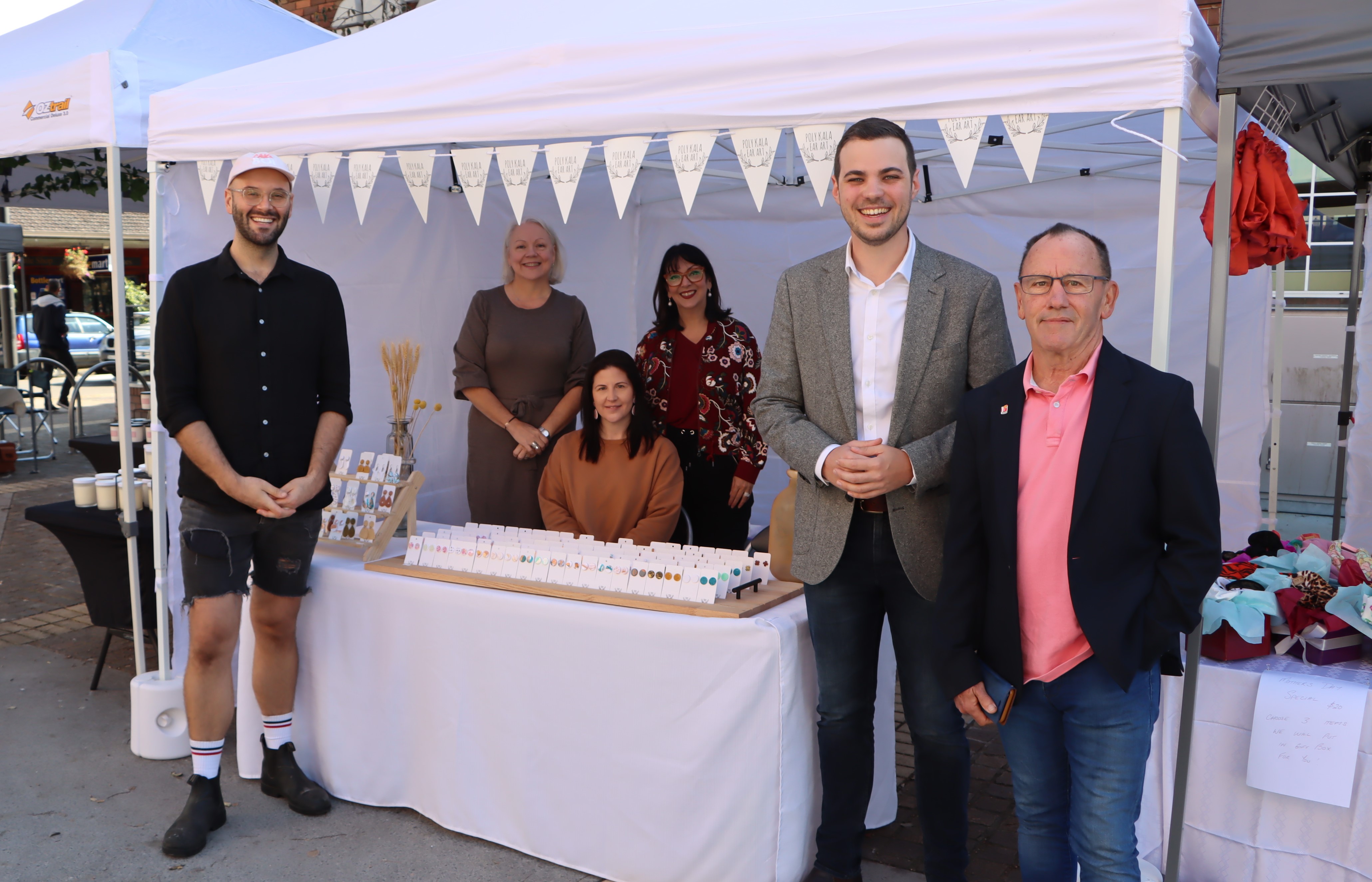
Businesses, not-for-profits and community groups are encouraged to apply for a share of $150,000 in funding for projects which activate or beautify the Hamilton, Wallsend and New Lambton business precincts as part of City of Newcastle’s Special Business Rate (SBR) program.

Initiatives ranging from the Big Picture Festival, which saw murals painted throughout the city, through to free cultural performances in Gregson Park, have recently been funded through the program, with REMPLAN modelling showing an economic impact of $5.8 million for the $1.6 million invested in the program last year.

New-James-Street-Plaza-Providore-Markets-in-Hamilton.jpg
Deputy Lord Mayor Declan Clausen said this round of funding would allow for projects which drive visitation and economic activity in the city’s suburban business precincts.

“City of Newcastle has received some truly innovative and unique proposals through recent SBR funding rounds, including Shakespeare in Civic Park and temporary 3D chalk art trails through the city, so we’re looking forward to seeing what comes through for our suburban precincts,” Cr Clausen said.

“Hamilton, Wallsend and New Lambton all have unique offerings as local business centres, and events, activations and beautification projects funded through the SBR program will give people another reason to visit.

“The funding available through the SBR program will see direct benefit to businesses by attracting visitation and making our local centres even better places to eat, drink and shop.”

Key categories of funding in 2022 include: industry and business development; place activation and events; beautification and infrastructure development; and promotion, with up to $50,000 available in each suburban precinct.

Councillor Carol Duncan said over the past few years COVID-19 had created the toughest trading conditions suburban businesses had ever experienced.

“The advocacy of our BIAs in engaging with business owners to activate their precincts is vital in creating thriving business communities to help mitigate the ongoing impact of COVID-19,” Cr Duncan said.

“We’re seeing the benefits of the BIA model across Newcastle, including in Hamilton where there are a host of new businesses popping up and even a new providore market establishing in James Street Plaza from this Saturday.

“We look forward to receiving a range of creative project ideas in the next round of SBR funding to positively benefit our local business precincts in Wallsend, New Lambton and Hamilton.”

Applications for the New Lambton, Wallsend and Hamilton funding close on 20 May 2022.

More information about the Special Business Rate program and funding opportunities can be found at newcastle.nsw.gov.au/special-business-rates.

Projects previously supported by suburban SBR funding include:

· Hamilton 150th Anniversary Celebrations (Curious Legends)
A mini cultural festival was held in Hamilton’s Gregson Park, in December to coincide with the 150th year anniversary of the suburb of Hamilton. Local artists, musicians, light installations and puppeteers activated the park. The community were also invited to participate in free workshops at Hudson Street Hum prior to the event to get involved with performances.

· Hamilton Hive Interactive Mural (UP&UP inspirations)
This project led to the design and painting of a mural on the exterior wall of the Community Hive building on Beaumont Street, Hamilton. The mural makes the space more vibrant and welcoming and encourages people to visit the Hamilton precinct which increases foot traffic for businesses.

· Walk With Us (Paul Maher)
This project is replacing a number of existing mosaics with safe, level, slip-resistant installations suitable for high foot traffic areas. The mosaics will beautify the Beaumont Street footpath, honour the suburb’s social and entrepreneurial history, encourage engagement with local businesses, and celebrate our shared cultural heritage and history.

· Hamilton Garden Tile Mural
Local ceramic artist, Ali Sobel-Read, in collaboration with the Kent Hotel, will create a unique artwork for local residents and visitors alike on a wall owned by The Kent on Cleary Street.

East End revitalisation taking shape

The long-term revitalisation of the Hunter Street Mall is a significant step closer, with work being finalised on the first stage of the East End Village project.

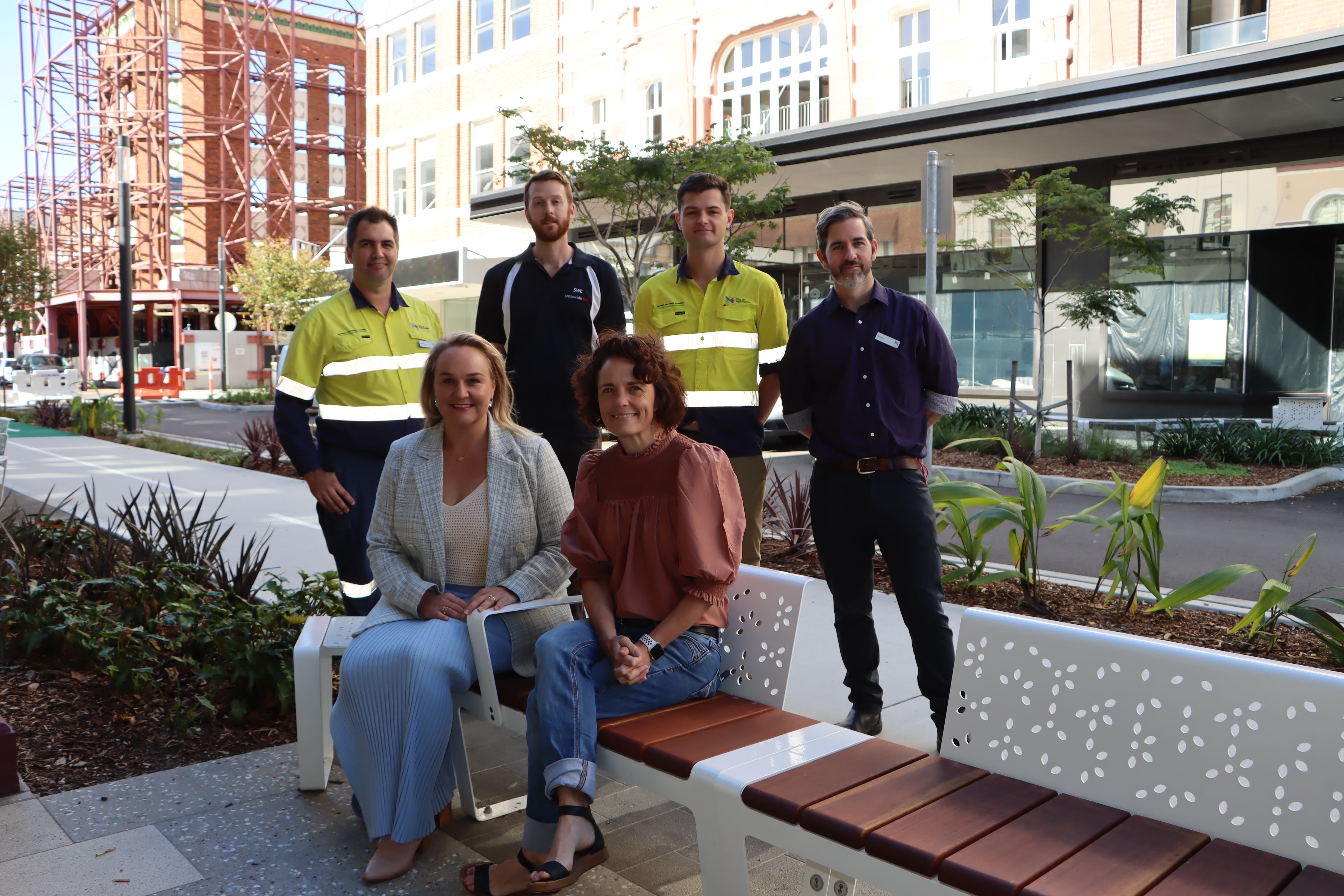
The $5 million first stage has seen new paving, service upgrades, street furniture, and increased ground cover and trees on Hunter Street, at the block bound by Wolfe and Perkins Street, and includes significant upgrades to stormwater and drainage, cycleways and footpaths.

Lord-Mayor-Nuatali-Nelmes-with-Angela-Hailey-from-Studio-Melt-with-the-project-team-and-construction-contractor.JPG
Lord Mayor Nuatali Nelmes said that stage one is a step towards positioning the precinct as a traditional high street and attractive shopping destination for locals and visitors.

“We have invested five million dollars into the first stage of public domain works in our cultural heritage precinct at the east end.

“It’s wonderful to see our long term vision for the former Hunter Street Mall take shape. Delivering these outcomes for our community have taken significant collaboration, public and private sector investment. It’s wonderful to see our plans become a reality,” Councillor Nelmes said.

“Delivering Stage 1 has been a significant undertaking and the complete renewal of the streetscape brings a level of excitement and anticipation for the future because the public now has a very clear understanding of what an upgraded precinct will look like for Newcastle.

“I’d also like to thank businesses and local residents for their patience during the construction period. We look forward to continuing to work together as we deliver a much improved and revitalised Hunter Street Mall area.”

“To celebrate the new and improved space, our community is invited to attend the ‘East End Party’ on Hunter Street from 2-6pm tomorrow, Saturday 7 May. I encourage everyone to come out, support local business and see what’s been delivered in this unique part of our city.”

The East End Party, which is being run as part of the Autumn Alive program, will showcase the nearby businesses, and provide people an opportunity to explore the upgraded block and recently completed piazza. The event will put a spotlight on local products and will also include live music, roving entertainment, food stalls and interactive spaces. City of Newcastle will also be on hand to share photos, maps and architectural renders for anyone interested in finding out more about the East End Village.

Chair of the City/Darby Street Business Improvement Association Mike Chapman said the group was happy to see the initial section of works be delivered in this unique part of Newcastle.

“These works bring a level of excitement for the future, and we would like to invite anyone interested to come along for the community event on Saturday. It will be a great opportunity to showcase our unique businesses and traders and show off what great local products we offer in the East End.”

The second phase of construction, which will target Hunter Street between Perkins and Brown Street, is scheduled to commence late 2022.

The East End Village is being delivered under the City Centre Revitalisation Program, one of Newcastle’s four Priority Projects. Visit www.newcastle.nsw.gov.au/eastend for more information.