
More Jobs for Western Sydney with another Metro Rail Contract Awarded

A major contract has been awarded as part of the new Sydney Metro – Western Sydney Airport line, marking another important milestone in the delivery of this critical rail project.

The $538.5 million contract to deliver approximately 10.4 kilometres of surface and civil alignment works has been awarded to CPB Contractors and United Infrastructure.
The contract includes:

  • 3.5 kilometres of elevated viaduct at Orchard Hills and Luddenham.
  • 6.7 kilometres of earthworks for track formation.
  • A 190 metre long rail bridge over the new M12 motorway.
  • A 20 metre long rail bridge within the airport.
  • Temporary and permanent access roads.
  • Bulk earthworks for the stabling and maintenance facility site.

The driverless 23-kilometre metro line will link St Marys to the centre of the new Aerotropolis at Bradfield via the new Western Sydney International (Nancy-Bird Walton) Airport. Six stations will also be built along the alignment.

Work on the project will be ramping up in coming months, providing a significant boost for the region creating 14,000 new jobs, including 250 apprenticeships during construction, and with at least 20 per cent of the workforce to be from Greater Western Sydney.

The Sydney Metro – Western Sydney Airport project is jointly funded by the Australian and NSW governments.
Premier Dominic Perrottet said this new rail line will become the transport spine for this growing region, with government investment unlocking a new city that will take shape before our eyes.

“This project is creating significant economic stimulus for Western Sydney, ensuring there is a steady pipeline of opportunities for young people in the years to come,” Mr Perrottet said.

“A world class city deserves a world class transport system, this is the next stage in delivering that for the people of Sydney.”

Federal Minister for Communications, Urban Infrastructure, Cities and the Arts Paul Fletcher said the new metro line would provide a critical transport connection to the new Western Sydney International Airport.

“Our government is continuing to invest billions of dollars in infrastructure across Western Sydney – an investment that will leave a lasting legacy on the region by creating jobs and providing the connections that the region needs as an economic powerhouse,” Minister Fletcher said.

“Today we have announced another major contract for the Sydney Metro – Western Sydney Airport project, which once complete will help service the millions of travellers that will use the new Western Sydney International Airport annually once it begins operations in 2026.

Minister for Transport and Veterans David Elliott said the Surface, Civil and Alignment Works will support railway tracks and associated infrastructure and follows the $1.8 billion contract to CPB Contractors and Ghella in late 2021 to deliver 9.8 kilometres of new twin metro rail tunnels.
 
“A new generation of engineers, carpenters, steelfixers, machine operators and other trades will get their start on this project – a unique opportunity to help shape the new Western Sydney Parkland City,” Minister Elliott said.

The third and final major contract package to be procured for the project is expected to be awarded at the end of this year.
FUNDING TO HELP FLOOD-HIT COMMUNITIES, FARMERS, SMALL BUSINESSES AND COUNCILS

A new support package for flood-affected communities across New South Wales will be released today to support farmers, businesses and local councils to recover and rebuild.

This initial $434.7 million of funding from the Commonwealth and New South Wales governments will be provided to support communities clean up and remove damage and debris, as well as further support local government areas (LGAs) that have been flood-affected.

Grants of up to $75,000 for primary producers and up to $50,000 for small businesses and not for profit organisations devastated by flooding will soon be available through NSW Government agencies, with registration now open through Service NSW. This program will be demand driven.

Prime Minister Scott Morrison said this package is just the first phase of the financial support that will support communities in need.

“We will be there to help farmers, small businesses and every community in New South Wales to get back on their feet as soon as possible when flood waters recede,” the Prime Minister said.

“Farmers will need to restock and rebuild and small businesses will need help replacing damaged goods and shop fronts, and when more support is needed, more support will be given.

“I have already asked the New South Wales Premier to provide my Government with a proposal for a second support package to ensure all communities get the support they need.

“We are working with Queensland on what support will be made available under Category D funding, ensuring communities receive the funding they require to rebuild, and my Government has requested a proposal of projects from the Queensland Government.

“This initial package is in addition to the federally funded $1,000 disaster relief payment and the 13-week income replacement for employees and small business, which to date has already paid out almost $63 million in a matter of days.”

New South Wales Premier Dominic Perrottet said the NSW Government stood ready to support communities hit hard by the floods across the State.

“We activated these measures during the 2021 floods, and we have done so again – they are large grants that will get much-needed funds to people quickly to provide some relief and assistance,” Premier Perrottet said.

“We know these supports will have an immediate positive effect and I would encourage anyone in NSW impacted by these awful floods to please contact Service NSW and find out what you are eligible for.”

Seventeen LGAs have been declared as disaster areas and are eligible for support through Disaster Recovery Funding Arrangements (DRFA).

Minister for Emergency Management and National Recovery and Resilience Bridget McKenzie said the activation of extraordinary Category D grant assistance under the DRFA was vital to help kick start the recovery of affected primary producers and small businesses.

“The Commonwealth and NSW Governments are focused on giving small businesses and not-for-profits the tools they need to clean-up, rebuild and keep operating,” Minister McKenzie said.

“We will continue to work with the NSW Government to roll out ongoing targeted support for communities impacted by these devastating storms and floods.”

New South Wales Deputy Premier Paul Toole said a phased approach to support was being adopted to ensure communities had the resources and support they needed at every stage from response to recovery.

“We know it’s going to be a long road to recovery for many of our regional communities and this targeted funding will ensure they get immediate assistance as well as in the weeks and months ahead,” Deputy Premier Toole said.

“In addition to the funding now available, Service NSW offers a one-stop shop for all information and support on disaster assistance by phoning 13 77 88 or online via service.nsw.gov.au.”

New South Wales Minister for Emergency Services and Resilience Steph Cooke said the mass clean-up is already underway and recovery grants have been designed to kick-start recovery.

“Many areas are still in the emergency phase and many more are unfortunately at risk of flooding. We are focused on delivering as much support as possible to impacted communities right across the State,” Ms Cooke said.

“While the acute response continues, we are working tirelessly in the background preparing for the significant clean-up and recovery ahead of us.”

People in NSW requiring assistance are urged to contact Service NSW on 13 77 88 or online at: www.service.nsw.gov.au/floods.

People and businesses can register their interest for these grant programs through Service NSW, with funding soon available through NSW Government agencies at: https://www.service.nsw.gov.au/campaign/storm-and-flood-assistance-businesses

The phase one package includes:

  • Demand driven – $75,000 grants to assist primary producers that have suffered direct damage from the recent severe weather and flooding. NSW Government estimate this to initially be $111.5 million.
  • Demand driven – $50,000 grants to assist small business and not-for-profit organisations that have suffered direct damage from the event. NSW Government estimate this to initially be $89.7 million.
  • $210 million to assist affected communities with the clean-up and removal of flood and storm related damage, debris and green waste. This will enable LGAs to work with Resilience NSW and NSW Government agencies to coordinate clean-up activities in their communities.
  • $1 million grants to impacted councils to assist with their immediate social, built, economic and environmental needs. This list may continue to grow.
  • $6.5 million to provide Community Recovery Officers to support communities impacted by this event.

The 17 LGAs are Armidale, Ballina, Bellingen, Byron, Clarence Valley, Coffs Harbour, Glen Innes Severn, Hornsby, Kempsey, Kyogle, Lismore, Nambucca, Port Macquarie/Hastings, Richmond, Tenterfield, The Hills and Tweed.

This is one tranche of assistance that will be offered to NSW residents, and is in addition to the disaster payments already available to flood victims.

The Commonwealth stands ready to provide similar financial help to victims of the flood disaster in Queensland once a request is received from the Queensland Premier.

Speeding Fines in 2021 Surge by 842 Per Cent

The Government raised a record $46.3 million from low range speeding fines in 2021, new government data obtained by NSW Labor reveals.

New South Wales drivers were slugged with almost 333,000 fines for low range speeding offences of under 10km/h over the limit.
 
The Government reaped over nine times the revenue from low range speeding fines in 2021 compared to 2020 – and almost 20 times the revenue compared to 2019.
 
The $46.3 million figure represents an 759 per cent increase from the previous year.
 
In December 2021 the NSW Liberal Government back-flipped on their scheme of hidden mobile speed cameras and agreed to reintroduce warning signs, following pressure from NSW Labor and the broader community.
 
The NRMA and former Roads Minister and Nationals MP Duncan Gay have previously criticised the practice of hidden mobile speed cameras, noting that warning signs work as important behaviour change tools.
 
Chris Minns, NSW Labor Leader said:
 
“In a year of lockdowns and financial hardship for many people, this Liberal National Government has collected an extraordinary $46.3 million in revenue from low range speeding fines across 2021.

That’s an over 800% increase compared to the previous year.

“This Government has form on announcing changes but failing to act. They said they would put the signs back in but there is no timeframe for when that is going to happen. In the meantime, NSW motorists will continue to get slugged for fines in this blatant cash grab. It has to end.
 
John Graham, NSW Shadow Minister for Roads said:
 
“Another record month of fines.”
 
“No NSW government has ever collected so much from drivers in fines, tolls and licence fees.”
 
“When will the Premier’s promise to bring signs back be put in place?”

New Grants, Same Rorts – 70 per cent of Tourism Grants go to Coalition Seats

It has been revealed that yet another NSW grant program has been rorted, with nearly 70 per cent of grants being awarded to businesses in Coalition electorates.
 

The Refresh and Renew Grants program 2020-21 offered grants for tourism operators to improve their facilities to meet consumer expectations, with successful applicants receiving $10,000 in unmatched funding.
 

Although the Refresh and Renew Grant guidelines provide for an objective assessment process, 70 of 103 awarded grants were awarded to businesses in Coalition electorates.
 

Although the grants are for regional businesses, more than half of regional electorates which are eligible for the grants are held by Labor and crossbench Members of Parliament.
 

One of these grants was awarded to a café owned by a Government appointed director of Destination North Coast. This grant was favourably assessed by Destination North Coast staff ahead of 141 other applications within the Destination Network which missed out on funding. Documents obtained by the Opposition showing that Destination North Coast staff were aware of the conflict.
 

Assessment of these grants is highly subjective, with evidence requirements largely being based around providing negative customer feedback from websites like Tripadvisor and Google Reviews to show consumer expectation gaps. An example of demonstrating a consumer expectations gap is given as follows:


A hotel proposes to paint the rooms and replace the mattresses. They supply copies of or links to reviews on Tripadvisor, customer feedback surveys, the businesses [sp] own website and/or other platforms where consumers criticise/comment on the uncomfortable mattresses and marked up or peeling paintwork in the rooms.
 

Pork barrelling is out of control under the NSW Liberal/National Government, last year Labor also revealed that:
 

  • 95% of the $252m Stronger Communities Fund grants went to councils in Coalition-held or marginal electorates.
  • 92 per cent of the projects chosen for the Schools Renewable Energy Infrastructure Pilot Project were in Coalition seats
  • Three-quarters of the grants from the Greater Sydney Sports Facility fund were awarded to Liberal-held seats in the lead-up to the March 2019 election; and
  • Backbench Liberal and National MPs and MLCs were given the right to assess and announce grant funding in non-government electorates.
  • 75% of ClubGRANTS Infrastructure funds were awarded to Coalition-held seats.

In November last year the Premier said:

“I think it’s important there is public confidence to the expenditure of taxpayer funds.” 
[Dominic Perrottet, Press Conference, 3 November 2021]

In a historic vote, Labor’s Private Member’s Bill to stop the rorts passed the Upper House in November 2021 in a show of solidarity against the culture of pork barrelling in NSW.
 

Enough is enough. The Premier must end the rorts and make the grants process more accountable and vote for Labor’s Bill in the Legislative Assembly.


Labor’s Bill will make the grants process fairer and more accountable by:
 

  •  Creating a single Grants Register – centralised, transparent and published;
  • Requiring Ministers to give reasons in writing for departing from Departmental recommendations;
  • Giving “follow the dollar” powers to the Auditor-General to audit grant recipient effectiveness.

NSW Labor leader Chris Minns said:


“Yet again the NSW Government has been caught treating public funds like its own piggy bank.”
 

“Thousands of eligible small businesses outside of Coalition electorates have missed out on a fair share of grant funding.”
 

“Dominic Perrottet needs to put the community ahead of his political party and mates. He should back Labor’s bill and end the grant rorts in NSW.”
 

NSW Shadow Special Minister of State, John Graham said:
 

“The Premier needs to explain to small businesses that missed out, why another grant program has been rorted.”
 

“Enough is enough, we need to fix the broken grants culture in NSW.”
 

“The grants bill is a fork in the road for the Premier. There is cross party support for this bill. Why is the Premier opposing it?”

Australia should join push for new UN Convention on the Rights of Older Persons 

The EveryAGE Counts campaign and the Older Persons Advocacy Network are calling on the Australian Government to support the development of a new UN Convention on the Rights of Older Persons, claiming the human rights of older people are currently poorly defined and routinely overlooked.

Today marks an international day of action in support of the Convention on the Rights of Older Persons, with gathering momentum to create and ratify a new convention. But although Australia has historically played an active role in advancing similar conventions – relating to rights of children, women, and people with disabilities – the Australian Government is yet to throw the nation’s support behind the new global initiative.

EveryAGE Counts campaign co-chair and human rights advocate Robert Tickner said the time was perfect for Australia to formally get behind the global movement.

“Ageism is a barrier to older people enjoying general human rights protections. Because our society often values older lives less than other lives, we tend to see the diminishing status of people as they age which pushes them to the margins as rights holders,” Mr Tickner said.

“While in theory, the Universal Declaration on Human Rights has no expiry date, as advocates for children, people with disability, and those who experience racial or gender discrimination have already found, general human rights protections are no substitute for specificity.

“The COVID-19 pandemic has been a turning point in recognising the burning need to step up on human rights protections for older people around the world. During the pandemic, we have seen human rights – such as the right to health and the right to participate in decision-making about personal circumstances – arguably denied to many older people, especially those in some parts of the aged care system in many parts of the world.

“Meanwhile, we know older Australians seeking employment currently face discrimination on a mass scale, with a recent survey finding almost 30 per cent of Australian employers confirming they are reluctant to hire workers over ‘a certain age.’ For more than two thirds of this group, that age was over 50.

“What we need is a defined international rights framework that calls out the discrimination of ageism and places the human rights of older people alongside those guaranteed to others. Without this framework, we lack even a commonly understood language or set of values to talk about the rights of older people and whether they might have been violated.

“Historically, both sides of politics have supported Australia playing an important role in leading the world on passing and implementing conventions designed to dismantle prejudice and discrimination. However thus far Australia has not played a comparably significant role in working for the establishment of an International Convention on the Rights of Older People. That needs to change.”

Older Persons Advocacy Network chief executive Craig Gear said the proposed new convention was necessary.

“Australia supporting an international convention would provide an explicit universal statement that reaffirms the essential truth that older persons are entitled to human rights and fundamental freedoms on the same basis as everyone else,” Mr Gear said.

HOW LIFELINE CAN HELP IF YOU ARE STRUGGLING WITH DISTRESSING CURRENT EVENTS AND HEADLINES 

With distressing events continuing both at home and overseas, Lifeline is reassuring the community that it is normal to be experiencing some level of psychological distress.

Patron John Brogden said it’s critical that every Australian knows they can access services like Lifeline when they are feeling overwhelmed or having difficulty coping or staying safe.

“Our thoughts go out to anyone directly impacted by the floods in Queensland and NSW. Our 13 11 14 crisis line is available 24/7 and our Lifeline Centres on the ground are ready and primed to provide practical and psychological help at a local level.”

“The vision and stories of war in Europe are very distressing to us all – more so for Australians whose family, friends and homelands are at war.”

Mr Brogden revealed Lifeline has received approximately 192,000 calls and 32,000 text and webchat contacts since January 1st, 2022 and continues to see elevated call volumes compared to those before the COVID-19 pandemic. 

“During January and February, calls to Lifeline were up 5% on the same months last year. We are consistently seeing this trend towards increased help seeking behaviour, and I am pleased to say that Lifeline’s call answer rates remain around 90%,” said Mr Brogden.

“Even for the most resilient of us, some of the news we are reading and images we are seeing at the moment are very confronting, and we know there will be an increasing number of people who will be struggling with heightened anxiety and distress.”

“If you are feeling overwhelmed, I encourage you to connect with Lifeline in the way you feel most comfortable, whether that be on 13 11 14, or via our 24/7 text and webchat services”. 

“Our trained Crisis Supporters are ready and waiting day and night to listen without judgement, chat about your needs, worries and feelings and work with you to explore the best ways to stay safe and get support in your community.”

Lifeline has also developed a range of free toolkits to provide you with practical information and assistance during challenging times. Anyone can browse, print or and download them at  www.lifeline.org.au/resources/toolkit-downloads/.

There is tailored support for anyone being impacted by floods at www.lifeline.org.au/floods.


Lifeline is Australia’s leading suicide prevention service, with 41 centres around the nation. The service responds to over one million requests for support each year, creating an average of 120 safety plans to keep a person experiencing suicidal ideation safe every day. 

You can phone Lifeline to speak to a Crisis Supporter on 13 11 14 (24 hours/7 days), text 0477 131 114 (24 hours a day, 7 days a week) or chat to Lifeline online at www.lifeline.org.au (24 hours/7 days).

ATAGI recommends Novavax for use as a COVID-19 booster

The Australian Technical Advisory Group on Immunisation (ATAGI) has recommended the use of the Novavax vaccine as a booster in Australians aged 18 and over where an mRNA vaccine is not suitable.

Novavax is the first protein-based COVID-19 vaccine to be provisionally approved by the Therapeutic Goods Administration (TGA).

It has been proven safe and effective in protecting against severe illness or death associated with COVID-19 infection, with clinical trial data showing a robust immune response providing around 90 per cent protection from infection.

Protein vaccines use a non-infectious protein component of the virus manufactured in a laboratory. After vaccination, immune cells recognise the vaccine protein as foreign and launch an immune response against it.

More than 25,000 Australians have received a first dose of the Novavax COVID-19 vaccine since it was approved for use last month, ensuring that Australia continues to be one of the most highly vaccinated countries in the world.

Australia was one of the first countries in the world to commence a whole-of-population COVID-19 booster program. More than 11.6 million Australians have received a booster dose.

Approximately 94.5 per cent of people in Australia have completed their primary course of vaccination.

The Australian Government has secured 51 million doses of Novavax to compliment the vaccine rollout.

The Therapeutic Goods Administration is currently considering an application for whole of population use of the Novavax COVID-19 vaccine as a booster following a two-dose course of either the Pfizer or Moderna mRNA vaccine or the AstraZeneca vaccine.

The TGA and ATAGI continue to review emerging evidence on all COVID-19 Vaccines.

All Australians who are currently eligible for their primary course of vaccination, or for their booster dose, and who have not yet acted are urged to make a booking as soon as possible to get vaccinated.

Please use the COVID-19 Clinic Finder and make your appointment.

Live performances give Novocastrians something to smile about as restrictions ease

Newcastle’s rich cultural scene is set to be reinvigorated with almost 70 live performances being delivered across 18 venues during the next two months with support from City of Newcastle.

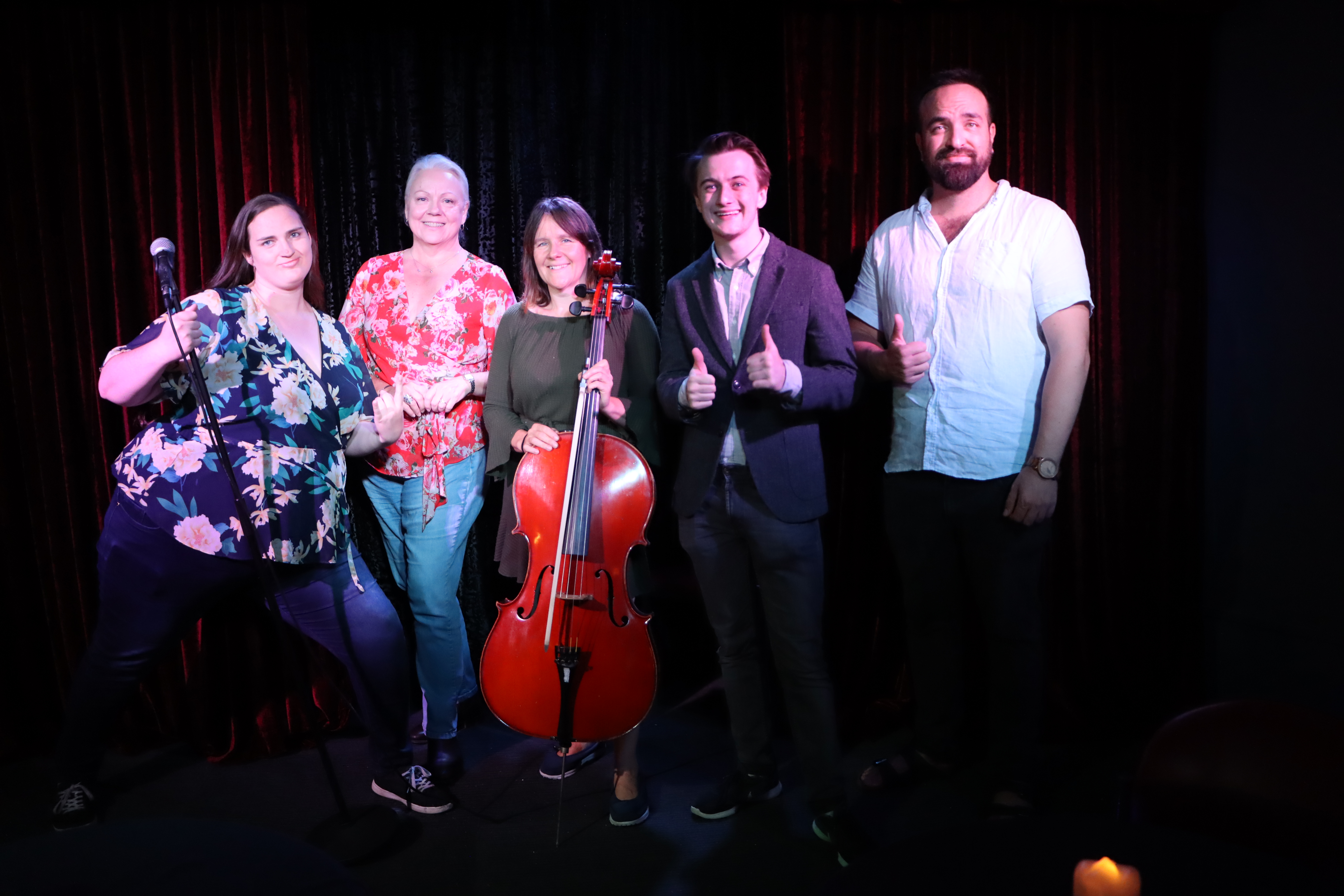
The newly-opened Newcastle Comedy Club will join venues across the city showcasing the talents of local performers as COVID-19 restrictions ease, encouraging more people to get out and about to experience the thrill of a live show and support the local industry.

Locally-Made-and-Played.JPG
Lord Mayor Nuatali Nelmes said City of Newcastle is committed to reactivating Newcastle and creating new opportunities for live performances through the Locally Made and Played funding program, as part of support for the COVID-19-disrupted performing arts industry.

“Few industries have been harder hit by the economic impact of the pandemic than the performing arts and hospitality sectors,” Cr Nelmes said.

“With the NSW Government easing COVID-19 restrictions, now is the perfect time to incentivise our city’s venues to host live performances as people start to return with a renewed confidence.

“Due to the current uncertainty for many venues relating to higher COVID-19 case numbers, we have extended the performance timeframe to include April, affording the venues greater flexibility to navigate these challenges.”

Following two successful funding rounds in 2021, the criteria for Locally Made and Played has been broadened to allow a wider variety of venues and performance types including live comedy and micro-theatre.

Venues were invited to apply for up to $1500 to host the live performances, with the funds used to support individual performers and artists at $300 per performance.

Chair of City of Newcastle’s Community and Culture Advisory Committee, Cr Carol Duncan said Newcastle’s embattled live music and cultural scene is set to rebound with the support of the Locally Made and Played grants.

“Live performances funded by the Locally Made and Played grant will apply to performances that take place between 2 March and 30 April 2022, to coincide with the easing of restrictions,” Cr Duncan said.

“The funding will not only provide a boost to local venues financially hit as a result of COVID-19 but will also help support our home-grown talent right here in Newcastle.”

Newcastle Comedy Club part-owner Allan Brady said the New York-style venue is the first dedicated comedy club to open its doors in Newcastle and comes at a critical time.

“Novocastrians are craving a good time at the moment and live comedy is the perfect antidote to beating the COVID-19 blues,” Mr Brady said.

“Many local comics and performing artists are relying on venues like ours to remain open to invite them to perform, so the funding comes at a critical time for our industry and performers livelihoods.”

The Locally Made and Played grant program forms part of City of Newcastle’s COVID-19 Community Economic Resilience Program.

Visit City of Newcastle’s What’s ON page for more event information.

Data shows phonics reaping reading rewards

Making phonics compulsory in NSW public schools is already having a positive impact on student results, according to NSW Department of Education data.
 
Minister for Education and Early Childhood Learning, Sarah Mitchell, said analysis of the Phonics Screening check data has revealed that 57 per cent of Year 1 students were meeting or exceeding the expected target, up from 43 per cent when the check was trialled in 2020.
 
“These results are extremely pleasing and show the importance of the government’s reforms requiring phonics to be used to teach all students to read as part of our new English syllabus for Kindergarten to Year 2.
 
“The percentage of Aboriginal students that met or exceeded the expected achievement score increased from 18.4 per cent in 2020 to 29 per cent in 2021.”
 
“We know that early proficiency in phonics is the pre-curser to achievement in reading and writing.
 
“The best results in reading for our students occur when phonics is explicitly and systematically taught in Year 1 alongside other components of reading instruction.
 
“Therefore, phonics is a compulsory component of the teaching of reading under the K-10 English syllabus.”
 
Following a successful trial in 2020, the Year 1 Phonics Screening Check was made mandatory for public school students in 2021.
 
In 2021 the check was completed by more than 66,000 Year 1 students across 1,615 schools.
 
The Year 1 Phonics Screening Check includes 40 words, which consists of 20 real words and 20 pseudo words. The words are set each year to provide opportunities for students to demonstrate their ability to use their phonic knowledge to read a word.
 
The inclusion of pseudo words ensures that students will need to use their knowledge of letter/sound correspondences to blend through the sounds in the word to read it correctly.
 
The check is completed in Term 3 each year, with results immediately available for teachers.

Supporting people impacted by flood disaster

The Department of Communities and Justice alongside partner agencies has registered more than 1,300 people impacted by the major floods that have engulfed parts of the Lismore region.
 
Minister for Families, Communities and Disability Services Natasha Maclaren-Jones said the NSW Government was committed to ensuring people affected by the flood disaster would be supported.
 
“We are doing everything we can to help those who are stranded and isolated due to this devastating event,” Mrs Maclaren-Jones said.
 
“In partnership with Resilience NSW and non-government agencies, DCJ is working to provide emergency accommodation to people affected by floods in northern NSW.
 
“DCJ staff are managing and assisting agencies with evacuation centres at 10 locations across the region.
 
“DCJ has existing partnerships with local accommodation and support providers in this region and is working closely with these services to meet demand.
 
“It’s heartbreaking to see so many people being evacuated from their homes due to such severe flooding, but I want to reassure everyone that we will continue to support flood victims and work with our government and non-government partners to respond to local needs as they evolve.”
 
DCJ Disaster Welfare provides support to people who have been affected by floods, storms, bushfires and other emergencies.
 
People needing assistance due to the flood disaster should contact the State Emergency Service on 132 500 and for emergency accommodation they can contact the Link2Home hotline 24 hours a day on 1800 152 152.