Australian Greens Education spokesperson Senator Mehreen Faruqi has criticised the exclusion of international students and other temporary visa holders from the Commonwealth’s Disaster Recovery Payment.
Senator Faruqi said:
“It’s cruel and unacceptable to use a person’s visa status to exclude them from vital financial support in the wake of disaster.
“Floods have devastated communities and people living in NSW and Queensland. Everyone affected should be financially supported regardless of their visa status.
“International students’ ineligibility for Disaster Recovery Payments smacks of Covid-era discrimination which harmed so many.
“During the pandemic lockdowns we saw international students neglected, abandoned and mistreated at every turn – excluded from critical schemes like JobSeeker and JobKeeper. Now, they are being locked out of disaster payments.
“The government has not learned its lesson and continues to treat international students as little more than economic opportunities to be exploited.
“International students must be supported and treated as full and valued members of our community.”
Minister for Sport Richard Colbeck has congratulated all 14 winners of the 2021 Sport Australia Media Awards.
Now in their 20th year, the awards recognise excellence in sports journalism, broadcasting and production and are the only dedicated sports media awards in Australia.
“Whether it’s covering the local competition or reporting from the world’s biggest sporting events, the media play a crucial role in telling stories and inspiring all Australians to get active,” Minister Colbeck said.
“As we continue to recover from the impacts of the pandemic, I am delighted to be able to reflect and celebrate the hard work and wonderful sporting stories that have been told in the past 12 months.”
“The finalists and winners again highlighted some of the key and important issues and moments in sport of the past year.”
Mr Colbeck paid tribute to Mike Sheahan who was awarded the prestigious Lifetime Achievement Award for Sports Journalism.
Mr Sheahan was recognised for his lengthy and influential career as a sports journalist and writer having dedicated 40 years of his career to covering AFL.
He spent 20 years as chief football writer for The Herald Suns and won dozens of major Australian football media awards across all categories – news breaking, features and columns as well as writing two books.
“Mike has had an incredible media career spanning decades and is a worthy recipient of this year’s Lifetime Achievement award,” Minister Colbeck said.
“On top of his written work, he became a regular radio and television personality including 11-years hosting his own talk show Open Mike on Fox Footy, with his contribution to the game duly recognised having been made a life member of the AFL and having the media centre at AFL House in Melbourne named after him.”
Minister Colbeck also extended his congratulations to the journalists, producers, photographers and podcasters recognised as finalists across the 12 award categories.
“The incredible performances at the Tokyo Olympics and Paralympics topped what was a huge year in Australian sport in 2021.
“The work done in elevating issues of national interest and telling personal stories encourages Australians of all ages, backgrounds and abilities to get involved in sport.”
Mr Colbeck said the Australian Government is committed to supporting the sector as it recovers from COVID-19 and as momentum builds ahead of the Brisbane 2032 Olympic and Paralympic Games.
“Sport has the power to drive positive social change and help all Australians lead happier, healthier lives. Thank you to everyone who entered this year’s Sport Australia Media Awards and for your continued support of Australian sport.”
The Federal Coalition Government has invested more than $32,000 through the Deafness Forum of Australia to promote World Hearing Day today, to raise awareness about preventing hearing loss and promoting heathy ear care across Australia.
Minister for Regional Health, Dr David Gillespie many common causes of hearing loss can be prevented, including hearing loss caused by exposure to loud sounds.
“As a doctor practising in regional Australia for three decades I saw the burden of preventable hearing loss in the community—for the individual and their families. It’s life changing and there ways everyone can protect their hearing,” Dr Gillespie said.
“About 3.6 million people—or one in six Australians experience some form of hearing impairment and for a third of these people, their hearing loss could have been prevented.”
Dr Gillespie said this year’s theme – To hear for life, listen with care – encouraged people to think about how they can listen safely in all situations, every day.
Dr Gillespie said the Federal Coalition Government is committed to raising awareness about hearing health and ensuring people have the information they need to avoid preventable hearing loss.
“To help achieve this, the Government has provided $32,500 to Deafness Forum of Australia to promote World Hearing Day 2022 across mainstream and social media channels nationally.
“This funding will get the message out to help people avoid preventable hearing loss and to take appropriate actions to help save their hearing.”
Supporting World Hearing Day and raising awareness about hearing health was identified as a key action under the Liberal and Nationals Government’s Roadmap for Hearing Health.
This funding is in addition to the $21.2 million committed to implementing this Roadmap announced in the 2020 Budget.
Also coinciding with Hearing Awareness Week, is the online Rural and Regional Hearing Healthcare Workforce Summit on 3 and 4 March, which Dr Gillespie addressed today.
The summit will explore current and projected hearing workforce issues to inform future service planning and delivery in rural, regional and remote Australia.
The Federal Government funded the summit in support of the Roadmap for Hearing Health.
An Albanese Labor Government will cut power bills for households, and reduce emissions, by installing an initial five community batteries across Perth.
More than one in three Western Australian households have installed rooftop solar panels.
But very few have a battery, because it’s still too expensive. This means families aren’t getting the full benefits of rooftop solar, and it’s putting pressure on our electricity grid.
That’s why Labor will install an initial five community batteries across Perth: in Coogee, Dianella, Kinross, Port Kennedy and Stratton.
This commitment will allow local households to feed solar power into the shared battery during the day and draw from it at night – cutting electricity bills and emissions, and reducing pressure on the grid.
Local households who might be unable to install solar, like renters and people living in apartments, will also be able to draw from excess energy stored in the battery.
Up to one in two households in these areas have rooftop solar. The areas have been selected in consultation with the WA Government.
All WA communities will be able to apply for a battery under Labor’s Power to the People plan, which will invest $200 million to install 400 community batteries across the country.
In WA, Power to the People will build on the trials already led by Western Power and Synergy.
This is part of Labor’s Powering Australia policy to cut power bills, reduce emissions and create jobs by boosting renewable energy.
In contrast, after nine years of energy policy chaos under the Liberals, Scott Morrison is focussed on photo-ops and marketing tricks – and attacking Western Australians.
Communities across WA deserve better – an Albanese Labor Government that will cut power bills and work for a better future for all Australians.
The Morrison Government is improving the participant experience for people on the National Disability Insurance Scheme, with easier access to assistive technology.
Minister for the NDIS Senator the Hon Linda Reynolds CSC has announced an increase in the upper limit for automatic approval of assistive technology (AT) purchases. This limit has now increased from $5,000 to $15,000.
“I have listened closely to participants and their representatives, and what they have told me is they want a Scheme which is more person focused, with less red tape,” Minister Reynolds said.
“This is another example of the Morrison Government’s commitment to improving the NDIS and improving the participant’s experience.”
The changes will also assist many participants who currently have quotable AT under $15,000 in their plans. The NDIA will automatically approve the funding for these items so participants can access this AT faster.
This new measure is still subject to the necessary checks and balances to maintain the integrity of the scheme.
The most commonly purchased AT within the $15,000 price range includes manual wheelchairs, specialty beds and bathroom chairs/stools.
The NDIA has summarised these changes in an updated guideline and new participant factsheet, setting out what evidence participants need to provide and what to do before buying AT.
The NDIA has also created a new guideline and template on vehicle modifications and driving supports, which includes simpler and clearer information. These will help participants work with assessors to provide evidence for vehicle modification support requests over $15,000.
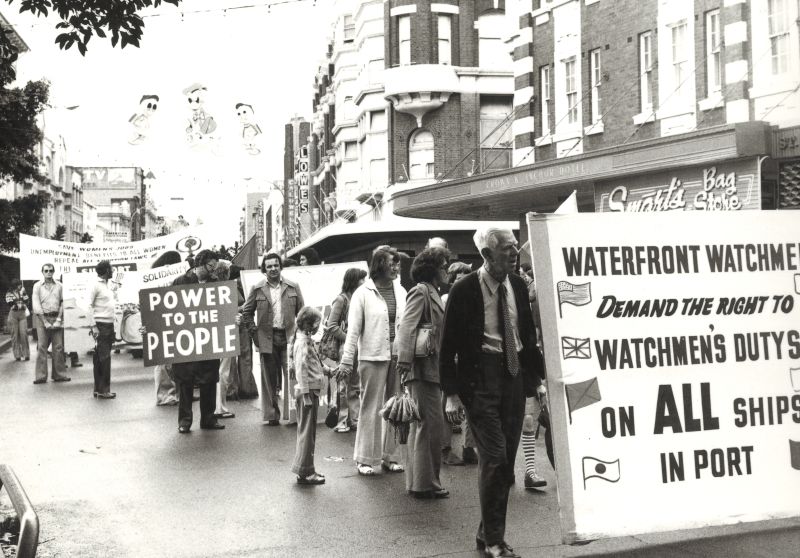
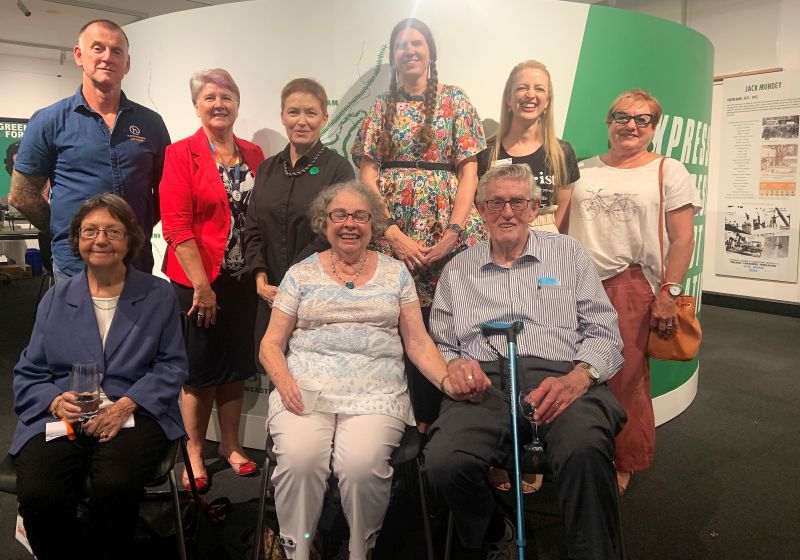
A union-backed community protest movement that helped stop Blackbutt Reserve being cut in two by a new highway in the 1970s is being celebrated in an exhibition at Newcastle Library.
Power to the People, 50+ Years of Union and Community Green Ban Action celebrates the 50th anniversary of the “green ban” movement, which effectively saw union members refuse to work on construction projects that were deemed environmentally or socially undesirable.
Green bans were conceived by Builders Labourers’ Federation (BLF) NSW secretary Jack Mundey and were instigated at the request of, and in support of, residents’ groups.
Newcastle Lord Mayor Nuatali Nelmes said the exhibition showcases an important time in history through the story of Jack Mundey and the green ban movement, and local Newcastle strike action to save Blackbutt Reserve and protect historic houses in the East End.
“Historical green bans demonstrate the value and impact that Newcastle’s communities can have when their passion and drive to protect our city’s rich natural and build environment is mobilised,” Cr Nelmes said.
“Power to the People50+ years of Union and Community Green Ban Action explores green bans to save Blackbutt Reserve and Newcastle’s East End, both initiated by the BLF, Newcastle Trades Hall Council and over 25 community groups in the 1970s, which protected two extremely important features of Newcastle.
“Newcastle green bans were born in parallel with the Sydney bans from 1971 onwards, and the legacy of the movement cannot be underestimated as it led a shift towards ensuring heritage and conservation were central to planning and policy.”
While many of the green bans in the early 1970s were focussed on Sydney, the protest movement also made its way to Newcastle through the Newcastle Trades Hall Council.
In one of the most significant instances locally, a green ban was enforced to help community groups stop a NSW Government plan to bulldoze more than 15 acres of Blackbutt Reserve for a 1.2 km section of Highway 23.
The road, which was being built to link the Sydney-Newcastle Expressway near Windale to the Pacific Highway at Sandgate, would have also effectively separated an additional 40 hectares of land from the main Blackbutt Reserve site.
Power to the People, 50+ years of Union and Community Green Ban Action has been curated by Newcastle Libraries in partnership with Cross Arts Projects, University of Newcastle and Newcastle Trades Hall Council.
The exhibition draws on archival material preserved in collections held by Newcastle Libraries, the University of Newcastle, the Hunter Living Histories, and Newcastle Trades Hall and presents an eclectic mix of stories that depict community uprising over unequal planning, Aboriginal and Torres Strait Island heritage, social housing justice, heritage buildings, land rights and conservation.
It will be on display at Newcastle Libraries’ Lovett Gallery in Laman Street, Newcastle until Thursday, 14 April.
The Bureau of Meteorology has advised that a low offshore from the Mid North Coast continues to move towards the central New South Wales coast today. This system is currently weakening and will continue to weaken into the evening. A severe weather warning remains in place for gale force winds, heavy rainfall, damaging surf and an abnormally high tide for the NSW Coast, which may pose risks to Newcastle’s coastline.
City of Newcastle has implemented safety precautions in preparation of the east coast low forecast for this week.
Surf and swell conditions are expected to be hazardous for swimming, surfing and rock fishing at all beaches and at Newcastle and Merewether Ocean Baths during this period.
City of Newcastle has prepared and is monitoring its coastal facilities and assets along the Newcastle coastline including areas in Stockton which may be further impacted by coastal erosion. Please be aware that coastal erosion can change beach conditions dramatically and quickly.
City of Newcastle asks the community to follow safety warnings, to abide by all road closures and to drive safely in the forecast hazardous weather conditions. The high tide and large swell have forced the closure of a number of beach accessways at Stockton Beach. A current list of closures can be viewed here.
To stay up to date on weather warnings visit the Bureau of Meteorology www.bom.gov.au and for information about any emergencies visit the State Emergency Service at www.ses.nsw.gov.au or phone 13 25 00.
The NSW Government is set to boost the state’s commitment to sovereign defence industry capabilities with the launch of a new $1.23 million Regional Defence Networks Program aimed at making it easier for local businesses to expand and supply to the defence and aerospace industry.
Minister for Enterprise, Investment and Trade Stuart Ayres said that the three-year program will focus on driving business growth across four key regions: Western Sydney, Shoalhaven/Illawarra, Riverina-Murray and the Hunter.
“We know that procurement requirements and entering the defence market requires a deep understanding of the industry, so we want to do all we can to help existing suppliers grow, and support new players to enter the sector,” Mr Ayres said.
“This program is about helping businesses understand the defence supply chain and identify that their offering has value and need. We want to turn local businesses from being ‘Defence Interested/Able’ to ‘Defence Ready’.”
Following a competitive procurement process, Investment NSW, working with Western Parkland City Authority and Regional NSW, has appointed four partner agencies to deliver the program:
Ai Group for the Western Sydney region
Shoalhaven City Council for the Shoalhaven/Illawarra region
Hunter Defence Cooperative for the Hunter region
NSW Business Chamber for the Riverina-Murray region.
“These organisations have a deep understanding of the defence ecosystem in their respective regions, which is critical to achieving the program’s objectives and in turn expand NSW’s defence and aerospace capabilities,” Mr Ayres said.
The littlest learners living in remote NSW now have better access to quality early childhood education with three new flexible learning programs in Ivanhoe, Louth and Pooncarie.
The flexible approach will allow bespoke delivery of programs for children in remote parts of the state, including engagement through School of the Air and partnerships with local schools.
Deputy Premier Paul Toole said the NSW Government is providing support for children and families in the most remote parts of NSW to enable children to have easy access to a quality education.
“This is a win for our little ones in the regions and I am excited that they will have the same opportunities as their city counterparts, despite living in some of the most remote parts of the state,” Mr Toole said.
“We know that this will have enormous benefits and long term impacts for the rest of their lives and help to build a strong foundation for lifelong learning.”
Located in the Far West of NSW with a population of around 200, the town of Ivanhoe is home to one of the state’s newest preschool programs, with additional communities expected to take up the opportunity in 2022.
Two days per week, preschoolers at Ivanhoe will participate in both face to face learning and online learning through School of the Air.
Minister for Education and Early Learning Sarah Mitchell said this was part of an ongoing commitment from the NSW Government to increase universal access to quality preschool in remote areas of the state.
“It is important every child in NSW has access to a quality early childhood education, no matter their background or location,” Ms Mitchell said.
“The flexible learning programs are part of the Rural and Remote Education Strategy we established to ensure that all children in rural and remote communities have access to quality early childhood education in the year before school.”
Principal of Ivanhoe Central School Greg Edwards said the concept of the preschool program on site has been embraced by the small town and said he hoped that it would attract more people to live there.
“Having access to preschool is essential for our kids and helps them to start their first year of school with a strong foundation,” Mr Edwards said.
“Parents have told me how excited they are for the program to begin and how easy it will make their lives having it located right here on school grounds.”
The program is now also available to children in Pooncarie and Louth who commenced learning at their new preschools this week.
Individuals and councils impacted by the flood events unfolding in NSW can now access the first tranche of NSW Government support through Service NSW.
Since February 22, 17 Local Government Areas have been declared as disaster areas.
The first round of immediate support is now available to assist as some areas start their recovery.
Premier Dominic Perrottet said Service NSW was ready to support anyone needing flood assistance.
“The scale of these floods is unprecedented and right now, we are still in emergency and response mode. This is the immediate assistance available that has been unlocked by the NSW Government as part of the disaster declarations,” Mr Perrottet said.
“This is the start of our support measures and there will be more announced in the coming days.”
Seventeen local government areas (LGAs) have been declared as disaster areas and are eligible for support through Disaster Recovery Funding Arrangements (DRFA).
These areas are: Armidale, Ballina, Bellingen, Byron, Clarence Valley, Coffs Harbour, Glen Innes Severn, Hornsby, Kempsey, Kyogle, Lismore, Nambucca, Port Macquarie/Hastings, Richmond, Tenterfield, The Hills and Tweed.
Minister for Customer Service and Digital Government Victor Dominello encouraged people in need of help to contact Service NSW straight away.
“The phone lines are staffed, and the information is available – please call 13 77 88 if you need help to find the support you require and assistance you can access,” Mr Dominello said.
Minister for Emergency Services and Resilience Steph Cooke said the danger is far from over for many communities across NSW.
“While we are still in the emergency phase, recovery is a process that must start as soon as it possibly can,” Ms Cooke said.
“The provision of this assistance will ensure we can get people and communities back on their feet as quickly as possible.”
A Disaster Relief Grant – to assist low income earners faced with disaster hardship who have suffered damage to the structure or contents of their home.
Personal and financial counselling.
Assistance finding temporary housing for those who have been forced from their homes.
Small business, primary production and not-for profit organisation support
Small business and primary producers concessional loans of up to $130,000
Concessional interest rate loans for not-for-profits
Freight subsidies of up to 50 per cent for primary producers
Councils
Assistance with operational costs and the restoration of essential public assets.
Additionally, residents may be eligible for the Commonwealth Government’s Disaster Recovery Payment, a one-off, non-means tests payment of $1,000 for adults and $400 for children who have been seriously injured, lost their homes or whose homes have been directly damaged, or the immediate family members of a person who has lost their life, as a direct result of the storms and floods. Disaster Recovery Allowances are also available through the Federal Government via Services Australia at servicesaustralia.gov.au
Service NSW customer care specialists are also able to connect flood-affected customers with services and support information, including:
For emergency help in floods and storms, call the NSW State Emergency Service on 132 500. In life threatening situations call triple zero (000) immediately.