
NSW powers ahead with biggest energy storage tender

NSW has opened the largest energy storage tender in NSW history, seeking new long-duration storage projects to boost electricity reliability and keep the lights on in NSW.

These projects will help ensure a steady and reliable supply of energy around the clock. They will play a significant role in the NSW Government’s transition to renewable energy, which will deliver reliable and affordable power to households and businesses at the same time as driving down emissions to meet our net zero targets.

Long-duration storage projects can bid for financial support under the new NSW Electricity Infrastructure Roadmap Tender 5 which is now open. This tender offers support for up to 1 gigawatt of projects, which can each release energy into the NSW grid for at least 8 hours.

The energy stored within 1 gigawatt of 8-hour long-duration storage is equivalent to the daily energy consumption of around 505,000 households.

This tender will take NSW closer to its target of 2 gigawatts of new long-duration storage by 2030.

Long-duration storage serves an important role as it allows renewable energy such as solar and wind to be stored and then released on demand when needed. Projects could include pumped hydro, batteries, compressed air storage and other technologies.

This is the fifth tender under the NSW Electricity Infrastructure Roadmap, and the third for long-duration storage. It is open to projects connecting to new planned infrastructure in Renewable Energy Zones with Access Schemes, or existing infrastructure state-wide.

Renewable Energy Zones are the power plants of the future. They group generation and storage projects in areas where there is plenty of renewable resources, and connect them to transition lines to pump the electricity around NSW.

The NSW Government is also announcing that a second Renewable Energy Zone is open for business. The new NSW Electricity Infrastructure Roadmap Tender 5 is accepting applications for the right to connect projects in the South West Renewable Energy Zone, around Hay.

Companies can apply for access rights, which allow them to progress their connection to the electricity grid.

Projects will compete for an initial 3.98 gigawatts of Access Rights, which unlocks the ability to generate enough electricity to power more than 1.9 million households.

They will be assessed on their contribution towards and engagement with communities, and those awarded rights will pay fees to fund community benefit and employment programs in the region.

The South West Renewable Energy Zone is expected to receive up to $2.8 billion in private investment by 2030. At its peak, it is expected to support more than 2,000 construction jobs in the region.

AEMO Services is conducting the long-duration storage and South West Access Rights tenders, as the state’s independent Consumer Trustee.

Projects can register on the AEMO Services website.

Minister for Climate Change and Energy Penny Sharpe said:

“Opening this tender for long duration storage projects and access to a second Renewable Energy Zone are milestones in the Electricity Infrastructure Roadmap.

“They will deliver projects that ensure NSW has enough renewable energy generation and storage when coal-fired power stations retire. They also give certainty to investors and communities.

“Long-duration storage is a key part of our future energy system, ensuring we have power when we need it.

“The opening of the second access rights process will ensure the right combination of projects can connect to the grid in a way that delivers for NSW electricity consumers and host communities.

“It shows the NSW Government is delivering the transition to a renewable energy system that will allow households and businesses to access affordable, reliable and clean energy to bring down bills and greenhouse gas emissions.”
Development assessment timeframes for social and affordable housing to be halved under Labor

The NSW Government has changed the way affordable and social housing development assessments are processed delivering faster approvals and more homes for those who need it most.

Under a new state-led rezoning pathway, the Government will accelerate rezoning proposals from the State’s housing agencies including Homes NSW (NSW Land and Housing Corporation and Aboriginal Housing Office) and Landcom.

A newly dedicated team within the Department of Planning, Housing and Infrastructure (DPHI) will manage the applications from concept review to lodgement, exhibition and final assessment.

As wait-times for social and affordable housing grow, greater responsibility is placed on councils and planners to move projects through the planning system. In the meantime, people are doing it tough. Under this new pathway these timeframes are set to halved.

Establishing an accelerated pathway for rezoning for the Government’s housing delivery agencies allows councils to focus on the assessment of local development applications.

These are the latest changes the Government is making to streamline the planning system, all aimed at expediting the delivery of more homes to the people of NSW.

This Government has already taken significant steps to improve and expand social and affordable housing services by introducing:

  • A new bonus Floor Space Ratio (FSR) on new developments of up to 30 per cent and a height bonus of up to 30 per cent where a proposal includes a minimum of 15 per cent of the gross floor area (GFA) as affordable housing.
  • Changes to self-assessment powers for certain social, affordable and public housing providers to ensure more homes can be built faster.
  • A requirement for affordable housing to be delivered at all TOD locations.

For more information on the pathway visit here.

Minister for Planning and Public Spaces Paul Scully said:

“This newly created team will prioritise social and affordable housing by streamlining the application process to help deliver critical housing for people in need for years to come.

“The former Government left us with a planning system that made the delivery of social and affordable housing, prolonged and complicated, these changes are just the latest step in rectifying this.

“All applications using this pathway will still need to meet eligibility criteria including their alignment to the State and Commonwealth housing commitments.”

Minister for Housing Rose Jackson said:

“We have been clear – all options are on the table to address the housing crisis. A key area for reform is our planning rules. This government is dedicated to exploring new ways to increase housing supply and enhance existing systems.

“One of those improvements is the new social and affordable housing planning pathway which will help our agencies get the job done faster.

“This is another important step in rebuilding the housing system in NSW. We need to expedite the delivery of more social and affordable homes and not have applications held up in unwieldly and complicated planning rules that don’t deliver homes for people in need.”

Have your say on NSW heritage: Nominate a Blue Plaque

Nominations are now open for a fresh round of Blue Plaques to celebrate the people, groups and events which have contributed to the rich heritage of NSW.

The Minns Labor Government is inviting everyone from individuals and families to schools and community organisations to submit a nomination.

Whether it’s an unsung hero, group or landmark event, now is the time to put them forward for recognition in this popular Heritage NSW program. More than a dozen recipients will be chosen from these submissions.

The Minns Labor Government is committed to protecting, preserving and modernising NSW heritage, and ensuring it reflects our diverse community.

This round of blue plaques will celebrate the diversity of our community, with nominations falling into themes including Aboriginal and Torres Strait Islander, environment and sustainability, sport, social justice and advocacy, war-time stories, the elderly, disability, LGBTQIA+ and more.

Nominating for a blue plaque is easy and can be done online. To be eligible, they must:

  • relate to a person, people or event that has made a lasting impact on a community in NSW or NSW as a whole
  • be appropriate, sensitive and engaging to a wide audience
  • relate to a person or people who passed away more than 20 years ago, or an event which occurred more than 20 years ago
  • have a location in NSW for the blue plaque that is publicly accessible and has a direct connection to the person, people, or event.

Heritage NSW and independent historians will evaluate nominations based on the eligibility criteria.

For the first time, the NSW Government is announcing a People’s Choice Blue Plaque. Heritage NSW has shortlisted favourite nominations from past rounds and launched a public vote to decide the inaugural People’s Choice Blue Plaque.

The nominations people can vote for are:

  • Abdul Wade (Abdul Wahid Khan) – an Afghan immigrant who pioneered camel transportation in Australia’s outback.
  • Coralia Stavropoulos (Sister Kaliniki) – Australia’s first ordained Greek Orthodox nun who dedicated her life to supporting Greek immigrants in Australia.
  • Malcolm Cole – Dancer, teacher, and LGBTQIA+ activist who championed social change and Indigenous rights.
  • Marie Beuzville Byles – The first practising female solicitor in NSW who paved the way for women in law.
  • Mother John Baptist De Lacy – A pioneering Irish nun who laid the foundation for healthcare and health education in colonial Sydney.
  • The Resch brothers – German migrants who brewed their way from outback NSW to creating beverage empires.
  • Ruby Payne-Scott – A trailblazer in radio astronomy and advocate for women in science.
  • The creation of Weet-Bix – The Australian breakfast staple.

To date, close to 50 blue plaques have been announced in cities and towns right across NSW, to honour noteworthy individuals and moments that have contributed to our rich cultural heritage.

They include activists, authors, artists, architects, pioneers, philanthropists, groups including Bondi Surf Bathers Life Saving Club and events such as the Soldiers’ Riots.

Nominate or cast a vote.

Nominations close Sunday 30 June, 2024.

Minister for Heritage Penny Sharpe:

“Everyone is invited to get involved in preserving and celebrating the diverse history of NSW, ensuring the stories of those who have shaped our state are honoured and remembered.

“I want everyone to share interesting, quirky or lesser-known stories of the people, groups and events which have made NSW what it is today.

“The Minns Labor Government values the diversity of our community and history, and we look forward to it being recognised in this round of Blue Plaques.

“The People’s Choice category is an exciting way for everyone to get involved, even if they don’t have a specific nomination in mind.”

Hundreds more homes for NSW residents

More than 700 people will have a safe and affordable home to live in with the restoration of 290 previously uninhabitable, vacant homes by the New South Wales Government, delivered with $25 million of Albanese Labor Government funding from the Social Housing Accelerator.

To date, the New South Wales Government has restored 277 homes, including 165 cottages, 30 townhouses, 7 villas and 75 units, with this Commonwealth funding. The 13 remaining homes will be restored by the end of June.

The $2 billion Social Housing Accelerator is one part of the Albanese Labor Government’s $32 billion Homes for Australia plan. 

The Albanese Labor Government is working with states and territories like New South Wales to help meet our ambitious national target of building 1.2 million homes by the end of the decade. 

Funding from the Social Housing Accelerator has been vital to the Albanese Labor Government and the Minns Labor Government’s shared goal to make more safe and secure homes available to New South Wales residents.

The Social Housing Accelerator has already provided $610 million to New South Wales to deliver around 1,500 homes. 

With over 58,000 people on the social housing waitlist in New South Wales, the New South Wales Government expedited refurbishment works last year to help alleviate housing pressure, particularly in areas with high rates of homelessness like Sydney’s Inner West. 

Prime Minister Anthony Albanese: 

“I grew up in a social housing flat in Sydney. I understand the life changing power that a secure roof over your head can provide.

“That is why my Government is committed to delivering more homes, more quickly, in more parts of Australia.

“We have a lot of work to do to achieve our goal but we are committed to getting it done and today is another step forward.

“Our $2 billion Social Housing Accelerator will deliver around 4,000 new social homes across Australia.”

Minister for Housing and Homelessness Julie Collins: 

“Our Government’s $2 billion Social Housing Accelerator has already helped to give more New South Wales residents a safe and affordable place to call home. 

“The New South Wales Government’s quick delivery of this funding is exactly why we committed to the Social Housing Accelerator.  
   
“Through our Homes for Australia plan, the Albanese Labor Government has committed $32 billion in new housing initiatives to deliver more homes across the country.  
   
“Our ambitious housing reform agenda is working across the board – with more help for homebuyers, more help for renters and more help for Australians needing a safe place for the night.”   

NSW Minister for Housing and Homelessness Rose Jackson: 

“When this Government committed to stopping the sale of public housing, we meant it. That meant finding new ways to fund social housing repairs and maintenance.

“The social housing waitlist is growing, not shrinking, so it never made sense for the Government to decrease its stock to fund repairs. The only way to get people of the social housing waitlist is by getting them into safe and secure homes.

“The former Government’s model of selling off public housing to fund repairs was not sustainable and we’re proud to be working with the Federal Government to get more homes fixed up and liveable for people in need, without reducing the limited stock to do so.”

Member for Reid Sally Sitou: 

“Our Government’s Social Housing Accelerator is helping to deliver a safe and affordable home to members of our local community.

“This is the best way we can address the housing challenges we face, which is a big priority for me as the local Federal Member.”

Overhauling surgeries to reduce overdue wait list

The NSW Government is revolutionising the way surgery is delivered to reduce the overdue wait list, by embracing short stay and same day surgeries.

The Same day and Short stay Joint Replacement Program allows patients to return home the day after their surgery when clinically appropriate.

This program provides an alternative care pathway for orthopaedic surgery patients.

It is based on research which shows that with the right pre and post-operative care, patients can be supported to recover at home, without the need for lengthy hospital stays.

All patients involved in the pilot receive comprehensive prehabilitation or ‘pre-hab’, which provides support prior to surgery, as well as post-operative in-home care.

Eligibility for this type of surgery is determined via a thorough screening process completed by a multidisciplinary team.        

It’s hoped the pilot will result in a better patient experience and faster recovery times, whilst also boosting capacity in our busy hospitals.

The pilot was one of the key programs overseen by the Surgical Care Taskforce established in the early days of the NSW Labor Government to take pressure off our hospitals.

Joan Reid underwent same day procedures for her knee surgeries.

She had her first surgery on 23rd August 2023 (Left Total Knee Replacement) and her second surgery on 20th February 2024 (Right Total Knee Replacement) at the Sutherland Hospital.

On both occasions Joan was able to return and recover from the comfort of her home that very same day.

She continued to receive support from clinicians and health workers as an outpatient, instead of spending weeks in the hospital.

While this joint surgery pilot program is promising, we are already starting to see promising increases in short stay surgeries for other procedures.

Between May and October last year, the proportion of sinus surgeries conducted as same day increased from 41% to 46%, to 363.

Meanwhile, same day septoplasties increased from 52% to 62%, to 669, and same day tonsillectomies increased from 23% to 36%, to 623.

This is just one of a range of measures the NSW Government has implemented to improve access to quality care and reduce wait times, including through:

  • boosting staff and infrastructure
  • creating more pathways to care outside our busy hospitals via HealthDirect and urgent care services
  • reducing overdue surgeries by safely increasing short stay surgeries
  • empowering pharmacies to prescribe low complex medications, relieving pressure on our GPs.

Minister for Health Ryan Park:

“People waiting for surgeries longer than clinically recommended are often waiting in pain and discomfort.

“We want to reduce overdue surgeries so that people can receive the lifechanging treatment they need and enjoy life.

“We want patients to be able to safely recover from the comfort of home, where it is appropriate and safe to do so.

“By doing this, we are boosting the capacity in our busy hospitals, improving patient flow and reducing wait times for others.”

Joan Reid:

“You know, when they first asked me about day surgery, obviously I went oh gee, I don’t know. How do you go with that? And it just turned out really well.          

“Being in my own home for recovery was great because I’ve got everything that’s familiar with me my own bed. I know the layout of everything here.

“Rather than sitting in a hospital bed and trying to get round a ward. It was more comfortable, I was more relaxed. Therefore I felt the recovery would be quicker. And it was and being in my own home just made it so much more easier and comfortable.

“My recovery was really well smooth and I had the support of the hospital staff and the doctors and of course the physiotherapy even though I did it as an outpatient.”

$201.9 million infrastructure boost to support 24,000 new regional homes

The NSW Government and councils will together invest a further $201.9 million to fast-track infrastructure in growing regional communities, supporting the delivery of tens of thousands of new homes from Tweed Heads to Wagga Wagga.

As regional NSW plans for and delivers more homes to its growing communities, the NSW Government and councils are supporting that growth by funding and upgrading critical local services and infrastructure.

The funds will accelerate 9 key projects, including wastewater and road upgrades to unlock development and bring more high-quality neighbourhoods to life faster.

Of the total investment made, $137.19 million has been allocated through the NSW Government’s Accelerated Infrastructure Fund, with co-contributions of $64.7 million from 5 regional councils.

Unless we support the delivery of more homes, we will continue to lock young people out of housing or lose them to other states.

Successful projects include new sports fields in the Tweed Shire and road upgrades for Port Macquarie-Hastings to support thousands of new residents.

Funding has been allocated to the following projects:

  • Bathurst – Laffing Waters critical development infrastructure, supporting 2270 new homes.
  • Port Macquarie-Hastings – Kew Sewerage Treatment Plant upgrade and Beechwood Road/ Yippin Creek bridge upgrade, supporting 1600 new homes.
  • Shoalhaven – Culburra wastewater treatment plant upgrades, supporting 1012 new homes.
  • Tweed Shire – Tweed Coast Road upgrade and Depot Road sports fields, supporting 5516 new homes.
  • Wagga Wagga – Northern Growth Area sewer upgrades and Plumpton Road North and South Road upgrades, supporting 14,500 new homes.

More information is available on the Accelerated Infrastructure Fund website.

Minister for Planning and Public Spaces Paul Scully said:

“These areas are growing fast and this funding will mean people will have functioning and well-serviced new homes to live in.

“A new home is no good if you cannot flush the toilet or drive down the road to the park.

“Accelerated delivery of infrastructure like sewage treatment plants and adequate roads will allow more new homes to be approved sooner in these growing regional areas.

“Housing affordability and availability is the biggest single pressure facing the people of NSW, and that’s why we are focusing investment in these key infrastructure projects to clear the way for new and thriving communities to take shape.”

NSW unveils plan to support wine exporters

The NSW Government has unveiled a plan to boost wine exports and create new jobs and opportunities for people in NSW.  

From July Investment NSW will kick off a targeted 12 month program of initiatives to bring international buyers to NSW and make it easier for local wine makers to take their products to markets around the world.

The program will be available to producers of NSW’s $420 million wine exports looking to re-enter the newly reopened Chinese market but will also support exporters in key emerging markets including India, Japan and Vietnam. 

The NSW Government is focusing its efforts on the markets with the highest value and highest potential for growth.

The 2024/25 export program includes:

  • A NSW Wine Promotional Roadshow in China reintroducing the NSW wine industry to importers and distributors across Shanghai and Shenzhen
  • Going Global Export Programs focused on beverages to China, UK, Korea, Japan and Vietnam
  • Export Capability Building workshops in the Central West, Hunter & New England and Riverina regions
  • Cellar Door to China in One Click – ‘How to‘ program
  • China and South East Asia Inbound Buyer Missions to NSW
  • Supporting export ready NSW wineries through trade missions that culminate in ProWine Mumbai 2024 and Expo 2025 Osaka
  • An e-commerce campaign to support existing distributors of NSW wine in the Japan market

The value of goods and services exported from NSW to the world topped $150 billion, contributing 19 per cent to NSW’s $777 billion Gross State Product last year.

With renewed focus and a better targeted trade program, NSW is on track to reach trade worth more than $200 billion by 2031.

To find out more about exporting from NSW and the support available, visit https://www.investment.nsw.gov.au/export/

Minister for Industry and Trade Anoulack Chanthivong said:

“Our state has the best products in the world, and global markets are willing to pay a premium that flows back to NSW in new and better jobs and higher incomes.

“We’re delivering smarter trade policy that focusses on key markets and sectors that can deliver for people in NSW.

“The state’s wine industry helps employ around 50,000 people and we believe they can do even more with help accessing expanding markets.

“I recently sat down with NSW Wine and wine makers in Orange to listen to their challenges and discuss how we can work together to grow exports.

“We know that visibility of export programs and initiatives over a longer term horizon is important for wineries to plan and target international markets.”

NSW Wine President Mark Bourne said:

“The NSW wine industry, particularly our exporters, have been facing significant challenges recently. The NSW Government and NSW Wine’s collaboration on a long-term export development support program will provide crucial assistance to the sector.

“The tailored approach of this program will allow wineries to select initiatives that address their specific business needs, optimising resources and maximising the potential for success in international markets.”

Batlow Fruit Company packhouse upgrade complete

Batlow Fruit Company – the largest grower and packer of apples in NSW – is now able to package more apples than ever at its Snowy Valleys location, thanks to the Australian and NSW Governments.

A project to modernise the company’s Batlow packhouse received more than $2.7 million in joint funding under the Bushfire Local Economic Recovery Fund, with an additional $274,000 from Batlow Fruit Company.

The upgrade was officially opened by the NSW Minister for Regional NSW, Tara Moriarty, while in Batlow today.

The grant is part of the Commonwealth and NSW government’s continuing commitment to focus of the economic and social development of regional and rural NSW.

The upgrades are now complete, with new grading and sizing technology bringing the facility in line with modern fruit processing standards and replacing technology which had been in place for over 40 years.

Batlow Fruit Company’s packing facility is one of the few in NSW able to meet the specifications of Australia’s major supermarkets.

Greater automation will ensure the packhouse can continue to process local apples and will provide Batlow Fruit Company with the flexibility needed to provide the highest quality product in response to changes in market demand.

On average Batlow Fruit Company distributes more than one million cartons of apples a year.       

Federal Minister for Emergency Management Murray Watt said:

“I spent time in Batlow after the Black Summer bushfires and spoke with growers who’d been impacted.

“Backing economic recovery after a disaster is critical, especially for regional communities like Batlow, which relies so much on the orchards that were extensively damaged and destroyed.

“It’s great to see that with support from the Australian and New South Wales Governments, the Batlow Fruit Company has modernised its operations to stay in business, supporting workers and the local community through the economic hardship off the back of the fires.”

Minister for Regional NSW Tara Moriarty said:

“Assisting companies like the Batlow Fruit Company is an important part of the Government’s support for regional and rural NSW

“By modernising its processing capabilities, the Batlow Fruit Company has ensured Batlow remains a financially competitive location for growers to get their apples packaged.

“This certainty will help it maintain its existing workforce and remain the largest employer for the Batlow region.

“Batlow Fruit Company has been growing and packaging apples out of Batlow for more than 100 years and these upgrades ensure they can continue to do so for many years to come.

Batlow Fruit Company Director Matt Palise said:

“The upgrade of the packing shed will improve our efficiency, reduce downtime and lower water and power usage.”

“The new equipment makes us a much more sustainable operation, ensuring we can continue to deliver high quality packaging services to Batlow growers.”

“The greater efficiency will help future proof our operations and make us better able to withstand disruptions to our supply chain caused by natural disasters. It will also provide better service for our growers, helping increase their returns.”

“I want to thank the Australian and New South Wales Governments for their support for this project.”

Federal Member for Eden-Monaro Kristy McBain said:

“The Dunns Road fire had a devastating impact on the Batlow community in 2020, with extensive damage to orchards and infrastructure taking a hit on our local fruit production.”

“That’s why it’s fantastic to see these upgraded and modern facilities at the Batlow Fruit Company in action – a real testament to the strong advocacy from the operators and Batlow community who made this happen.

“This new equipment will boost their operation, unlock new economic opportunities for Batlow, and secure the next 100 years of world-class produce from the Mighty Eden-Monaro.”

Dr Joe McGirr, State Member for Wagga Wagga said:

“This modernisation program comes at a time when Batlow is rebuilding from the disaster of the Black Summer fires and the success of the Batlow Fruit Company will be integral to driving that growth.

“The works will enhance the pipeline from Batlow’s orchards to consumers around the country and that’s great news, not only for the company and its employees but also growers and the wider community whose future depends on a strong and vibrant apple industry.

“I’d like to congratulate the company on driving this important project and thank the state and federal governments for their investment in the community’s future.”

Speers Point bottleneck election commitment on its way

Consultation is about to commence on the New South Wales Labor government’s election commitment to deliver a congestion busting $11 million upgrade of the Speers Point roundabout and road network.

As part of the government’s plans to build better communities across the state, the proposed upgrade will cut travel times while improving safety and reducing congestion in north west Lake Macquarie.

With this area expected to be home to 12,000 more residents and 6000 more jobs over the next 20 years, the government’s plan for the Speers Point roundabout upgrade will help ensure the growing number of families in this region spend less time in traffic and more time doing what matters to them.

A key focus of the proposed upgrade project will be changing traffic movements on Five Islands Road, restricting movements into and out of Creek Reserve Road as well as providing a dedicated left turn lane on TC Frith Avenue.

The upgrade will also seek to improve walking and cycling connections as well as public transport facilities, to help support more sustainable modes of transport.

Transport for NSW is also considering several additional improvements, including the potential installation of traffic lights at the intersection of TC Frith Avenue and Seventh Street, which would also involve extending the two lanes in each direction on TC Frith Avenue from The Esplanade to north of Seventh Street.

As the upgrade project’s public feedback period kicks off, Transport staff and contractors will be on site over the coming weeks to undertake traffic data collection and identify utilities, geotechnical and environmental constraints, that will help shape design of the final upgrade.

Community members can provide feedback on the initial proposed upgrade options between 30 May and 23 June.

After the feedback period ends, a report responding to the community views will be published and further detailed upgrade design work will be carried out after taking into account community feedback.

Timing for construction is not yet confirmed and would be dependent on planning approvals.

Minister for Regional Transport and Roads Jenny Aitchison said:

“After 12 years of neglect in the Hunter, the New South Wales government is delivering for local communities including like Lake Macquarie with this much-needed upgrade at Speers Point.

“With $3.5 billion worth of infrastructure projects underway across the Hunter, our communities will benefit from more reliable travel times and safety improvements while also meeting the future needs of our Hunter communities.”

Member for Lake Macquarie Greg Piper said:

“Congestion around Speers Point roundabout has been a source of frustration for the Lake Macquarie community for many years. During peak periods traffic can often bank back for several kilometres along TC Frith Avenue and this is happening seven days of the week.

“Progress on this long-awaited project will be a welcome relief to residents who lose valuable hours travelling on these roads every day. I encourage all residents to take this opportunity to review Transport for NSW’s plans and to provide feedback into the design options proposed.”

Labor’s spokesperson for Lake Macquarie Emily Suvaal MLC said:

“Everyone locally knows the Speers Point roundabout at the intersection of Five Islands Road, TC Frith Avenue and The Esplanade is a local bottleneck and it’s great to see work progressing to deliver this much needed upgrade.

“We took a commitment to the election to boost funding for this infamous roundabout, and it is wonderful to see this work commencing.

“Across the state the NSW Labor Government is investing in projects like this to set communities up for the future by reducing congestion and improving safety on our roads.”

Labor’s targets show biggest growth coming to the West

Western Sydney will be required to face faster population growth than other parts of Sydney under the Minns Labor Government’s new housing targets, according to analysis undertaken by the NSW Opposition.
 
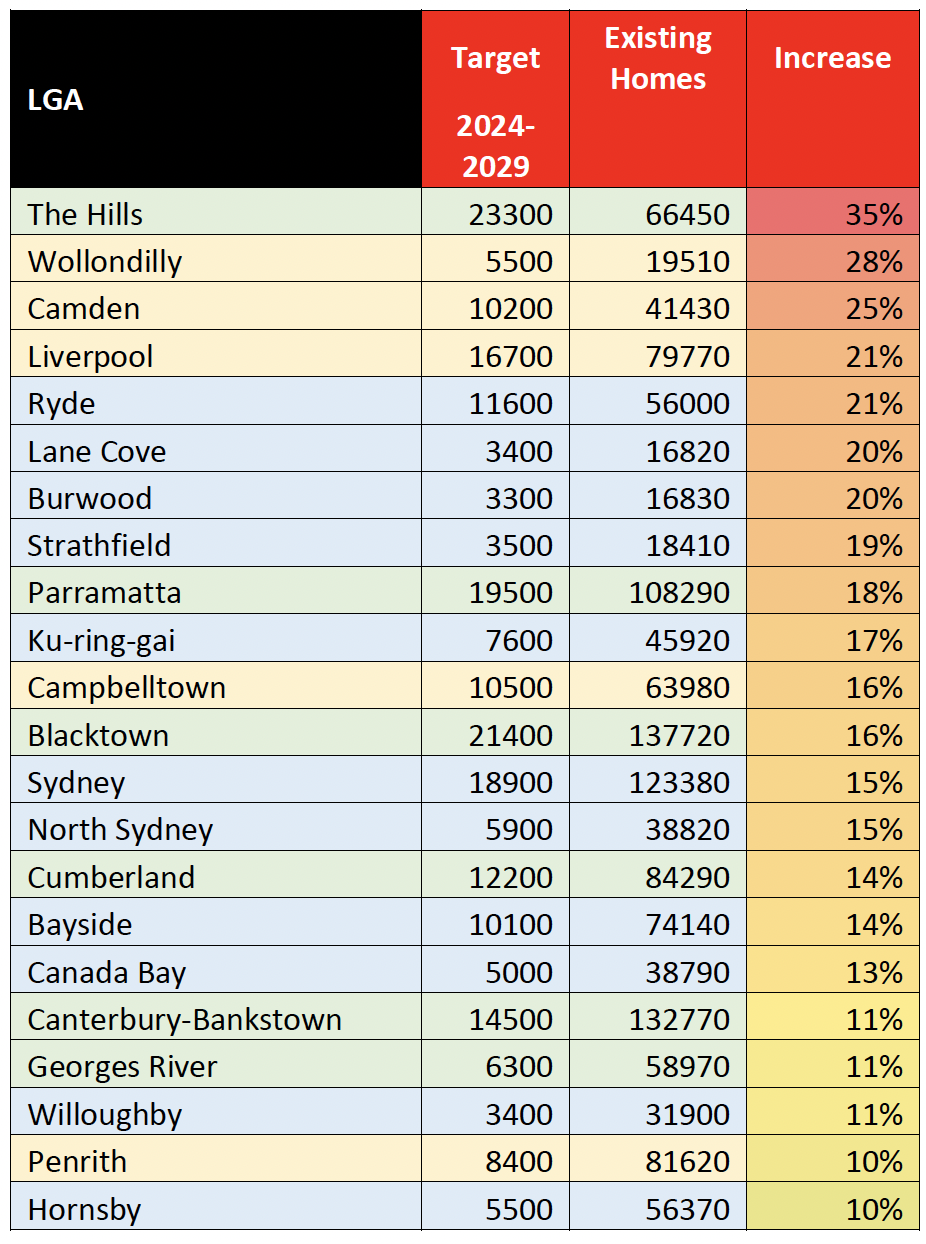
Visiting the Hills Shire, which will see a proposed 35% increase on existing dwellings in just five years, Leader of the Opposition Mark Speakman said that despite the Premier Chris Minns’ talk about re-balancing growth, the truth is that the Hills, Wollondilly, Camden, Liverpool and Ryde will be seeing the largest percentage increases in their populations under the Labor’s targets.
 
“Under the Labor Government’s housing targets, the Hills Shire is called upon to increase its number of dwellings by 35% from 66,450 to 89,750 dwellings in just five years,” Mr Speakman said.
 
“This is while the Hills has the most stretched schools in the State, with almost half over its cap by over 100 students each, including 11 primary schools and two high schools.”
 
Shadow Minister for Planning and Public Spaces Scott Farlow highlighted that the Hills Shire was not alone, with Wollondilly required to add 28% more homes in just five years, Camden 25% more homes, and Liverpool and Ryde 21% each.
 
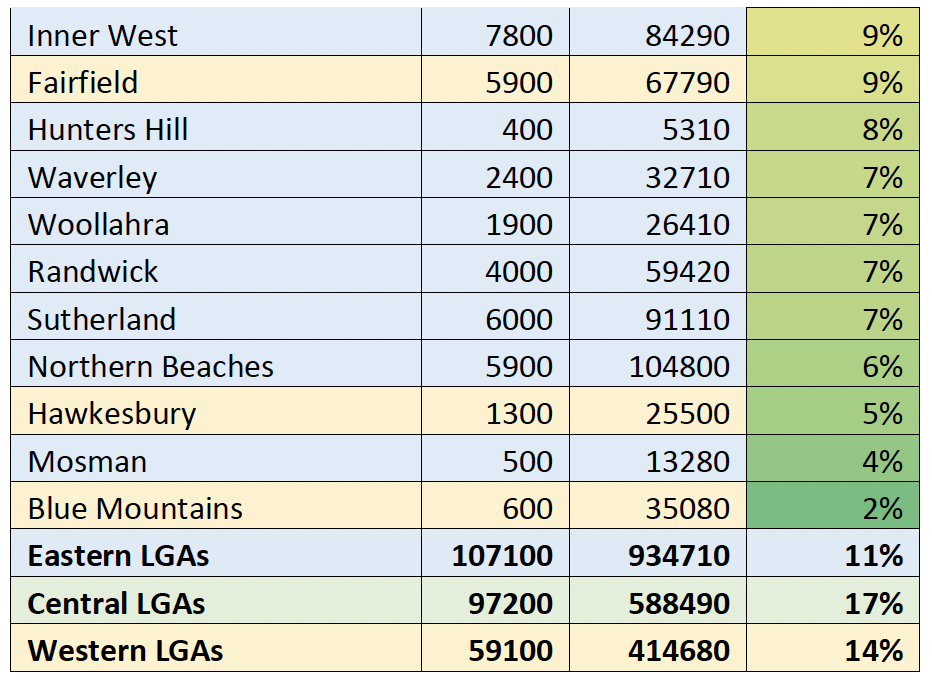
“This compares with a Sydney-wide average of 14% growth on existing dwellings. The growth is largest in the West with ‘Central’ council areas comprising Blacktown, Cumberland, Georges River, the Hills Shire, Parramatta and Liverpool collectively growing by 17%, while Sydney councils further west will grow collectively by 14% and eastern councils by 11%,” Mr Farlow said.
 
“It’s no wonder that the Inner West Labor Mayor embraced its target when they are only required to produce 9% growth in homes in their council area over the next five years.”
 
“Despite Chris Minns beating his chest about bringing housing closer to the CBD, the reality is that the communities which will see the biggest impact in growth are in Western Sydney.”
 
The Hills Shire Council Mayor Peter Gangemi said the Minns Labor Government had more than doubled the Hills’ housing completion target for the next five years. 
 
“We now have the highest housing targets in NSW; we could deliver more homes than any other council in NSW yet not receive a cent from the Minns Labor Government’s $200 million infrastructure fund,” Cr Gangemi said.
 
“We are a Council that is assisting greatly with the housing crisis and are not opposed to doing more. However, the target imposed on us is unachievable logistically and financially for the construction industry.”
 
Mr Speakman concluded, “we’re in this position because Chris Minns signed up Canberra’s housing targets that he could never meet, without any advice from his own Planning Department. All the while he’s still refused to call on Anthony Albanese to reduce immigration to ease the affordability and supply pressures on our housing market.”

Graphic 1
Graphic 2