Snowy Mountains Special Activation Precinct projects progressing

The Snowy Mountains Special Activation Precinct projects are progressing across Jindabyne including important works underway to enhance Barry Way road to deliver a new purpose fit approach for the new Jindabyne high and primary schools plus sport precinct.

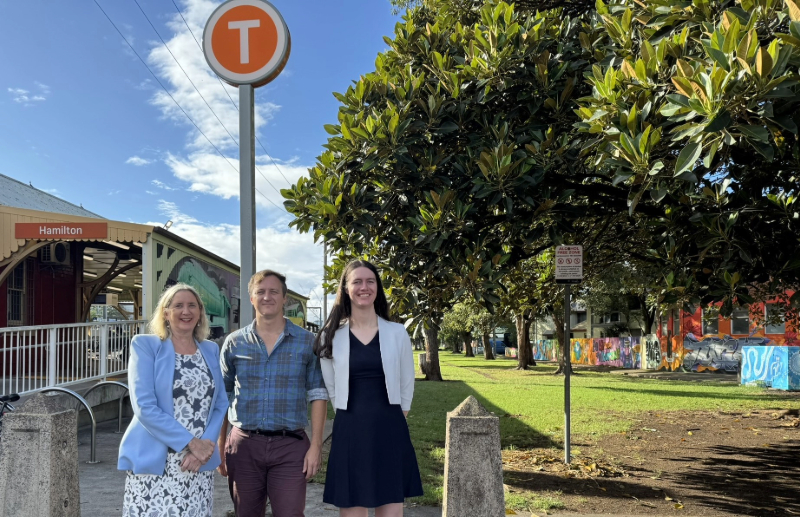
The Minister for Regional NSW Tara Moriarty and State Member of Parliament for Monaro Steven Whan were on-hand to inspect the progress of projects this week.

The Barry Way upgrades, which commenced in November this year include landscaping, levelling the road for safer driving, replacing utilities pipes and conduits, and a safer and easier drop off section for parents, children and staff when the new schools open in early 2025.

This complex road construction project is a priority and the Minns Labor Government stepped in to find the $47 million in funding when discovering the former Nationals/Liberal government had not funded the necessary road works for the new schools.

The $47 million commitment to enhancing Barry Way is in addition to the previously announced $196 million for the special activation precinct announced by Ministers Moriarity and Whan earlier in 2024. This increases the special activation precinct funding to a $242 million program of works for the Snowy Mountains.  

In addition to the Barry Way upgrade the projects announced in April 2024 by the Minns Labor Government have progressed as follows:

Foreshore design

  • The key elements of the foreshore design include a 3.5km shared user path upgraded between Banjo Patterson Park and Widows Creek, a new playground in the park, a pump track, improved lawn areas and improved drainage
  • Community consultation related to the foreshore design wrapped up in November and feedback will be considered, and the final design completed by mid-2025.

Bike precinct

  • This project will see 500 hectares of land within the Snowy Mountains precinct become home to a Mountain Bike Adventure Park
  • Planning work is underway and will inform what features, facilities and amenities the adventure park will include. Further details are expected to be announced by mid-2025.

Sewer and water

  • The Jindabyne wastewater treatment plan is being upgraded to increase capacity, to meet the long-term needs of the growing population, ensuring the future amenity needs of the community are met. The detailed design for the wastewater treatment plant is underway.
  • A new water treatment plant will be constructed to ensure compliance with drinking water standards. The project is currently in the concept design phase, with a construction tender expected to be issued in 2025.

Electrical upgrades

  • The scope of the electrical upgrades is being finalised, these upgrades will future proof the precinct and provide reliable electrical supply to the growing Jindabyne community.

Land development

  • Planning work is underway that will inform how the staged release of land will be rolled out to support a diverse mix of housing.

NSW Public Works has been engaged to lead the delivery of the water and sewer projects across the precinct. NSW Public Works are well equipped to plan and deliver water supply and wastewater infrastructure that meets the Council’s and community needs and protects public health and the environment.

The Snowy Mountains precinct is also facilitating the supply of a diverse mix of housing to benefit the community, support workers and the transition to a year-round economy.  

For more information: www.nsw.gov.au/snowySAP.

Minister for Agriculture, Regional NSW and Western NSW Tara Moriarty said:

“The Snowy Mountains special activation precinct is playing an important role in creating long-term economic prosperity in the region and I am pleased to expand the precinct commitment by $47 million to include important upgrades to Barry Way around the new school precinct.”

“These projects are progressing but there is more to be done and I am ensuring this happens appropriately and in a timely manner.

“The water and sewerage works, the foreshore design plus bike precinct and opening further housing development are important for a future Snowy economy and our Government is keen to see it underway.”

Member for Monaro Steve Whan

“When I was elected, I told the electorate that my focus would be on the essentials. Essentials which were neglected by the previous government when considering how Jindabyne and the Snowy Mountains area is growing.

“Now that public consultation is closed, design works are progressing on the foreshore design, roadworks are underway to finish the Jindabyne School Precinct, and a new sewerage and water treatment plant will help ensure the town’s growth is sustainable.

“There is more work to be done, and I will keep the region updated and time goes on.”

Ballina Hot Meal Centre funded for another year

The NSW Government will donate $25,000 in funding support for the Ballina Hot Meal Centre from the Premier’s Discretionary Fund.

The Ballina Hot Meal Centre has been serving hot meals to people who are sleeping rough and other vulnerable people in Ballina Shire for over 27 years.

The Ballina Hot Meal Centre has only seen an increase in demand for its sit-down, take-away, and meals-on-wheels service for the most vulnerable in the community with 600 meals prepared by a purely volunteer staffed service across the 2 days per week it is open.

Premier of NSW Chris Minns said:

“We know people are doing it tough and now more than ever, organisations like the Ballina Hot Meal Centre are a lifeline in our regional communities.

“I’m pleased to provide the hard-working volunteers with this funding so they can continue serving hundreds of meals each week, making life a little easier for those who may be struggling or need some extra support.”

Minister for Local Government Ron Hoenig said:

“Providing this service for nearly 30 years relying solely on donations is a testament to the spirit of the volunteers at the Ballina Hot Meal Centre and the generosity of the Ballina community.

“I was grateful to meet with Dawn and the volunteers who provide not only a meal but a friendly face, offering comfort and support to those who need it most.”

Member for Ballina Tamara Smith said:

“Incredible and selfless volunteers have been running Ballina’s only soup kitchen for nearly 3 decades without government assistance. As well as the amazing local businesses that donate food and money, our community stepped up where previous governments did not deliver.

“I am very grateful to the Premier Chris Minns for his humane response to the funding needs of the service, and for recognising the incredible work that this community run organisation is doing to improve vulnerable people’s lives. This funding not only keeps the centre open for another year but it lifts the morale of the volunteers who keep it going.

“I would like to thank the volunteers and every person and organisation that have donated over many years and who have not given up on this service – the only organisation that remained open and provided meals to people in our community throughout COVID 19. The volunteers, most of whom were vulnerable and at risk of infection themselves, did not step down but instead modified their service delivery to provide takeaway meals.

“Today’s announcement recognises the unbelievable effort of volunteers in our community who have fundraised every year, volunteered to collect and cook and serve meals every year, and kept going. You are absolute heroes in my eyes and in the eyes of our community.”

General Manager of Ballina Hot Meal Centre, Dawn Sword said:

“The Ballina Hot Meal Centre is operated and run entirely by volunteers, some who have been here since its inception, and all of whom help provide a warm and welcoming environment where they feed those in need not just with food but with kindness and hope.

“We are so grateful for the continual support and advocacy from our local Member Tamara Smith MP who has helped us to secure this much needed funding from the Premier, and thank his representative Minister Hoenig for joining us today.

“Without this funding it would have been a struggle to keep our doors and kitchen open to continue servicing the community at a time when it is most needed.”

South Coast in spotlight as international trade mission kicks off

The Minns Labor Government is continuing work to safeguard the future of regional New South Wales, with a three-day international trade mission commencing in the South Coast showcasing all the region has to offer.

International delegates from 13 countries are attending the South Coast trade mission, which will focus on the region’s emerging industries which present investment, trade and industry development opportunities.

As the state’s economy grows and changes into the future, building enduring partnerships with international investors and exploring new opportunities for local industries in global markets is vital.

This mission will give the delegates a firsthand experience of the innovation, trade, investment and collaboration opportunities regional New South Wales has to offer.

Representatives from Canada, China, France, Germany, India, Ireland, Italy, Japan, Netherlands, New Zealand, Poland, Switzerland and the United Kingdom are visiting Eden, Merimbula, Bega, Moruya, Broulee and Batemans Bay.

The trip include meeting with local industry leaders such as the Alkath Group, Bega Cheese, Broulee Brewery, Australia’s Oyster Coast, and Sea Urchin Harvest.

Delegates will learn more about how South Coast businesses such as Recycling Technologies Group in Eden are reducing landfill from metal and timber manufacturing by turning the waste into a new, viable energy source.

They will also have the chance to soak up the scenery and learn more about the rich Aboriginal heritage of Killalea Regional Park, Jigamy Farm and Snug Cove.

The trade mission is part of the NSW Government’s Regional Investment Activation Program, which aims to drive growth, create jobs, and promote investment in regional NSW.

To date, the initiative has supported five trade missions in NSW in regional locations such as the Hunter, Riverina and Central West.

Minister for the Illawarra & South Coast Ryan Park said:

“The South Coast is a hub of industry and natural abundance and I’m so proud we have an opportunity to showcase this to international markets.”

Minister for Regional NSW, Tara Moriarty said:

“We are saying very clearly to the global community – Regional New South Wales is open for business!

“As well as the South Coast of NSW being a stunningly beautiful place to visit, the region is a hub of opportunity and has so much to offer in terms of established and emerging industries.

“There is no substitute for first-hand experience, and I am delighted that the Consuls-General will have a chance to get outside of the metropolitan areas and get an authentic understanding of this region’s economic strengths in person.

“This trade mission is putting regional NSW front and centre for global investors to help us open the door to new opportunities, create jobs, and drive growth in our regions.”

Minister for Industry and Trade, Anoulack Chanthivong said:

“Diversifying our state’s trade offerings is central to the Minns Labor Government’s plan for our trade economy.

“Showcasing local South Coast businesses to representatives from major international markets including China, France, Germany, India, Italy, Japan, and the United Kingdom, is not only an opportunity for the local economy but increases the profile of NSW across the globe.

“This is another great example of the Minns Labor Government creating real international trade opportunities for local businesses.”

State Member for South Coast, Liza Butler said:

“The South Coast is a region of unparalleled natural beauty and innovation, making it an incredible destination for global business and investment and I welcome the delegates to the region.  

“It is exciting that the delegates will visit Huskisson to launch the NSW Government’s Seaweed Prospectus at PhycoHealth, a local business that specialises in sustainable seaweed products.  The seaweed industry not only drives innovation but also reinforces our commitment to environmentally sustainable practices.

“This trade mission is a testament to the unique opportunities our industries on the South Coast have to offer; from world-class aquaculture to groundbreaking clean tech advancements.”

State Member for Bega, Michael Holland said:

“I am pleased to welcome the international trade mission to the beautiful Bega electorate.

This is a wonderful opportunity to share the best of the Far South Coast’s primary production from our dairy products to the world’s best oyster industry.

Our visitors will experience the Eurobodalla and the Bega Valley’s hospitality as well as witnessing innovative manufacturing and tourism industries.”

Final checks as New Mariyung fleet prepares to enter service December 3

In a story five years in the making, Newcastle and Central Coast passengers will be the first to enjoy Sydney Trains’ new Mariyung fleet when it rolls out of Newcastle Interchange for its first passenger service on Tuesday, December 3.

The first Mariyung Train will begin its journey from Newcastle Interchange to Sydney Terminal at 8:21am, stopping at 20 stations, including Newcastle Interchange, Hamilton, Broadmeadow, Cardiff, Fassifern, Morisset, Wyee, Warnervale, Wyong, Tuggerah, Gosford, Point Clare, Tascott, Koolewong, Woy Woy, Berowra, Hornsby, Epping, Strathfield, and Sydney Terminal.

After years of delays under the former Liberal Government, which awarded the contract for the fleet in 2016, the Minns Labor Government came to an agreement on the final operating model with the rail workforce in August 2023 which meant the Government could finally press ahead with getting these trains on the tracks.

The operating model for the fleet has also been signed off and approved by the Office of the National Rail Safety Regulator.

So far, fifteen Mariyung train sets have been completely modified by local workers at Kangy Angy. Two of those sets will begin service on December 3, while the rest go through the rigorous safety testing regime before being progressively rolled out along the Central Coast and Newcastle Line.

Mariyung Trains will then be progressively rolled out on the Blue Mountains Line and the South Coast Line.

Modifications include relocation of CCTV viewing screens and passenger door controls, changes to the digital radio system, adjustments to fire detection management and fire-resistant materials, and emergency door release functions.

Modifications have also been made within the rail corridor to support the changes made to the Mariyung fleet operating model, including station platform extensions, relocation of train stopping markers, signaling equipment and overhead wiring structures.

The New Intercity Fleet will set a new standard of travel for commuters who make approximately 26 million journeys a year on the electrified intercity network.

The improvements include wider, more spacious two-by-two seating with arm rests, tray tables, and high seat backs, charging ports for mobile devices, dedicated spaces for luggage, prams and bicycles, and modern heating and air conditioning.

They will also open up greater options for travel for people with disabilities and mobility issues with dedicated spaces for wheelchairs and accessible toilets.

Last year, more than 12.7 million trips were taken along the Central Coast and Newcastle Line, and it’s hoped the much-anticipated new fleet will boost patronage.

Named after the Darug word for Emu, the Mariyung can operate in 4-car, 6-car, 8-car or 10-car configurations, and seat more than 820 passengers in a 10-carriage train.

The Mariyung trains will progressively replace older fleets including the V-sets, that were first introduced to NSW in the 1970s and the Oscar trains that debuted in 2006.

Minister for Transport, Jo Haylen said:

“It should have never taken this long but the wait is finally over. The Mariyung trains will finally be on the tracks from December 3 this year. They’ll provide a massively improved level of comfort for all our passengers travelling between Newcastle, the Central Coast and Sydney.

“These trains were supposed to be on the tracks 5 years ago. It’s been a priority of mine to ensure that we got them out of sheds and on the tracks by the end of this year. I’m incredibly proud that our Government has been able to deliver that.

“I also want to thank our rail staff for working with us to get these trains ready. This is an example of what can happen when the government and the rail workforce work together.” 

Chief Executive of Sydney Trains Matt Longland said:

“Today is an exciting chapter for our staff and our customers and especially those passengers travelling to and from Sydney on the Central Coast and Newcastle Line.

“The Mariyung trains are quieter and roomier and will provide our passengers with a much improved and more comfortable travelling experience for decades to come.”

“This project has been incredibly complex, but we are pleased we have been able to work in consultation with our workforce to locally modify these trains and get them into service.”

A bright idea to keep drivers safe on unlit roads

Glow-in-the-dark line markings will be trialled on Bulli Pass, south of Sydney, before being assessed for a wider rollout in NSW.

The photoluminescent painted markings absorb and store sunlight during the day and glow at night, helping drivers better see line markings and the shape of the road ahead.

Glow Roads are designed to improve night-time visibility, helping markings stand out in adverse weather, and provide a safe alternative at sites where street lighting is not practical.

The hairpin turn on Bulli Pass will be the first place in the state to get the glow treatment.

The location was chosen after a spike in near-miss incidents between 9pm and 4am, with 125 near-misses recorded in the year to June 30.

Bulli Pass is heavily used by large trucks and motorcycles and the new line markings will be installed part way down the steep descent to increase awareness of the sharp bend. A glow sign will also be installed.

The trial will run for six months, after which data and customer insights will be reviewed to determine whether to extend the trial or implement the Glow Road technology on other parts of the state’s road network.

Rigorous testing of glow roads has been undertaken at Transport’s Future Mobility Testing and Research Centre in Cudal to ensure the innovation is suitable for Australian conditions.

Different modes of transport were put through their paces, with a car, truck, motorbike and bicycle tackling the controlled ‘glow’ course. Skid testing was also undertaken to check Glow Roads’ had the same level of slip resistance as current line markings. 

Minister for Roads John Graham said:

“Line markings might not be the first thing we think about in terms of innovation, but this is a bright idea and we are excited to trial its benefits.

“Being able to see the shape of the road ahead is critical to safe driving and that’s what Glow Roads do.

“Data shows around a third of fatal crashes in NSW happen at night. If this trial is deemed a success, we will look at its application on other locations with a history of crashes or near-misses where better visibility is needed. 

“Bulli Pass has had a rising number of near-misses – particularly at night- so using Glow Roads to improve driving conditions will help the thousands of motorists who rely on this busy route.”

Minister for Regional Transport and Roads Jenny Aitchison said:

“Glow Roads is an exciting new alternative for areas where street lighting may not be practical – many of our regional and rural roads face this challenge.

“Locals know this road – and others like it across the state – can have visibility plumet in seconds when fog or a storm rolls in, and I’m excited to see how this innovation performs in those conditions, too.

“This initiative offers an energy-efficient and environmentally friendly solution on regional roads with limited or non-existent street lighting.”

Transport for NSW Secretary Josh Murray said:

“The Glow Roads is the brainchild of one of our transformation teams here at Transport who – trying to find a solution to boost safety at remote or isolated sites – pitched the idea at an in-house innovation challenge. 

“Improving road safety is a massive priority for everyone across at Transport – so we jumped on the opportunity to put this ‘bright idea’ to the test.

“Before rolling ‘Glow Roads’ out on public roads, we tested the new line markings and glow paint under a range of conditions at our Future Mobility testing site to make sure it was ready for the next phase of the trial.”

Jobs and entitlements secured as Junee Correctional Centre approaches return to public hands

The NSW Government has reached a major milestone as it brings the management of Junee Correctional Centre into public hands, securing workers’ roles and entitlements ahead of the 1 April 2025 transition.

The Junee Correctional Centre has been managed by The GEO Group Australia since 1993.

Under Corrective Services NSW’s (CSNSW) operational model, the majority of current GEO staff who want to remain working at the prison will be offered roles within the centre and will retain their entitlements without needing to serve probationary or qualifying periods.

Their long service leave will be paid out by GEO and their years of service will be recognised by CSNSW for future entitlements.

The new operational model will also create several new positions, with local recruitment currently taking place to fill openings and additional roles.

CSNSW has begun rolling out induction and custodial bridging courses onsite in preparation for next year’s transition.

Deputy Commissioner Security and Custody Dr Anne Marie Martin, met with GEO staff at the centre today alongside representatives from human resources and Justice Health to outline the next steps in the transition.

Minister for Corrections Anoulack Chanthivong said:

“The Minns Labor Government is committed to reversing the trend towards privatisation, and bringing the management of Junee Correctional Centre into public hands is a key indicator of that.

“This change means Junee prison staff will have well-paid, secure, public-sector jobs with a history of service that will be recognised by CSNSW, which is a huge win for staff and the community.”

Acting Commissioner, Corrective Services NSW Leon Taylor said:

“Experienced Corrective Services NSW staff have been working onsite to support GEO officers through the management transition, to ensure they’re ready, trained, and equipped to move to the new operational model.

“Junee officers have shown commendable dedication to their work over the years, so we’re looking forward to having them on board and working towards our shared goal of reducing reoffending and keeping the community safe.

“We’re also looking forward to maintaining valuable relationships with the local community partners and the Junee Shire Council.” 

Funding to support community-led response to men’s mental health crisis

The Minns Labor Government is continuing work to support the wellbeing of the people across New South Wales, with $400,000 in grants now available to provide targeted support to improve men’s mental health and drive down rates of male suicide.

Targeted at community-based mental healthcare providers, the new program offers grants of up to $50,000 for local and grassroots organisations who are working on the ground to support men’s mental health.

New South Wales accounts for the most male deaths by suicide in Australia. In 2023 alone, there were 934 suspected deaths by suicide in the state, with men accounting for 730, or 78 per cent of these tragedies.

The launch of the new grants program follows the recent release of the NSW Men’s Mental Health: A focus on suicide prevention report which was informed by the landmark Men’s Mental Health Forum held in August.

This program aligns with the report’s recommendation to invest in grassroots local community-led initiatives that focus on building community connection, emotional intelligence and mental health literacy among men.

The forum brought together 84 participants from 61 mental health and suicide prevention organisations across NSW. It provided a platform for discussions among advocates, researchers, diverse people with lived experience of mental illness and professionals working to support men.

Leaders at the forum examined the social drivers of men’s distress, identified at-risk priority communities and proposed successful interventions, while considering the future of male suicide prevention.

Further recommendations within the report which will inform the Government’s ongoing work in this space include:

  • strengthen the peer workforce to support men’s mental health, reduce stigma, increase help-seeking behaviour, and improve mental health literacy
  • expand access to support services for men outside of clinical settings, recognising that clinical settings can be a barrier
  • ensure policies, programs and services are co-designed with input from men who have lived experience of mental ill-health and those who care for them.

Grant applications are now open until 15 December and can be completed online: https://www.health.nsw.gov.au/mentalhealth/Pages/men-suicide-prevention.aspx

Minister for Mental Health Rose Jackson:

“The number one cause of death among Australian men aged 15-44 years is suicide. This is unacceptable and we are dedicated to moving the dial by providing real support to mental health care providers in the community.

“While the statistics alone are sobering, we must also remember that behind every number is a story of loss, families and communities left grieving and missed opportunities for intervention.

“The Men’s Mental Health and Suicide Prevention Small Grants Program is an opportunity to bolster our support for community organisations who help men and can address the unique challenges they face in relation to mental health and suicide prevention.

“I want to personally thank all the mental health advocates and men with lived experience who participated in the Men’s Mental Health Forum this year – their voices are vitally important to continue this conversation, work towards solutions and end the stigma.

“The recommendations from the Forum report are critical to our ongoing work in this space will guide our future efforts to reduce suicide and improve mental health among men in NSW.”

If you, or someone you know, is in a life-threatening situation please seek help immediately by calling Triple Zero (000). For those contemplating suicide or experiencing severe distress, the following helplines are available 24/7:

New service brings cardiac procedures closer to home for Central Coast patients

A Cardiac Electrophysiology Service has been launched at Gosford Hospital, giving Central Coast patients access to cardiac procedures without the need to travel out of area.

The service is expected to benefit hundreds of local patients each year, meaning they won’t have to travel to Sydney or Newcastle for critical care.

The new service offers diagnostic and therapeutic treatment for patients with heart conditions. This includes providing therapeutic ablation for patients with right-sided tachyarrhythmias which is also known as irregular heart rhythm.

Cardiac ablation is a procedure where small areas of tissue in the heart which are causing the irregular heartbeat are inactivated through the application of heat or intense cold. The procedure restores and maintains a normal heart rhythm.

The service is also performing diagnostic studies for cardiac patients, including electrophysiology studies which are tests used to evaluate the heart’s electrical system and to check for abnormal heart rhythms.

The launch of the service is a significant development for the Central Coast, providing local public patients access to the service close to home for the first time.

Minister for Regional Health, Ryan Park:

“I am pleased this new service will be able to offer local patients access to these important procedures on the Central Coast, making it much easier for them to access the treatment they need close to home.

“Central Coast Local Health District is already receiving very positive feedback from patients about how much they appreciate having the local service available to them.”

Minister for the Central Coast, David Harris:

“It is pleasing the Central Coast community can now access these important cardiac procedures closer to home. 

“We know the Central Coast is a high-growth region, and as our population grows it is essential we continue to bolster our local healthcare system, and services like this are another step in the right direction.”

Member for Gosford, Liesel Tesch:

“The launch of this service will mean that our community no longer has to travel multiple hours to access this important medical service, providing accessible care right here in our community when people need it most.

“The NSW Government is committed to investing in healthcare for the Central Coast community.”

Central Coast Local Health District Head of Cardiology, Associate Professor Maged William:

“We are thrilled to be able to provide these procedures on the Central Coast. Previously, it was necessary for patients to travel to Sydney or Newcastle to have these procedures. We are anticipating that the service will benefit hundreds of local patients every year.

“Plans are already underway to expand the scope of the service to treat patients with other common cardiac concerns such as atrial fibrillation and ventricular tachycardia.”

Heavy Industry Manufacturing Centre of Excellence in the Illawarra backs a future made in Australia

The Albanese and Minns Labor Governments are jointly investing more than $47 million to establish the Illawarra Heavy Industry Manufacturing Centre of Excellence at TAFE NSW Wollongong.

Students will have access to state-of-the-art facilities and equipment that cultivate the skills required to operate legacy equipment, enhancing efficiencies by using digital and robotic technologies, and advanced manufacturing techniques.

The Illawarra Heavy Industry Manufacturing Centre of Excellence will:

  • provide targeted training in traditional and emerging heavy industry manufacturing for the defence and transport sectors
  • integrate emerging technologies and automation into training, equipping students for work in digital, electrical and robotic manufacturing
  • deliver microskills and microcredentials to upskill current workers.

The Centre of Excellence will innovate training by piloting a new qualification model, the Associate Degree in Manufacturing and Applied Digital Technologies. This Degree Apprenticeship will provide a pathway between school, vocational education and training, and higher education.

Courses on offer include Engineering Mechanical Trade, Laboratory Skills and 3D Printing.

The Centre of Excellence is positioned to help progress the Albanese Government’s Future Made in Australia plan, ensuring that we have the skills and infrastructure to make the materials we need to transition to net zero.

This follows the announcement of the Western Sydney Advanced Manufacturing Centre of Excellence and the Hunter Net Zero Manufacturing Centre of Excellence, as the third TAFE NSW Manufacturing Centre of Excellence, boosting skills training in advanced manufacturing and rebuilding onshore manufacturing capabilities.

The Albanese Government is investing $325 million under the five-year National Skills Agreement, which began on 1 January 2024, to establish a network of up to 20 TAFE Centres of Excellence in areas of high skills needs.

Some courses will available from 2025, while the refurbished site will be ready by 2027.

Prime Minister Anthony Albanese:

“The Illawarra has a proud history of industry and manufacturing – which is why this is the perfect place for this Centre of Excellence.

“This builds on the skills that are already a part of this region’s DNA.

“Investing in a Future Made in Australia means investing in the skills and training industry will need in the years to come.

NSW Premier Chris Minns:

“Whether its trains, buses or ferries, we want to build things here in NSW.

“The Illawarra is a powerhouse of manufacturing, and the TAFE NSW Centre of Excellence will build on these strengths, delivering more education and training so local workers are skilled in new technologies.

“The centre will create a pipeline of skilled workers so we have the mechanical and electrical engineers, machinists and metal welders needed to secure the regions future and support a thriving domestic advanced manufacturing industry in NSW.”

the Minister for Skills and Training, Andrew Giles:

“The Albanese Government is putting TAFE at the heart of the vocational education and training sector. Implementing TAFE Centres of Excellence as a key initiative under the National Skills Agreement will ensure we can deliver on this objective.

“The Illawarra Heavy Industry Manufacturing Centre of Excellence will work in partnership with the other manufacturing Centres of Excellence that we are establishing here in New South Wales. Creating a manufacturing powerhouse that will have a key role in supporting our transition to net zero, and harnessing the opportunities being created by our Future Made in Australia plan.

“It is exciting to see that the Heavy Manufacturing Centre of Excellence is exploring new pathways that look to break down potential barriers between VET and higher education. As new skills needs emerge in our workforce, we need to keep exploring ways for greater harmonisation across our tertiary education sector.

“The Centres of Excellence are being established between the Australian, state and territory governments. Once the Centre is up and running it will operate in partnership to ensure we deliver a successful project. I look forward to continuing work with NSW Skills Minister Steve Whan to create a world-class VET sector.”

the Minister for Skills, TAFE and Tertiary Education, Steve Whan:

“The TAFE NSW Heavy Industry Manufacturing Centre of Excellence – Illawarra will provide opportunities for local workers to reskill and upskill in areas most critical to a growing and evolving manufacturing sector, including new digital technologies such as robotics.

“Through the TAFE Centres of Excellence and in collaboration with industry and universities, the Australian and NSW Governments are ensuring local workers have the skills needed to support onshore manufacturing capabilities and access jobs in transport, logistics and supply chain, defence and renewables.”

Sky-high milestone for airport metro as viaduct complete

The Sydney Metro – Western Sydney Airport project has reached new heights with the completion of the 3.2-kilometres of viaduct (bridge), linking the Warragamba viaduct to the future Luddenham Station.

The new 23-kilometre metro line which once complete, will mean it’ll take passengers five minutes to travel from the airport to Bradfield, approximately 15 minutes from the airport to St Marys and approximately 20 minutes from Bradfield to St Marys where passengers can connect to the rest of Sydney’s rail network. 

The impressive viaduct structure is a critical part of the metro alignment between Orchard Hills and Luddenham and has been constructed to take metro services over key locations including the Warragamba pipelines, Blaxland Creek, and Luddenham Road. 

This viaduct will be part of a mix of underground tunnels, ground level railway and elevated railway. 

A total of 1,101 precast concrete segments (sections of the bridge) were used to construct the viaduct, with each segment measuring 10.85 metres wide, up to 3.2 metres long and 2.4 metres high, and weighs up to 65 tonnes, with more than 52,000 tonnes of concrete used to cast the segments.

In a boost for local jobs, all 1,101 precast concrete segments, which were pieced together to build the structure of this viaduct, were manufactured in Buchanan, 20 minutes outside of Newcastle.  

Supporting the impressive structure are 84 piers, each weighing between 80 and 160 tonnes and towering up to 15.3 metres high. The piers were made using 96,250 tonnes of concrete.

To build the viaduct, more than 2,500 people worked over 16 months with huge machinery to manoeuvre the heavy segments.

The Sydney Metro – Western Sydney Airport project itself has engaged more than 8,868 workers, 54 per cent of whom live in Western Sydney.

Completing the viaduct also included completing the base of Luddenham Station, the only station located on a viaduct 13.5 metres above ground. 

Luddenham Station is one of six new stations for the metro railway line that will become a crucial connection for travellers visiting the new international airport.

It will also open up housing and business opportunities here in Sydney’s west, as we link up this part of our city to a rail line for the first time ever. 

The next stage of this project will include laying track along the entire 23-kilometre alignment.

This new Sydney Metro railway will become the transport spine for Greater Western Sydney, connecting communities and travellers with the new Western Sydney International (Nancy-Bird Walton) Airport and the growing region. 

The project is a jointly funded infrastructure project between the Australian Federal and NSW governments.    

For more information about the project, visit sydneymetro.info/westernsydneyairportline.  

Premier of New South Wales Chris Minns said:

“We are committed to building better communities in Western Sydney, and public transport projects like will create new jobs and connect people to the airport and the rest of Sydney.”

“This project will also deliver major economic stimulus for Western Sydney, supporting more than 14,000 jobs.

“There’s more to do, but it’s great to see the progress being made on this world class infrastructure project, which will benefit our great city for generations to come.”

Minister for Transport Jo Haylen said:

“With huge milestones ticked off both below and above ground, we can now start to prepare for tracklaying.”

“This above-ground megastructure is a true engineering feat, built safely and with precision to ensure passengers have fast and reliable journeys in Sydney’s Greater West.

“As we reach this important stage, we are closer than ever to delivering a modern, reliable, and efficient metro system that will drive growth and support the region’s long-term development.

“Once open, Western Sydney Airport line will service the new international airport and connect communities between St Marys and Bradfield to wider Sydney, with the capacity to carry 7,740 passengers an hour in each direction on their new metro service.