Humanitarian assistance to Bangladesh

The Australian Government will provide more than $1.8 million for humanitarian relief and emergency supplies in response to the recent flooding in Bangladesh.

Almost 6 million people have been affected by the flooding, and livelihoods have been devastated as agricultural fields and fishponds are submerged by flood waters.

Essential services including communication and transport networks are disrupted, providing a further challenge to response efforts.

More than half a million people have been displaced and are sheltering in flood evacuation centres, where overcrowding and temporary structures have heightened protection concerns, especially for women and girls.

Australian assistance will be directed through Oxfam and BRAC, a Bangladeshi NGO and one of the world’s largest non-government organisations. Our contribution will ensure the most vulnerable, including women, children and people with disabilities can access lifesaving assistance.

In addition to today’s announcement, Australia welcomes the release of USD17.7 million (approximately AUD26.4 million) from the UN Central Emergency Response Fund (CERF) to respond to crises in Bangladesh in 2024. Australia is a top 10 donor to the CERF.

National Access to Justice Partnership

Today National Cabinet signed a Heads of Agreement for a new National Access to Justice Partnership that will provide a critical increase of nearly $800 million in funding over five years from 2025-26 to the legal assistance sector, with a focus on uplifting legal services responding to gender-based violence.

The Commonwealth Government will invest a total of $3.9 billion in support for frontline legal assistance services to be delivered through a new partnership agreement with the states and territories.

The former Coalition Government did not provide ongoing funding for this agreement, leaving a funding cliff from 30 June 2025. The Albanese Government will provide ongoing funding for the agreement, alongside other major agreements in skills, schools and health – this will provide funding certainty for the sector

This is the largest injection of funding to the legal assistance sector in 20 years, and provides much needed funding certainty for hundreds of services nationwide, including many who provide holistic support for victims and survivors of gender-based violence.

The funding was announced today at National Cabinet as part of a $4.7 billion package to respond to the national crisis of family, domestic and sexual violence and support legal assistance.

The National Access to Justice Partnership will commence on expiry of the current National Legal Assistance Partnership (NLAP) on 30 June 2025. The Government’s commitment of funding for the Partnership, well before the expiry of the NLAP, will give the sector the certainty it needs to continue vital services

Today’s commitment will deliver vital support to all parts of the legal assistance sector, including Legal Aid Commissions, Community Legal Centres, Women’s Legal Services, Aboriginal and Torres Strait Islander Legal Services and Family Violence Prevention Legal Services. It will also allow for salaries in community sector legal assistance providers to better align with the rest of the sector, ensuring these services can recruit and retain staff.

The full National Access to Justice Partnership will be agreed through the Standing Council of Attorneys-General by the end of the year.

Prime Minister Anthony Albanese

“Gender-based violence is a national crisis – and we cannot solve it overnight.

“We recognise that the legal assistance sector plays a vital role in that response. Legal assistance helps victims safely leave and recover from violent relationships, through access to finances, secure housing and safe arrangements for children.

“Today’s announcement builds on our Government’s efforts to provide better access to services for women and children fleeing domestic and family violence.”

Attorney-General Mark Dreyfus

“I have spent decades fighting for a better deal for the legal assistance sector. Legal assistance is essential to ensuring access to justice and equality before the law for all Australians, and safety for victims and survivors of family, domestic and sexual violence.

“I thank the many workers on the frontline who have been tireless advocates for the sector and for the rights of the thousands of Australians who rely on them every year.

“This funding is critical – it will mean that essential frontline services can continue to operate and help the most vulnerable in our community.”

AFP warning over rise of sadistic sextortion online

The AFP is warning parents and guardians over a concerning online trend emerging in Australia involving young victims who are being coerced into producing extreme sexual and violent content over the internet.

Sadistic sextortion is a rising online crime type that involves extreme online groups targeting children as young as twelve years old on social media and messaging platforms to coerce them to self-produce explicit material to gain acceptance into extreme online communities.

These online communities use different names and monikers to operate on social media or messaging platforms, and consist of members from all around the world. To gain access to a majority of these groups, prospective members are coerced by group members to produce or live-stream explicit content online.

In some cases, the offenders are the same age as the victims being targeted.

AFP intelligence has identified that sadistic sextortion offenders will initiate an online relationship with a victim on social media or messaging platform before encouraging them to produce an image or video performing an explicit sexual or violent act.

The offender will then share the content with other members in the online group, who will attempt to extort the victim by threatening to share the material with their family or friends, unless the victim produces more videos and extreme content.

The offender will relentlessly demand more content from victims that often continues to escalate in its seriousness including specific live sex acts, animal cruelty, serious self-harm, and live online suicide.

The Western Australia Joint Anti-Child Exploitation Team (WA JACET) commenced an investigation into reports of an alleged serious sadistic sextortion offender in WA, 14, accused of targeting victims around the world in 2022.

Police seized the offender’s phone and later identified child abuse material (CAM) and videos of animal cruelty.

The offender was charged and received a juvenile caution in relation to the matter.

AFP Commander of Human Exploitation and the AFP-led Australian Centre to Counter Child Exploitation (ACCCE) Helen Schneider said intelligence received by the ACCCE suggested most offenders in extreme online groups were not motivated by money, but were instead focused on obtaining status or notoriety within the group.

“Unlike sextortion, these offenders are not motivated by financial gain. Instead, they are driven by exploiting vulnerable victims into producing abhorrent content for their deranged amusement,” Commander Schneider said.

“Unfortunately, some victims in these groups, do not see themselves as victims. They do not believe they are being coerced into performing these extremely horrific acts and therefore are unlikely to report it to the authorities.

“Without information or assistance from victims and members of the public, it can be extremely difficult for police to identify offenders and shutdown these dangerous groups.”

Commander Schneider said the AFP urged parents and guardians to be aware of the warning signs of young people being groomed by coercive groups online.

‘If parents believe their child is engaging in harmful activity online, it’s important to have a conversation with them to understand the situation and provide appropriate support,” Commander Schneider said.

“Warning signs children may be engaging in harmful activity online may include increased screen-time on computers or phones, isolating themselves from friends and family or being secretive about who they are interacting with online.

“Whether a child is or has been a victim of sextortion online, please reassure them it’s not their fault and report it to the ACCCE.”

If you think you are a victim or know of someone who is a victim of sadistic sextortion
DO stop the chat
DO take screen shots of the text and profile
DO block the account and report it to the platform
DO get support from a trusted friend or family member, or professional support services and seek mental health support if required. Kids Helpline offers free and confidential sessions with counsellors.
DO report the crime to the ACCCE
DON’T send more images or pay as this will lead to more demands
DON’T respond to demands
DON’T enter into further communication
DON’T think you are alone
If you’re concerned about your or someone else’s safety, dial Triple Zero (000) or contact your local police station.

The AFP and its partners are committed to stopping child exploitation and abuse and the ACCCE is driving a collaborative national approach to combatting child abuse.

The ACCCE brings together specialist expertise and skills in a central hub, supporting investigations into online child sexual exploitation and developing prevention strategies focused on creating a safer online environment.

Members of the public who have information about people involved in child abuse are urged to contact the ACCCE. If you know abuse is happening right now or a child is at risk, call police immediately on 000.

If you or someone you know is impacted by child sexual abuse and online exploitation, support services are available.

Research conducted by the ACCCE in 2020 revealed only about half of parents talked to their children about online safety. Advice and support for parents and carers about how they can help protect children online can be found on the ThinkUKnow website, an AFP-led education program designed to prevent online child sexual exploitation.

For more information on the role of the ACCCE, what is online child sexual exploitation and how to report it visit the ACCCE website.

Attorney General falls on his own knife laws in estimates

The NSW Attorney General has been blasted by crossbench and opposition MPs in Budget Estimates this morning in a fiery exchange that exposed the impotence of the Minns Labor Government’s “tough-on-crime” posturing. 

Under questioning, it was revealed the Attorney General could not identify any evidence or consultation that suggested more severe penalties for knife offences or expanded police knife-wanding powers have reduced crime or would ever reduce knife crime.

The Hon. Susan Carter presented BOCSAR stats showing that certain violent knife offences have actually increased since the introduction of harsher penalties for knife offences last year

Ms Sue Higginson presented evidence from the The 2023 Griffith University Review of Queensland wanding powers which found no evidence that police wanding powers had reduced the rate of knife possession or violent knife offences and had been disproportionately used to target First Nations children and young people.

No prior consultation was undertaken on youth bail reforms with legal experts or community groups

88% of children refused bail under Labor’s youth bail reforms were First Nations children

The new Moree youth remand facility announced in March this year will not be operational before the expiration of NSW Labor’s youth bail reforms next year

The LECC will have no role overseeing the implementation of knife wanding powers, in spite of their offer to do so

The Attorney General repeatedly stated he would not apologise for legislation introduced without community and legal expert consultation and admitted that the legislation will result in the further over-incarceration of First Nations people, particularly children and young people.

Greens MP and spokesperson for justice Sue Higginson said “This morning was a dreadful display of the realities of a tough on crime, law and order agenda. It is not based on evidence, will not reduce crime but means this government has functionally abandoned its commitment to Closing the Gap targets,”

“More First Nations young people and children are in prison than ever before in NSW because of the headline-chasing, tough-on-crime posturing of the Premier and Attorney General in the last 12 months,”

“It is an unconscionable political failure that the drivers of crime are so widely, well and long understood and that more has not been done to date to reform our approach in NSW,”

“Being tough on crime may be responsive to radio shock jocks and be cathartic for bully-boy lawmakers but it has not, has never, and will never make our communities safer,”

“Crime prevention requires community empowerment and resourcing, therapeutic responses, extraordinary compassion and understanding and the leadership to drive it and it is the leadership that is absent,” Ms Higginson said.

NSW government responds to Mental Health Inquiry

The NSW government will fail to deliver meaningful change in response to the Parliamentary Inquiry into community and outpatient mental health care without significant additional funding.

The inquiry was initiated by the Greens in July 2023 to hear from people with lived experience and people on the front lines of providing mental health care. The committee is chaired by Dr Amanda Cohn, Greens spokesperson for Health including Mental Health and former GP.

Out of the 39 recommendations in the final report, the government has supported 24, supported 8 in principle, and noted 7.

Key takeaways

Funding for the mental health systemThe NSW government has failed to support recommendations to increase and maintain funding across the mental health system, or to explore innovative revenue streams to fund mental health services.
Mental health crisis and emergency responsesThe government has supported several recommendations towards a health-led response to mental health emergencies, with police only activated as a secondary response to those emergencies (supported in principle).  The government has not supported a recommendation to improve mandatory comprehensive mental health training for police officers. The government has not supported a recommendation to expand the Safe Haven program to be a 24/7 program where feasible.
Mental health workforceThe NSW government has failed to support recommendations to increase pay for public mental health clinicians in line with other states, or to increase resourcing for formal clinical supervision. Recommendations to integrate peer workers into the broader mental health workforce and into emergency departments were supported. The government has supported recommendations to advocate to the federal government to address funding and workforce gaps in primary care and mental health services and to provide HELP fee relief for mental health priority courses. 
Other recommendationsThe government has agreed to look to initiatives that provide mental health care outside of traditional clinical settings, explore opportunities for embedding mental health clinicians in general practice, improve service directories and system navigation, and implement best practice for data collection on gender and sexuality. The government has stated it is considering introducing 5-year funding agreements for NSW Mental Health Community Living Programs to improve consistency of care for consumers and growth and stability of the workforce, but that the availability of funding is a consideration.

The inquiry comes after data released recently by the federal government shows that across 2022-23, 205,830 people aged 12-64 in NSW required psychosocial support but 166,040 were not receiving it. That’s over 80% of those people needing but not receiving psychosocial support services. That percentage is second only to the NT at 82.3%. 

Dr Amanda Cohn, Greens NSW spokesperson for Health including Mental Health, and former GP:

“There are some important steps forward to take out of the government’s response. Commitments to bolster the role of peer workers, better integrate mental health care and primary care and streamline system navigation are important and welcome.

“After a long-fought campaign by the Greens, the government has supported moving to health-led responses to mental health emergencies. The fight continues now to ensure this is implemented in full so that people in crisis receive the care they need and do not come to harm at the hands of police.

“It’s a slap in the face to hard working, skilled, and increasingly burnt out mental health clinicians that the government has not supported increasing their pay in line with other states. Services will continue to be understaffed and unable to deliver the care that people deserve while our health workforce moves interstate.

“These recommendations don’t get pulled out of thin air within the walls of Parliament. They were informed by the testimonies of hundreds of people, many who relived painful memories and trauma to advocate for change. 

“Without new funding for community mental health services, people across NSW will continue not to be able to access the care that they need, and the mental health system will continue to be reactive and crisis-driven,” said Dr Cohn.

UK starts the ban on weapons sales to Israel – so why won’t Australia?

The UK has suspended 30 arms export licences to the State of Israel including the direct transfer of parts of the F-35 fighter jet. The UK did this because of the mounting legal risk for any government that actively supports a genocide.

The Albanese Government is increasingly isolated in its refusal to introduce any form of ban or suspension in the two-way arms trade with the State of Israel. This is despite rulings by the International Court of Justice and the UN calling on countries to stop the export of military equipment to the State of Israel.

There are currently 66 active Australian military export permits approved by the Albanese Government to send military equipment to the State of Israel. These include goods being sent to Israeli manufacturers for repair and uplift, including weapons as part of the two-way arms trade, as well as dual-use goods and weapons parts and components.

Australia provides a critical supply line for the Israeli military’s F35 fighter jets, with contracts through over 70 companies, including the sole global manufacturers for specific parts.

While the information on the F35 supply line in Australia recently disappeared from Government websites, the head contractor for the F35 Lockheed Martin said: “Every F35 built contains some Australian parts and components.”

The UK’s arms ban does have a significant and inexplicable exemption for the indirect supply of F35 fighter jet parts to Israel through the US.

The UK ban follows a Dutch court ruling in February this year that ordered the Netherlands Government to stop exporting weapon parts for the F35.

Greens Senator and Defence Spokesperson David Shoebridge said: “What will it take for the Albanese Labor government to ban the two-way arms trade with Israel?

”The UK’s move shows the growing legal and political risk for the Albanese government as it allows Australian industry and weapons exporters to support a real-time genocide.

“Australian law shields decision makers from criminal liability for supporting war crimes by placing a political veto to prosecutions in the hands of Federal Attorney General Mark Dreyfus. However, this does not provide a shield to international prosecutions through the International Criminal Court.

“Labor has agreed to an almost $1 billion contract with Israeli weapons manufacturer Elbit and millions more to firms such as Rafael Systems who are making record profits from arming those committing genocide.

“There is only one valid legal and moral response to an ongoing genocide, and that is to do everything in your power to stop it. This is a test that Labor is comprehensively failing,” Senator Shoebridge said.

Report should spell the end of compulsory income management

The report from the Parliamentary Joint Committee on Human Rights into compulsory income management has recommended the complete abolition of the scheme. This follows years of advocacy from communities and the Greens arguing the racist and oppressive program should be repealed. 

Last year, the Greens successfully passed amendments that ensured oversight of the expanded compulsory income management scheme through the Joint Committee on Human Rights. 

This review considered whether the scheme was compatible with human rights and what its impact had been on communities where it was imposed. 

Evidence considered including the dramatically different rate of exemptions granted for compulsory income management with First Nations people much less likely to apply for an exemption and significantly less likely to get an exemption. 

The evidence also showed that the move away from the Cashless Debit Card was marked by a very poor transition plan, no support for those impacted and no financial counselling. This was a real opportunity for empowerment and support that was missed. When compulsory income management is fully abolished this mistake should not be made again. 

Greens Senator and Social Services and Government Services Spokesperson Penny Allman-Payne said: 

“Labor must not continue to kick the can down the road – they need to commit to abolishing compulsory income management as a matter of urgency.

“The Greens, advocates, academics, and people on income management will not stop fighting until Labor keeps their promise and abolishes compulsory income management once and for all.

“Labor promised voters they would end compulsory income management. Since they’ve been in government all they’ve done is expand it through the SmartCard.” 

Greens Senator, Justice Spokesperson and PCJCHR member David Shoebridge said:

“We heard the evidence on this inquiry that Compulsory Income Management was oppressive, racist, unequally applied and deeply unfair. 

“This scheme has systematically discriminated against First Nations people.

“It is extremely positive that the majority report calls for an end to income management and the progressive majority in Parliament is ready to support quickly terminating this unfair program. 

“Despite the compelling evidence we heard in this inquiry to end income management the Coalition still support it in what can only be seen as an ideological attack on poverty. 

“This report says compulsory income management should end, and what we say as Greens is that it should end now.”

ACT Greens motion on Labor’s pokies conflict passes Assembly

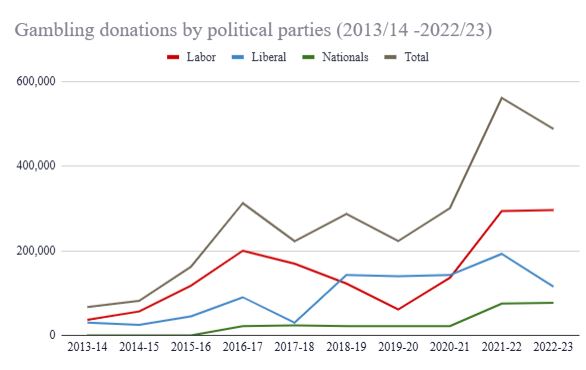
An ACT Greens motion calling on the Labor party to sever its ties to pokies and donate its pokies-seeded investment capital to the Alliance for Gambling reform has passed the ACT Assembly. 

“The Labor Party is impossibly compromised on gambling policy,” said Andrew Braddock, ACT Greens MLA for Yerrabi.  

“Today, the quiet part has now been said out loud. 

“The Greens introduced the motion because the ACT Labor Party has avoided, delayed, and ultimately rejected best-practice gambling reforms that were presented to it through the term of the Assembly.  

“The Labor Party has blocked positive gambling reforms in the ACT and let down the community and we must ask, what is preventing them from taking the action that all the advocates and experts are calling for? 

“The ACT Greens endeavour to work closely with Labor to achieve progressive outcomes for the community, but we are forced to call out Labor’s significant, entrenched failure on the issue of gambling reform.” 

“The Greens will continue to stand with gambling harm minimisation advocates, and push for the implementation of best-practice reforms”, said Mr Braddock.   

ACT LABOR AND CANBERRA LIBERALS CONTINUE TO GIVE MORE MONEY TO HORSE RACING THAN LITERALLY ALL OF THE SPORTS SECTOR

For the third time, the old parties combined to reject an amendment to the ACT Budget from ACT Greens MLA Jo Clay to phase out the ACT Government’s $41 million subsidy to the horse racing industry.

“The ACT Greens believe that the ACT Government should invest public money in industries that support community need, or bring benefit to the community,” said ACT Greens MLA, Jo Clay.

“Currently, the horseracing industry receives more public money than the Canberra Raiders, ACT Brumbies, Canberra United and all community sports programs COMBINED.

“What’s more, they get this money outside of any grant process or public tender.

“I don’t think anyone in the community would think this is a good or fair use of taxpayer dollars.

“The Canberra Racing membership has declined and event attendance has dropped. Despite the huge financial injection from the ACT Government, they have moved from a surplus to a deficit and their liabilities have doubled.

“We’ve heard the industry claim their activities contribute $81M to the economy. But they admit the majority of this is from gambling and gambling advertising. And that figure is not high – the ACT’s creative industries contribute $2.9 billion to our local economy.

“The horseracing industry also claims to create 500 jobs – this is a pretty generous reading. It looks like they are including every job in sports administration in Canberra. A closer reading of their report based on hours of work indicates that their direct employment accounts for only 2 FTE jobs.

“The horseracing industry is a dying industry that has lost its social licence.

“It is not the job of government to prop up this dying industry. Public funds need to go towards the public good. What are we getting for our public funding?

“The 2022-23 MOU provided $6.8M of public funds to the Canberra Racing Club. That year, the Canberra Racing Club gave out $5.96M in prize money and $976,000 in payments to key management personnel. It looks an awful lot like the public is funding horseracing prize money and CEO salaries.

“This is just not OK and the community will be rightly disappointed that both ACT Labor and the Canberra Liberals voted today to continue this waste of public funds.

“The ACT Greens recognise the need to support the workers and animals involved as the industry transitions. In order to do that, the Greens propose phasing out public funds rather than stopping them immediately,” said Ms Clay.

Background

Since 2011, the ACT government has spent or pledged more than $100M of public money to the horseracing industry. The current MOU is here. It provides funds to the Canberra Racing Club and the Canberra Harness Club. In 2022-23 it provided $6.8M to the Canberra Racing Club and in 2023-24 it provided $6.9M to the Canberra Racing Club. In total, over $8 million is provided in public funding each year to the Canberra Racing Club and Canberra Harness Racing Club under the MOU.

Canberra Racing Club’s Annual Reports are online. Annual Report 2022-23Annual Report 2021-22, Annual Report 2020-21, Annual Report 2019-20.

Clay’s amendment to the budget and Explanatory Statement can be provided on request.

The horseracing industry has produced an Economic Impact Report. It’s not a public document but Clay obtained a copy under FOI. The report claims an economic contribution to the ACT economy and notes that 60% of that contribution is from gambling and gambling advertising. Clay has put questions to the horseracing industry about the information in this report in the interests of a transparency and is waiting on answers to those questions.

Australia-Japan 2+2 Foreign and Defence Ministers’ Meeting

Deputy Prime Minister and Minister for Defence, the Hon Richard Marles MP, and Minister for Foreign Affairs, Senator the Hon Penny Wong, will host their Japanese counterparts for the 11th Australia-Japan 2+2 Foreign and Defence Ministerial Consultation in Victoria on 5 September 2024.

The meeting with Japan’s Minister for Foreign Affairs, Kamikawa Yoko, and Minister of Defense, Kihara Minoru, will advance our bilateral cooperation and defence and security priorities.

The Deputy Prime Minister will host Minister Kihara for a Defence Ministers’ Meeting in the Geelong region today. The Foreign Minister will also host Foreign Minister Kamikawa for a bilateral Foreign Ministers’ Meeting tomorrow.

Australia and Japan have never been closer, and this visit is an opportunity to deepen our Special Strategic Partnership, underpinned by mutual trust, complementary economies, and a close affinity between our people.

We are working together to support an Indo-Pacific region that is peaceful, stable and prosperous.

Deputy Prime Minister, the Hon Richard Marles MP:

“I am honoured to welcome Minister Kihara to my hometown of Geelong. I look forward to discussing our shared ambition to strengthen our defence partnership, building on our 2022 Joint Declaration on Security Cooperation.

“Our defence cooperation with Japan is a pillar of regional stability. Our strong strategic alignment supports collective deterrence and stability in the Indo‑Pacific.”

Foreign Affairs Minister, Senator the Hon Penny Wong:

“Japan is an essential partner for Australia, and our two nations work closely together, including through ASEAN, the Pacific Islands Forum and the Quad, to make a vital contribution to the region’s security and prosperity.

“I am pleased to have travelled to Japan three times in the past 12 months, a sign of our close and regular engagement.”