
School’s out on third failed Labor budget

The Minns Labor Government has failed its third budget test, only announcing one new school in its 2025-26 Budget and being forced to reannounce projects to cover for its lack of delivery.

Leader of the Opposition Mark Speakman said this budget proves the absence of Labor’s ambition for our schools. 

“Families across New South Wales, whether they’re raising kids in our growing suburbs or out in the regions, deserve better than recycled announcements and empty promises,” Mr Speakman said.

“Parents want to know their children will have access to quality classrooms, proper facilities and the support they need to thrive, no matter their postcode. 

Instead, Labor is spending more to deliver less, with no clear plan to fix the schools we already have or build the ones we’ve been promised. It’s not just a missed opportunity, it’s a failure to deliver on the basics.”

Shadow Education Minister Sarah Mitchell said it’s particularly bad news for the bush, with not a single new school or major school upgrade slated outside of Newcastle, Sydney or Wollongong.

“The fact there’s not one new school or major upgrade anywhere west of the divide, down south or on the north coast, speaks volumes about the Minns’ Government’s priorities for education in this state,” Mrs Mitchell said.

“All kids should have access to high quality schools and classrooms no matter where they live, but under Labor regional students completely miss out.

“The only exception is the forced rebuild of Willyama High School in Broken Hill due to a significant mould outbreak, and even that has only received funding in this year’s budget, despite it being promised in 2024.”

There are major concerns around the slowing infrastructure pipeline with the Government’s $2.6 billion package  only projected to build 140 new classrooms, despite the Coalition delivering close to 500 new classrooms, 55 specialist learning spaces, 13 halls, 12 libraries and 9 covered outdoor learning areas for $770m in the 2021 school year alone.

“The devil is in the detail when it comes to this budget and the numbers clearly don’t stack up,” Mrs Mitchell said.

“Not only is Labor spending more for less, but it’s also not being clear about how much money will go towards maintenance and minor works, with those figures missing from the budget papers.”

The budget also falls short when it comes to early childhood education and care, with just four new preschools due to be opened in 2025-26.

“Despite Labor’s promise in the lead up to the 2023 election to build 100 public preschools, it will take them three years to build just five preschools,” Mrs Mitchell said.

“It’s also unclear how the Government plans to uphold its commitment of deliver universal pre-Kindergarten for every child in NSW before 2030, because the amount on offer won’t create anywhere near enough places.”
Visit to the United States

This week, I will travel to the United States to participate in a meeting of Quad Foreign Ministers.

This will be the second Quad Foreign Ministers’ Meeting within six months, reflecting the importance of our partnership and the strategic circumstances confronting our region and the world.

I look forward to engaging with my Quad counterparts as we strengthen cooperation to ensure a peaceful, stable and prosperous Indo-Pacific.

While in Washington DC, I will also meet separately with each of my counterparts, Secretary of State Rubio, External Affairs Minister Jaishankar and Foreign Minister Iwaya, to progress bilateral cooperation.

The United States is our closest ally and principal strategic partner. Our alliance contributes to the peace, prosperity and stability of our countries and the region we share.

We will continue to work together to further our important economic and security partnership and advance our mutual interests.

Minns’ anti-protest laws cause of police violence

The continued actions by Premier Chris Minns to clamp down on political expression and peaceful protest are empowering state violence against the community of NSW. The recent assault and arrests by the NSW Police at a peaceful community protest have revealed the impact of Minns’ rhetoric and law making in empowering state violence by the NSW Police against the community.

Greens MP and Spokesperson for Justice Sue Higginson said “Premier Chris Minns’ attacks on protest near places of worship have now turned up in police fact sheets from a community rally where Hannah Thomas was violently assaulted and hospitalised,”

“I am shocked but unsurprised to see this in the police fact sheet. It is clear to me that Premier Chris Minns is responsible for the police response and serious injury that took place at Belmore,”

“The level of impunity the police displayed doesn’t come from nowhere. It’s written there in black and white – a direct reference to the anti-protest laws rushed through the NSW Parliament under the sordid non-disclosure of the truth around the Dural Caravan incident,”

“The news that the victim of the assault by police has now been issued with a court attendance notice is unsurprising, but upsetting. If the police think they can justify the violence committed against the community by throwing an unjustifiable charge, then they have another thing coming,”

“Chris Minns was warned, each time he pushed ahead with further crackdowns on legitimate and peaceful protest, that handing more powers to the Police, powers that the Commissioners and Deputy Commissioners have said they don’t even need, that the result would be state endorsed violence against the community. Now here we are,”

“I, along with others in the Parliament warned the Premier and his Government that we would see this level of impunity and now here it is. What has happened to Hannah is so distressing, surely Chris Minns and his Cabinet will now start to listen and reverse this agenda of intolerance and anti-protest measures,” Ms Higginson said.

New financial year = More costs and more red tape

As Australians turn the page on a new financial year, they will be waking up to yet another wave of cost increases and economic pressure – all under the Albanese Labor Government’s watch.

From 1 July, the Government starts rolling out a raft of changes that will hit households, businesses and workers in the hip pocket. Whether it’s higher electricity prices, increased small business costs, more red tape or new vehicle taxes, the common thread is clear – Australians are being asked to pay more and get less.

Under Labor, gross debt is heading for nearly $1.2 trillion, or around $45,000 for every Australian. Labor is pushing Australia’s debt to the highest level in our nations history. While the Government pats itself on the back, it’s leaving future generations to foot a growing bill. Labor’s boastful spin about so-called “cost-of-living relief” has never been more tone deaf.

The new financial year should bring fresh opportunity. Instead it brings:

  • Higher energy bills: The energy regulator’s Default Market Offer for 2025 kicks in across NSW, South Australia, Queensland. Compared to 2024-25, from 1 July prices for households will be up to 9.7% higher, and up to 8.5% higher for small businesses. Over the last three years of price rises under Labor, households will have spent up to $3,177 more, cumulatively, on electricity, compared to 2021-22 levels.
  • A tax on aspiration: Labor’s proposed tax on superannuation balances above $3 million hasn’t even passed Parliament, yet they plan to backdate it to 1 July. If legislated, this tax would double the rate from 15 to 30 per cent and apply not just to realised earnings, but to unrealised gains – taxing Australians on paper profits they haven’t even received. This is a broken promise that punishes aspiration, undermines trust in the system, and sets a dangerous precedent for future raids on unrealised gains on other investments.
  • A tax on investment: Labor’s new mandatory mergers notification regime begins its transition phase, and businesses could now face fees of over $1 million to have transactions reviewed by the ACCC. With a $56,800 Phase 1 fee and an eye-watering $952,000 Phase 2 fee, this regime risks deterring investment, choking off small-scale mergers, and driving away international capital. Labor had just 13 days of consultation before locking in these costly changes, and the result is a bureaucratic, expensive regime that flies in the face of the Government’s claimed productivity agenda.
  • A tax on small business: From today, the Albanese Government has removed the tax deductibility of interest charged by the ATO on overdue tax debts. With the ATO’s interest rate currently at 11.17%, this change increases the financial burden on approximately 2.6 million small businesses, making it more costly to manage cash flow and settle tax obligations.
  • A new tax on vehicles: Labor’s New Vehicle Efficiency Standard kicks in, applying financial penalties on popular vehicles like utes, 4WDs and family cars. Industry experts warn these penalties will increase prices by thousands of dollars – at a time when families are already stretched.
  • New tax reporting rules: From 1 July, Labor’s costly multinational tax reporting rules kick in. These won’t raise extra revenue but will burden businesses with $30 million in compliance costs, scare off foreign investment, and push start-ups offshore. Despite talking deregulation, Labor introduced over 5,000 new regulations last term that threaten Australia’s competitiveness, economy, and future industries like AI and biotech.
  • NBN price hikes: From 1 July, wholesale prices for 7 out of 8 NBN plans are increasing by between 2% and 3%, adding up to $1.71 more per month for providers. While it may seem small, these increases will likely be passed on to households already struggling with rising bills – yet another cost-of-living hit under Labor.
  • Stamp prices to rise: From 17 July, the cost of sending a standard letter will rise by 13.3%, from $1.50 to $1.70. While Labor claims this will only add a dollar or so to household costs, it’s part of a growing trend of rising prices for essential service – and another reminder that nothing is staying affordable under this Government.
  • More expensive to register a business name: From 1 July, ASIC has increased the cost of registering or renewing a business name. A one-year registration or renewal now costs $45, up from $44, while a three-year term has risen to $104, up from $102.
  • More expensive to register a company: ASIC has also raised fees for company services. Registering a new proprietary company now costs $611, up from $597, and the annual review fee for such companies has increased to $329, up from $321.
  • More red tape for suppliers: From 1 July, Labor’s Environmentally Sustainable Procurement Policy will apply to government contracts over $1 million for ICT, textiles, and furniture. Businesses will face new reporting and compliance burdens, with estimated costs of $1.2 million a year – locking out smaller suppliers and adding to Labor’s growing regulatory load.

Labor promised a better life for families. Instead, Australians are being squeezed, living standards have declined, and the economy is going nowhere fast.

Under Labor the economy is stalling, and households have gone backwards. Business investment is falling, productivity has flatlined, and real GDP per capita has plunged from 20th to 60th in just a year.

The reality Australians face is grim. Since Labor came to office, prices have surged across the board:

  • Health costs are up 13.4%
  • Education is up 17.3%
  • Food is up 13.9%
  • Housing is up 15.4%
  • Rents are up 18.6%
  • Insurance has skyrocketed by 35.9%
  • Electricity is up 33.5% (before government rebates)
  • Gas is up 34.2%

As the clock ticks past midnight, Australians won’t be met with fireworks for the start of a new financial year, just higher bills.

This new financial year was Labor’s chance to reset, instead Labor have doubled down on higher costs, more red tape, and policies that make life harder for working Australians.

The longer Labor is in power, the poorer Australians become.

Average speed cameras switch to enforcement mode for both heavy and light vehicles under road safety trial

From 1 July 2025 both light and heavy vehicles will receive penalties for speeding at two trial sites in regional NSW, as part of a trial that extends the use of average speed cameras to light vehicles for the first time.

Data from the trial, part of the Minns Labor Government’s efforts to improve road safety, shows that speeding at the trial locations decreased significantly during the two-month warning period.

Average speed cameras have been in place and enforcing average speed offences for heavy vehicles since 2011. Now they are also measuring average speeds of light vehicles on a 15km stretch of the Pacific Highway between Kew and Lake Innes (Port Macquarie) and on a 16km stretch of the Hume Highway between Coolac and Gundagai.

In the first week of the two-month warning period, one in every 122 drivers of light vehicles was caught speeding on the Pacific Highway cameras and issued with warning letters. One in every 122 drivers of light vehicles was also detected speeding at the Hume Highway location.

At the end of the seventh week, there was a 48 per cent improvement in behaviour on the Pacific Highway with the number of light vehicle drivers detected speeding dropping to one in every 235. An improvement of 37 per cent was seen on the Hume Highway, where the figure dropped to one in every 194.

During the warning period, light vehicle drivers were only fined if caught exceeding the speed limit by more than 30 km/h. There have been nine fines issued at the Pacific Highway location and three fines issued at the Hume Highway location during the warning period.

All fine revenue from camera-detected speeding, red-light, mobile phone use and seatbelt offences goes into the Community Road Safety Fund, which is used to fund priority road safety programs and initiatives.

The switch from warning letters to enforcement mode at the two locations is the next step in the trial which was committed to following last year’s Road Safety Forum. All other average speed cameras around the state continue to only enforce heavy vehicle speeding.

To learn more about the trial, including results, visit: https://www.transport.nsw.gov.au/roadsafety/topics-tips/speeding/enforcement-cameras/average-speed-cameras.

Minister for Roads and Minister for Regional Transport Jenny Aitchison said:

“Speeding contributes to around 42 per cent of road fatalities every year and so far this year, speeding has contributed to 33 per cent of all road fatalities. That’s 59 lives lost due to dangerous driving behaviour, just this year.

“Last year we committed to investigate ways to lower road trauma at our Road Safety Forum including trialling the use of average speed cameras for light vehicles.

“While average speed cameras are currently used for heavy vehicle enforcement in NSW, this trial is about investigating whether this technology can help reduce speeding by light vehicle drivers.

“NSW is the only jurisdiction that has limited the use of average speed cameras to heavy vehicles, creating confusion across border communities and establishing a different standard for drivers.

“The initial indicators from the warning period are promising, with a significant reduction in speeding at both trial locations.

“Overall, we’ve seen a 45 per cent decrease in light vehicles speeding over the first seven weeks of the trial. It’s good to see driver behaviour improving before we switch to enforcement mode.

“All drivers caught speeding at the two locations will now receive penalties for the next 12 months while we continue to monitor the effectiveness of the trial.

“Speed limits are set to ensure motorists travel at a safe and appropriate speed for the surrounding road environment. When the unexpected happens on the road, the speed that you’re travelling at matters. ‘Just a bit over’ the speed limit can be the difference between being able to stop in time or not at all.” 

Inspiring icons Ida Leeson and Bobby Goldsmith honoured

Two new blue plaques have been unveiled paying tribute to lesbian and gay luminaries, librarian Ida Leeson and activist Robert (Bobby) Goldsmith, whose legacies helped progress LGBTQIA+ rights and shaped the rich history of NSW.

The Minns Labor Government has installed these plaques to share the fascinating stories of people and events that have shaped communities across the state.

Ida Leeson’s blue plaque can be found on the Mitchell Building at the State Library in Sydney’s CBD. Fighting both systemic sexism and discrimination against same-sex partnerships, Ida rose to the top of her discipline and in 1932 earned the highly esteemed position of Mitchell Librarian. Controversy over the appointment turned the wheels of the feminist movement, inspiring campaigns for equal workplace rights.

Ida was a talented librarian whose contributions to research, archival management and historic preservation shaped the library’s world-leading Australian and Pacific collection.

Born in 1885 in Leichhardt, Ida became a library assistant at the Public Library of NSW, now the State Library, by the age of 21. At age 24, she would meet her partner Florence Birch, with whom she remained for the rest of her life.

Bobby Goldsmith has been honoured with a blue plaque at Universal Sydney nightclub on Oxford Street.

Bobby, born in Hurstville in 1946, was a beloved leader in the LGBTQIA+ community whose death at the age of 38 from HIV-AIDS related illness was the first publicly recognised case in NSW.

He was a prominent gay rights activist, marching in Sydney’s first Gay and Lesbian Mardi Gras in 1978. Bobby was also a prolific swimmer and represented Australia at the inaugural 1982 San Francisco Gay Olympics, where he took home 17 of Australia’s 21 medals.

He was diagnosed with HIV months after the Gay Olympics. His partner Ken, friends, family and community rallied around him, fundraising to provide him with the dignified home care he deserved.

With the support of the Gay Counselling Service, the group raised a remarkable $6,000 at an event at the Midnight Shift, now Universal, on Oxford Street. The fundraiser helped launch the Bobby Goldsmith Foundation, which is Australia’s longest running HIV charity and still provides community-based care and support today.

His blue plaque has been installed outside Universal Sydney to keep his legacy alive.

Leeson and Goldsmith are two of 16 new blue plaque recipients. For more information visit: the Blue Plaques NSW website.

Minister for Heritage, Penny Sharpe, said:

“These blue plaques recognise two extraordinary people who have left lasting legacies in progressing women’s and gay rights, and will ensure their stories live on.

“Ida Leeson stood tall in the face of sexism and discrimination to win the recognition she deserved, and moved the dial of progress for all women.

“Bobby Goldsmith was a hugely influential figure at a time when the LGBTQIA+ community was fighting for its fundamental rights and forging its identity in Australia.”

Member for Summer Hill, Jo Haylen, said:

“Ida’s achievements as a feminist trailblazer living as an openly gay women in Sydney’s inner west almost 100 years ago are truly remarkable.

“She fought for recognition and inclusion in every aspect her life, living unapologetically and true to who she was – an inspiring achievement we are rightfully celebrating alongside her groundbreaking professional success with this blue plaque.”

Pride History member Teresa Savage, who nominated Ida Leeson, said:

“Ida Leeson was a trailblazing feminist librarian, an accomplished academic, researcher and collector.

“She lived openly in a lesbian relationship for over 50 years at a time when that was rare.”

Bobby Goldsmith Foundation CEO Nick Lawson, who nominated Bobby Goldsmith, said:

“Bobby Goldsmith’s friends, especially his partner Ken, were instrumental in transforming care for people living with HIV/AIDS.

“The foundation they created remains a tribute to their love and compassion. We nominated Bobby to honour the enduring legacy they built in his name – one that continues to uplift and support people living with HIV today.”

Recall: Coles Smooth and Coles Crunchy Peanut Butter 1kg

Best before: 05/02/2027

Sold in Coles supermarkets and Coles Online nationally

Coles is recalling Coles Smooth Peanut Butter 1kg and Coles Crunchy Peanut Butter 1kg, sold between 01/05/2025 and 30/06/2025 at Coles supermarkets and Coles Online nationally with a Best Before date of 05/02/2027, due to aflatoxin contamination.

A jar of peanut butterAI-generated content may be incorrect.A jar of peanut butterAI-generated content may be incorrect.

Best before: 05/02/2027

Sold in Coles supermarkets and Coles Online nationally

Coles is recalling Coles Smooth Peanut Butter 1kg and Coles Crunchy Peanut Butter 1kg, sold between 01/05/2025 and 30/06/2025 at Coles supermarkets and Coles Online nationally with a Best Before date of 05/02/2027, due to aflatoxin contamination.

The product is:

Coles Smooth Peanut Butter 1kg and Coles Crunchy Peanut Butter 1kg
Best Before date: 05/02/2027
Dates sold: Between 01/05/2025 and 30/06/2025.

Food products containing aflatoxin may cause illness if consumed. Any customers concerned about their health should seek medical advice.

Customers can return the product to any Coles supermarket for a full refund. Coles Online customers can receive a full refund or credit by contacting Coles Online Customer Care on 1800 455 400.

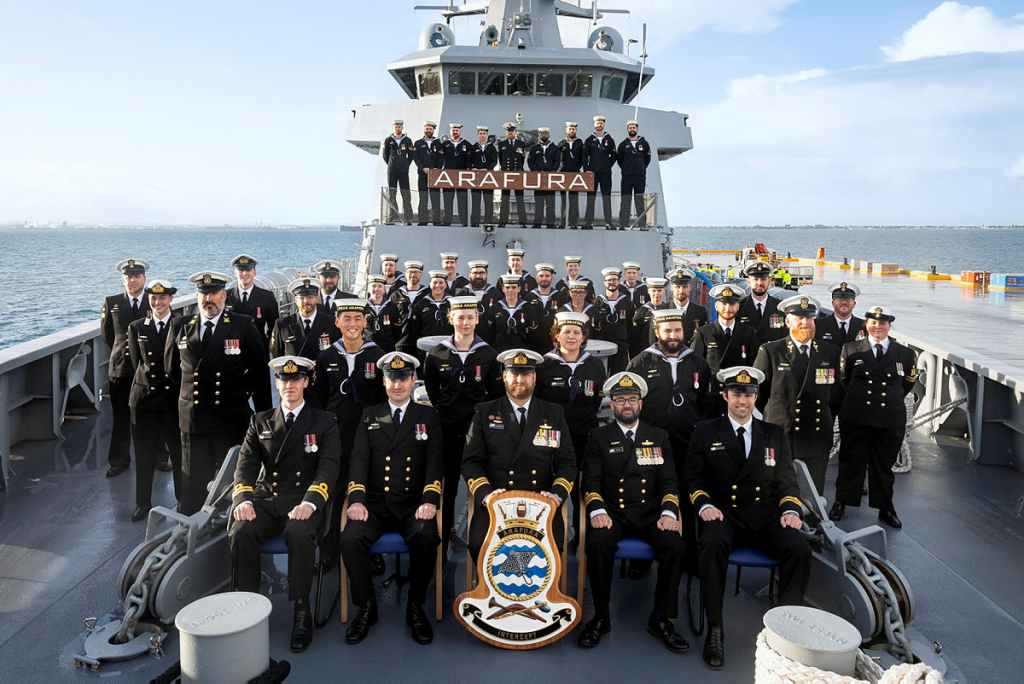
Navy introduces new capability with commissioning of HMAS Arafura

oday marks Today marks a major milestone of the Australian Government’s implementation of the Surface Fleet Review with the commissioning of HMAS Arafura into the Royal Australian Navy fleet. 

HMAS Arafura is the first Arafura class offshore patrol vessel (OPV) of the Navy’s surface fleet. 

HMAS Arafura will enter into the fleet at a commissioning ceremony in Western Australia today.

Navy’s OPVs will help patrol and secure Australia’s maritime border alongside the evolved Cape class patrol boats. They will also play a role in humanitarian and disaster relief, enhance regional engagement and support other Navy missions. 

These new capabilities have a greater range of 4,000 nautical miles, and can perform roles that previously required numerous vessels. These OPVs will also have improved living quarters and amenities to better support personnel. 

The Government’s Independent Analysis into Navy’s Surface Combatant Fleet (Surface Fleet Review) reaffirmed the need for the Arafura class OPVs whilst recommending they operate alongside the evolved Cape class patrol boats. 

HMAS Arafura was built by German shipbuilder Luerssen Australia at the Osborne Shipyard in South Australia. 

The second OPV, NUSHIP Eyre, has been built and is awaiting acceptance by Navy. The remainder of the four ships are under construction at the Henderson Shipyard in Western Australia. 

Deputy Prime Minister, the Hon Richard Marles MP:

The commissioning of HMAS Arafura marks an important milestone in the implementation of the Government’s Surface Fleet Review. 

“HMAS Arafura means that the Navy can continue to ensure the safety and security of our maritime borders.

“The commissioning of HMAS Arafura is a turning point, and we will continue to see the Navy introduce new vessels into its fleet.” 

Minister for Defence Industry, the Hon Pat Conroy MP:

“The delivery of these offshore patrol vessels is an excellent example of our partnership with defence industry in action. 

“The Australian Government has worked collaboratively with Defence and Luerssen Australia to successfully deliver HMAS Arafura, with another ship on the way and four more under construction at Henderson.

“The construction of the remaining four ships is on track, and continues the Australian Government’s investment in a productive, continuous naval shipbuilding and sustainment industry.”

the Minister for Defence Personnel, the Hon Matt Keogh MP:

“HMAS Arafura delivers on our plan for Australian workers to build vessels for the fleet faster than Australia has for decades, to ensure the Navy has what it needs to secure our national interests at sea. 

Arafura also provides improved living quarters and amenities to support our highly skilled naval personnel as they patrol and protect our coastline.”

“My best wishes go to the crew of the Arafura as they take on this new challenge, and may they have fair winds and following seas. My thanks also go to their families, whose support enables our personnel to do what they do each and every day for our nation.” 

the Chief of Navy, VADM Mark Hammond, AO, RAN

“A strong Australia relies on a strong Navy, one that is equipped to conduct diplomacy in our region, deter potential adversaries, and defend our national interests when called.

“The Arafura class offshore patrol vessels will perform a number of roles, including regional engagement, patrol duties, and employment of uncrewed systems in a variety of missions.”

Albanese Government support for Austal’s United States expansion

The Albanese Government welcomes Export Finance Australia’s credit approved loan facility of up to US$150 million to shipbuilder Austal to help it expand its shipyard in Alabama in the United States. 

Austal is an Australian success story, and support from Export Finance Australia will help it to deliver on recently awarded major contracts for the US Navy and US Coast Guard. 

The expansion of Austal’s shipyard further deepens defence industrial cooperation with our key ally, the United States, and complements Australia’s investments into the sovereign industrial bases of AUKUS partners.

The finance will help fund the development and construction of a new assembly facility, waterfront improvements and a new ship lift system. 

The expansion marks a major milestone for Austal, and it shows the strength of the Australian defence industry, its capabilities and support for our international partners. 

Export Finance Australia’s loan facility is subject to completion of finance documentation and satisfaction of conditions precedent.

Minister for Trade and Tourism, Senator the Hon Don Farrell:

“The Albanese Government is backing Australian defence companies to grow and export their world-class capabilities by securing lucrative international contracts.

“This financial support from Export Finance Australia is another example of how the Albanese Government is providing support to Aussie businesses to expand and grow overseas.

“Austal’s expansion shows the strength of Australian businesses to export, invest and support shared Australian-US priorities such as defence.”

Minister for Defence Industry, the Hon Pat Conroy MP:

“Austal’s investment into its United States shipyard demonstrates its commitment to support the United States’ domestic shipbuilding ambition and will deliver greater security and economic resilience for both Australia and the United States.

“I visited Austal’s shipyard in Mobile, Alabama last year and witnessed firsthand its contribution to the submarine industrial base in the United States, including manufacturing components for Virginia class submarines.

“In times of geopolitical uncertainty, closer defence industrial collaboration with our AUKUS partners will deliver major security and economic benefits.” 

Strengthening access to lifesaving vaccines

Australia will provide $386 million to support the vital work of Gavi, the Vaccine Alliance from 2026 to 2030, to fight deadly diseases in our region and beyond. This includes a new funding commitment of $300 million.

The Albanese Government recognises global health challenges require sustained commitments.

Gavi is a public-private partnership which has helped vaccinate more than 1.1 billion children globally, saving more than 18.8 million lives.

Australia’s support for Gavi directly benefits Australia’s closest neighbours.

In Asia and the Pacific, Gavi has helped immunise more than 633 million children, saving six million lives.

Gavi has also prevented more than 27,000 cervical cancer deaths by enabling access to the human papillomavirus (HPV) vaccine in Indonesia, Laos, Myanmar, Cambodia, Solomon Islands and Timor-Leste.

In addition to the new funding, Gavi will also be able to utilise $86 million previously pledged by Australia for COVID vaccines, through the International Finance Facility for Immunisation.

In a time of heightened global uncertainty, Australia is pleased to partner with Gavi and directly support our closest neighbours.

Minister for Foreign Affairs, Senator the Hon Penny Wong:

“The Albanese Government is supporting access to new and more effective vaccines and strengthening our region’s ability to respond to disease outbreaks.

“When we invest in a healthier Indo-Pacific, we’re investing in a safer and more secure Australia.”

Minister for International Development, the Hon Dr Anne Aly:

“Australia is steadfast in our commitment to Gavi because we know countries in our region and around the world rely on Gavi’s support.”

“Health security requires collective action, and our new pledge to Gavi will help ensure countries in our region and around the world can access lifesaving vaccines.”