
Two years of Anthony Albanese’s economic vandalism is killing Australian small business

After two years of the Albanese Government, it is clear that Labor’s economic vandalism is killing Australian businesses with builders, manufactures and small businesses bearing the brunt. Australian businesses are going to the wall because Anthony Albanese lied about his plan to deliver cheaper power prices and that he would ‘rebuild Australian manufacturing’.

Labor has delivered an insolvency crisis across the Australian economy. According to the official Australian insolvency statistics for April, released by ASIC, insolvencies across construction have already exceeded the annual figure for 2022-23 and manufacturing insolvencies are set to exceed the 2022-23 figures by the end of May. This underscores an increasing rate of insolvencies across the Australian economy, which was already three times higher than the same period, just two years ago under the Coalition.

Businesses are going bust under Labor and it will only get worse. According to CreditorWatch’s Business Risk Index released yesterday, one in 13 Australian hospitality businesses are facing failure in the next 12 months. This is attributed to the sector’s exposure to discretionary spending of consumers “which has dried up as cost-of-living pressures mount.” As CreditorWatch notes, hospitality businesses such as restaurants have been hit hard by cost pressures, with higher than ever power prices and cost of ingredients combining with weaker consumer spending. This report indicates that Western Sydney and South-East Queensland are the regions with the highest risk of business failures.

CreditorWatch has also found that business to business (B2B) payment defaults have hit a record high and are up 69.4 per cent year-on-year, as businesses struggle to pay their invoices. Their analysis shows a strong correlation between B2B payment defaults and business failure indicating there will be a continued and increasing trend in businesses going bust over the coming year.

Anthony Albanese’s energy crisis is killing Australian small businesses. According to Research commissioned by Energy Consumers Australia and the Council of Small Business Organisations Australia (COSBOA), released today, energy hardship and financial strain is hitting small business harder than COVID-19. One in five small businesses are struggling to pay their energy bills on time and nearly half of small businesses are concerned about their ability to pay future energy bills. More than one in three small to medium-sized enterprises have experienced energy hardship during the past 12 months and rising energy costs are the number one factor which has ­impacted businesses’ financial situation in the last 12 months.

In the face of a deteriorating economy, COSBOA was absolutely right to label the Federal Budget a, “missed opportunity to back small business”.

As small businesses struggle to pay their power bills which have risen by thousands and thousands of dollars, Labor’s response has been to give them $325, spread quarterly. The sector has rightly indicated this “won’t even touch the sides”.

As Australian manufactures fail in great numbers, Labor have committed an additional $22.7 billion for their Future Made in Australia proposal including $13.7 billion of corporate welfare, while their existing $15 billion National Reconstruction Fund is yet to spend a single cent.

Deputy Leader of the Opposition and Shadow Minister for Industry, Skills and Training and Small and Family Business, Sussan Ley, said Labor’s failure to deliver real economic leadership had taken Australia in the wrong direction and it is only the Coalition, under the leadership of Peter Dutton, that has a proper plan to get Australian back on track.

“Because of Anthony Albanese’s bad calls, Australian businesses are in their worst position since the Global Financial Crisis, with payment defaults the worst on record and Australian households hurting.

“After two years in government, Anthony Albanese’s record is clear: weak leadership on the economy, weak leadership on national security, and a refusal to take responsibility for the dire situation facing Australians and their small businesses.

“Anthony Albanese and Jim Chalmers love to talk up the jobs they claim to have ‘created’ – well, if they want to take credit for employment outcomes, then they also have to take responsibility for these skyrocketing insolvencies.”
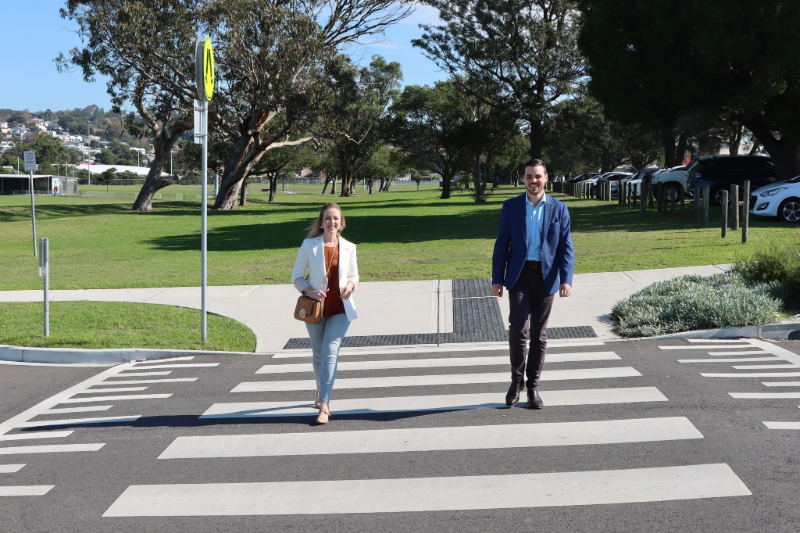
Community input needed to make Newcastle a more walkable city

City of Newcastle is inviting Novocastrians to share their thoughts on the safety and accessibility of pedestrian crossings to help guide future installations and upgrades across the city.

Residents will provide feedback on the different types of crossings, as well as recently completed raised pedestrian crossings in suburbs including New Lambton, Waratah, Birmingham Gardens, Broadmeadow, and Merewether.

Cr Adamczyk and Deputy Lord Mayor Declan Clausen use the pedestrian crossing at New LambtonCr Adamczyk and Deputy Lord Mayor Declan Clausen use the pedestrian crossing at New LambtonDeputy Lord Mayor Declan Clausen said encouraging more people to walk is important for the wellbeing of our community and the liveability of our city.

“We’re preparing a more strategic approach to how we plan and deliver pedestrian crossings across Newcastle by addressing barriers to walking,” Cr Clausen said.

“With a better understanding of how different crossing types improve the experience of pedestrians, we’ll be able to implement appropriate crossings that prioritise safety and accessibility.

“We want to ensure our pedestrian crossings reflect the diversity of our community and cater to the needs of all Novocastrians including older residents, people with mobility or vision impairments, parents with prams, school children and tourists.”

Councillor Elizabeth Adamczyk, Chair of the Walking and Mobility Working Party said the survey would help shed light on community experiences and perceptions of the safety benefits of different pedestrian crossing types.

“Community feedback will help to improve safety and accessibility of walking in our city,” Cr Adamczyk said.

“By reducing the barriers related to crossing the road, we aim to improve safe continuous pathways of travel and enhance the experience for pedestrians of all mobilities and abilities.”

To take part in the survey visit newcastle.nsw.gov.au/yoursay

Feedback closes at 5pm on 10 June 2024.

Add a hint of orange and thank a NSW SES volunteer this WOW Day

Minister for Emergency Services Jihad Dib has urged communities across NSW to add a splash of orange to their outfits this Wear Orange Wednesday, or WOW Day, in celebration of the more than 10,000 hardworking State Emergency Service (SES) volunteers across the state.

Minister for Emergency Services Jihad Dib has urged communities across NSW to add a splash of orange to their outfits this Wear Orange Wednesday, or WOW Day, in celebration of the more than 10,000 hardworking State Emergency Service (SES) volunteers across the state.

The past few years have been busy for the NSW SES, with ongoing wet weather conditions and an increase in the number of severe weather events.

WOW Day is an opportunity for communities to say ‘thank you’ to their local SES volunteers, who do everything from flood response to helping in road accidents and bush searches, as well as providing first aid to the community.

NSW SES volunteers are among more than 100,000 emergency services volunteers across NSW who are being celebrated this National Volunteer Week. The NSW Rural Fire Service, Surf Life Saving NSW, Marine Rescue NSW, VRA Rescue NSW, and Fire and Rescue NSW Community Fire Units are also acknowledging the dedicated individuals who make up their ranks and give their time to helping others.

Over the past 12 months, NSW SES volunteers have responded to 28,000 incidents across the state. Volunteers have attended more than 20,000 storm related jobs, performed 366 flood rescues, helped at more than 600 road crashes, responded to more than 500 community first responder incidents (a specialist first aid role in rural areas) and assisted other emergency services on more than 1500 occasions.

In March this year, the NSW SES commenced a recruitment campaign, encouraging communities – particularly in regional areas – to join the volunteer emergency service. 

Get more information about how to Volunteer in the NSW SES. 

Minister for Emergency Services Jihad Dib said:

“It’s incredibly important to acknowledge and thank volunteers for everything they do, and in turn encourage others to consider joining up to a local emergency volunteer service.”

“SES volunteers don’t expect praise or thanks, but today I’m joining many others across the state by saying thank you and adding a touch of orange to my outfit to honour their efforts.”

“This is a great opportunity to acknowledge SES volunteers, who have had a busy and, at times, challenging run, with wet weather and severe weather events impacting communities across the state.”

NSW SES Acting Commissioner Damien Johnston said:

“Today is a special day for the NSW SES, as we take a moment to reflect on the remarkable work of our volunteers across the state.”

“As we celebrate National Volunteer Week and WOW Day, now is a great time to consider donning orange overalls and joining the ranks of the NSW SES.

“Volunteering gives you the opportunity to make lifelong friends, learn new skills and improve your physical and mental health.

“We offer incredible training opportunities for all ages and abilities. Our volunteers do everything from using chainsaws to cut fallen trees, to performing logistics or intelligence roles in an incident management team.

“There is a role for everyone at the NSW SES, which is one of the greatest benefits of joining as a volunteer.”

Speeding up connection of batteries to NSW electricity grid

The NSW Government is accelerating the roll out of major battery projects across the state, boosting electricity reliability to keep the lights on in NSW.

$8.4 million in new funds has been awarded to Transgrid and the Australian Energy Market Operator (AEMO) to hire more engineers, enabling them to fast-track grid connections for four battery projects of more than 100 megawatts (MW) each.

The total capacity of these projects is equivalent to 15 per cent of the 2023-24 NSW summer peak demand or supplying approximately 800,000 households with energy during a peak demand event.

The most recent AEMO report forecasts increased reliability risks in NSW from 2024 to 2028, driven largely by retiring coal plants and not enough renewables coming online to fill the gap.

These large batteries will play a critical role in delivering affordable, reliable energy in NSW by storing renewable energy during sunny and windy periods and supplying that electricity to the energy grid during peak demand.

The projects which could benefit from the grants include:

  • Waratah Super Battery (850 MW, 2-hour storage duration)
  • Liddell Battery Energy Storage System (500 MW, 2-hour storage duration)
  • Orana Battery Energy Storage System (415 MW, 4-hour storage duration)
  • Richmond Valley Battery Energy Storage System (275 MW, 8-hour storage duration)

This investment will bring forward completion dates of these priority battery projects by as much as 12 months, helping to decrease current reliability risks to NSW consumers.

Connecting projects to the grid is highly technical and a lack of qualified staff can cause delays.

Transgrid will use a $3.2 million grant to fund extra technical staff on grid connections to reduce the risk of delays. Transgrid will also establish two dedicated ‘squads’ of engineers, technicians and customer support staff, to provide additional grid connection application review and support.

AEMO will receive up to $5.2 million for additional staff to project manage the grid connection process and coordinate with Transgrid and other project proponents to get the supported battery projects up and running by 2025-2026.

The funding for these battery projects is one of many measures the NSW Government is putting in place to deliver affordable, reliable energy for the people of NSW including $1.8 billion to establish the Energy Security Corporation.

Minister for Climate Change and Energy Penny Sharpe said:

“The NSW Government is committed to accelerating replacement electricity infrastructure and is funding additional staff to ensure priority battery projects are connected to the grid as soon as possible.

“The funding to AEMO and Transgrid will reduce the risk of connection to the grid being delayed and help to address the reliability risks identified in AEMO’s recent report.

“These batteries will ensure consumers in NSW have access to affordable and reliable electricity sooner.”

Youth volunteering a focus for National Volunteer Week

A newly released NSW Youth Volunteering Guidelines will help support and boost youth volunteering in the state.

Launched today during National Volunteer Week (20 to 26 May), the guidelines are underpinned by 3 overarching pillars– Recruit, Retain and Recognise.

Extensive research and consultation were undertaken by the NSW Government, including gathering information from young people and volunteer organisations to ensure the guidelines are a valuable and useful resource.

The Youth Volunteering Guidelines are an initiative under the NSW Volunteering Strategy 2020-2030, which is focused on engaging young volunteers to strengthen the sector’s future sustainability.

The NSW State of Volunteering Report 2023 showed that young people are volunteering at higher rates than ever, with 35% of volunteers under the age of 30, and 70% of all people under the age of 25 engaging in some form of volunteering activity.

The guidelines were developed in response to recommendations made by the NSW Volunteering Taskforce set up to build the capacity of volunteer organisations to recruit, train, manage and recognise young people as active volunteers.

The new guidelines will provide advice and guidance to organisations on how to best strengthen youth participation in the volunteering sector, in particular tapping into the different skills they bring to encourage them to volunteer. 

View the Youth Volunteering Guidelines and youth volunteering opportunities.

Minister for Youth Rose Jackson said:

“We need to foster the next generation of compassionate, socially conscious individuals to lead the charge in the volunteering sector.

“We want to encourage more young people to reap the benefits of volunteering and effectively engage with them to recognise their valuable contribution. These guidelines provide guidance, strategies, and ideas around how to do this.

“It’s especially important to increase participation of young people from diverse backgrounds, including from Aboriginal and Torres Strait Island communities, which will effectively result in volunteering having a greater impact on the people and communities it supports.”

Minister with responsibility for Volunteering Jodie Harrison said:

“The NSW Government is committed to increasing opportunities for youth-led volunteering initiatives that forge supportive, community-based partnerships between young people and volunteer organisations.

“Young people across NSW are talented, highly capable, and full of fresh ideas, all of which are valuable assets to our volunteering sector.

“We want to achieve growth in participation by young people, support continued active participation and acknowledge and showcase the contribution young people make to the volunteering sector.

“We need to develop and invest in young people now, so they become the leaders of today and tomorrow. By harnessing the skills and qualities of our young volunteers, we can create a dynamic volunteering sector that is forward-thinking, innovative and embraces everyone’s unique skills.”

Youth Leader with St John’s Ambulance’s Bankstown Cadets Division Trist Wang said:

“When I started volunteering with St John Ambulance, I had 2 things in mind. I wanted to engage in community work and meet people outside of school. But it quickly became so much more.

“My role right now involves leading and mentoring young people who are the same age I was when I first started volunteering. I tell them that volunteering is about enacting a scalable impact on your community. It’s fulfilling and fun, and but also builds character, friendship and growth.”

Birds, bugs and bees the big winners from new biodiversity resource

A new framework to welcome more nature into our backyards, balconies, rooftops and footpaths has been released, to celebrate Biodiversity Day 2024.

Australian research has shown that increasing the volume of native understorey by 10-30 per cent can result in a 30-120 per cent increase in species such as native birds, beetles and bugs.

That means greener, healthier, happier communities for all species.

The Biodiversity in Place Framework, developed by the NSW Government Architect (GANSW), provides a practical guide to bring nature back into our cities, towns and suburbs.

The framework has been developed for industry and community groups to use on new developments and when existing developments are being updated.

How we plan and what we plant on our verges, backyards, balconies, public spaces, rooftops as well as in the land around critical infrastructure, such as our roads, railways and creek corridors, can make a big difference in the health of local environment.

We have seen councils and community groups doing some great work designing and supporting a more resilient and sustainable future. This framework will further inform this work.

For more information on the framework please visit here.

Minister for Planning and Public Spaces Paul Scully said:

“As cities evolve, so too does their urban fabric. We have seen cities across the world carefully and successfully balance more housing and employment activities with urban greening.

“As we collectively respond to the need for more housing and jobs, this framework will support councils and community groups to make the most of our public spaces.

“As we work to tackle other challenges in our cities and urban environments it is important to consider how we can add greenery to our suburbs.”

Government Architect NSW Abbie Galvin said:

“We acknowledge that our cities need to be greener.

“Our next step is to radically rethink the way we design and provide that green space. Our urban spaces need to work harder than ever before.

“To improve the quality of our public and private landscapes and make our cities more resilient, we need to shift our thinking from providing the relative monocultures of lawn with exotic trees to planting highly diverse ecology in rich understories.

“Biodiversity loss is one of the greatest challenges worldwide. Bringing nature back into our cities provides an opportunity to halt the decline of biodiversity and pave the way for cultivating a vibrant urban environment where people and nature thrive together.”

Broadmeadow’s future mapped for the next 30 years

The NSW Government welcomes the City of Newcastle releasing a bold vision for Broadmeadow to outline how housing, employment opportunities and public spaces are developed over the next 30 years.

Council’s draft Broadmeadow Place Strategy envisages the revitalisation of a 313-hectare precinct, 3km west of Newcastle’s CBD, with up to 20,000 new homes and 15,000 jobs while retaining Broadmeadow as the region’s premier sport and entertainment destination.  

To support the supply of new housing, the NSW Government will shortly release rezoning plans for consultation that proposes the development of new homes on identified government-owned land as part of the first stage.

Together, NSW Government and the City of Newcastle are preparing for major urban renewal given Broadmeadow’s central location, public transport, government-owned land and large industrial sites. The plans will outline how government-owned land can be utilised so that more housing, including affordable and diverse housing, is available for the people of the Hunter region.

Broadmeadow is well known as a leisure destination and this project builds on significant sport, entertainment, leisure and recreation opportunities that will attract major events to Newcastle with high-quality public transport so the people that live and visit can move around safely and easily.

NSW is the midst of a housing crisis and the draft Broadmeadow Place Strategy provides a great opportunity to plan for more homes.

The draft Broadmeadow Place Strategy will go to a vote of councillors at the next council meeting and if approved, will go on public exhibition.

For more information visit the Broadmeadow Place Strategy.

The NSW Government’s rezoning plan will go on exhibition for the community to have their say in coming weeks.

Minister for Planning and Public Spaces Paul Scully said:

“This collaborative approach to create a vision for the Broadmeadow precinct from different levels of government is about securing more housing and a better future for Newcastle.

“We have been working with council on these complementary plans and I encourage the community to have its say when they go on exhibition.”

Minister for the Hunter Yasmin Catley said:

“Broadmeadow has unparalleled potential to deliver tens of thousands of new homes and jobs for the Hunter.

“The place strategy proposes a liveable and growing community which will stimulate development, encourage population growth and provide new investment opportunities.”

Newcastle Lord Mayor Nuatali Nelmes said:

“Broadmeadow offers a once-in-a-generation opportunity to deliver vital affordable housing, jobs and infrastructure to support our housing strategy, as well as access to quality public open spaces and improved leisure facilities right in the heart of Newcastle.”

Plan ahead for free Vivid Sydney to help you see the light

Australia’s biggest festival of light, music, ideas and food kicks off in a blaze of colour this week, with visitors, especially families, urged to plan ahead to maximise their enjoyment.

After 3.48 million people attended Vivid Sydney 2023, another bumper turnout is expected over 23 cost-of-living-busting nights between Friday 24 May and Saturday 15 June.

Visitors are asked to remain considerate of others and enjoy the sense of community throughout the CBD and surrounds, including the Sydney Opera House, The Rocks, Circular Quay, Royal Botanic Garden, Walsh Bay, Barangaroo, Machine Hall Precinct, Darling Harbour, Carriageworks and The Goods Line in Ultimo.

Families with younger children and prams are advised to attend on typically quieter nights, Monday to Thursday, and for those wanting to experience the entire Vivid Sydney Light Walk, consider spreading the experience across three nights.

Key road closures will be in place throughout the Sydney CBD, Circular Quay, Darling Harbour, Haymarket, The Rocks and Walsh Bay with parking restrictions daily from 3pm and road closures by 5pm each night of the festival, along with additional closures on Fridays and weekends.

Local residents are encouraged to familiarise themselves with the road closures as access to properties and driveways will be restricted while roads are closed each night.

When planning travel, it is strongly encouraged to leave the car at home and take public transport to avoid any traffic delays and get the best out of your Vivid Sydney experience. All Vivid Sydney precincts are within short walking distance of major transport hubs and will have plenty of extra services running to help get you to and from the city.

Due to road closures, large crowds and weekend trackwork, transport services will operate differently on Friday nights and weekends during the event.

Commuters are advised to regularly check for updates on Transport for NSW’s Trip Planner, which will be continuously updated to show travel options, as will other map providers like Google Maps.

Visitors are also reminded that while ferries are a great way to see the Vivid Sydney lights, they are very popular and will reach capacity early, particularly on weekends. Expect long queues, have a back-up transport option in mind and allow plenty of extra travel time.

During the Vivid Sydney drone shows on Saturday 8, Sunday 9 and Saturday 15 June, ferries to and from Circular Quay will be affected between 9pm and 9.30pm.

Visit the Vivid Sydney website to plan your trip. It also includes transport details, information on road closures and program highlights.

Minister for Jobs and Tourism John Graham said:

“On Friday, the bright lights of Vivid Sydney will once again transform our city, mesmerise, delight and inspire.

“The number of visitors to Vivid Sydney in 2023 was a staggering 3.5 million and it has become such an important night out for families across Sydney and the state who are doing it tough due to the cost-of-living squeeze.

“Vivid Sydney is also a welcome period for businesses in the CBD during the colder months.”

Minister for Transport Jo Haylen said:

“Vivid is an unmissable time of the year for Sydneysiders and visitors alike, but the best way to enjoy it is to leave your car at home and use public transport.

“We’ll have 400 additional rail services running on Fridays, Saturdays and Sundays throughout the Vivid season, as well as additional bus and light rail options.

“People will have three weeks to enjoy the lights, sounds and spectacles of Vivid. There will be no trackwork in the city over the three weeks of Vivid, but the critical maintenance of our railway will continue. Passengers should check the Opal app where required and make the most of free Park and Ride facilities on other lines.”

Minister for Police and Counter-terrorism Yasmin Catley said:

“The NSW Police Force will have a visible presence across Vivid to help ensure everyone stays safe while enjoying this brilliant event.

“Large crowds are expected, so be mindful of your own safety and watch out for those around you.

“The NSW Police Force work around the clock and sacrifice so much to keep us safe. If you see an officer – thank them.”

Historic boost to health services on the NSW North Coast as the new Tweed Valley Hospital is officially opened

The NSW Government is today officially opening the $723.3 million Tweed Valley Hospital, a state-of-the-art health facility on the NSW North Coast that will also be supported by a new urgent care service in the area and a brand new ambulance station in Kingscliff.

This investment will provide a significant boost to healthcare on the North Coast of NSW, a rapidly growing region that deserves the best access to world class healthcare.

Tweed Valley Hospital

The new Tweed Valley Hospital represents the largest capital health investment in the regions in NSW history, including capacity for 430 beds, almost 200 more beds than at the former hospital.

Key features of the hospital include:

  • Access to radiotherapy services, as part of a new integrated cancer care service.
  • New satellite medical imaging in the emergency department, to speed up access to support.
  • An interventional cardiology service that is currently being developed, delivering diagnostic and interventional cardiology procedures for the first time in Tweed.
  • A clinical training and research hub through the Northern NSW Academic Health Alliance that brings together local universities, TAFE NSW and the Local Health district.
  • And a new car park will provide over 1000 free car parking spaces at the hospital campus.

Tweed Urgent Care Service

Further to the opening of the new hospital, residents in the Tweed will now also have access to an urgent care service in Tweed that eases pressure on emergency departments by providing care to people in their homes.

The new service, launched only weeks ago, is initially treating elderly patients in the comfort of their home or residential aged care facility.

Next month the service will expand to operating 7 days a week from 8am to 8pm, to support people of all ages across the Tweed region to receive urgent care at home.

The service will be staffed by a team of nurses, NSW Ambulance Extended Care Paramedics and allied health professionals.

Kingscliff Ambulance Station

Ambulance services in the region are also being boosted with construction of Kingscliff’s new ambulance station, on track for completion in the coming months.

The new 2-level ambulance station will replace a 65-year-old station on Marine Parade in Kingscliff.

It will feature 8 internal parking bays (including an internal wash bay), administration and office areas, staff rest facilities, gym, logistics and storage areas and on-site parking.

These new health facilities and services are further supported by the NSW Government’s commitment to rebuilding essential services by addressing the staffing crisis inherited from the former government.

From lifting the wages cap, working to deliver 500 new paramedics in rural and regional NSW and implementing safe staffing levels while delivering paramedics a historic pay rise, the NSW Government is supporting the staff these new hospitals, ambulance stations and services need.

Premier Chris Minns said:

“Whether you live in the middle of the city or in regional communities like the North Coast, we’re working hard to make sure everyone has access to the very best health care.

“This new hospital as well as a new urgent care service and ambulance station are going to make a huge difference to this rapidly growing region in NSW.

“We are not only committed to delivering the very best health facilities but also to looking after the staff in them who look after all of us.”

Minister for Regional Health Ryan Park said:

“This $723.3 million hospital is the one of the largest hospital investments in NSW history.

“For the community here in Tweed, this facility means hundreds more hospital beds, more ED treatment spaces, and more single patient rooms.

“New services at the hospital are estimated to benefit 5000 patients each year by giving them access to care locally, without needing to travel outside the region as was previously the case.

“We’re also pleased the Urgent Care Service is up and running, enabling residents to receive high quality, expert care without leaving their home, providing a better patient experience and easing pressure on the region’s busy emergency departments.”

Member for Lismore Janelle Saffin said:

“I am proud to be part of a government which is committed to investing in rural and regional health infrastructure to support better health outcomes for local communities.

“This new hospital, the establishment of an urgent care service and a new ambulance station at Kingscliff will provide benefits for Tweed and beyond.”

Labor Spokesperson for the Tweed Emily Suvaal MLC said:

“I thank our incredible health staff, leaders and managers who have been integral to this project, ensuring the successful delivery of this fantastic health facility for the community.

“As a former nurse, it is great to know this beautiful new hospital was designed in partnership with clinicians, staff and the community to deliver the best clinical outcomes for patients.

“It’s also great the campus will be home to the Northern NSW Academic Health Alliance, which will build a pipeline of skilled healthcare workers for the Northern Rivers.”

New strategy to address psychological risks in the workplace with $5.6m in business assistance

The NSW Government launched a plan aimed at helping employers manage psychosocial risks and protect their workers from psychological harms.

The SafeWork NSW Psychological Health and Safety Strategy 2024-2026 outlines how the workplace regulator will support employers to manage risks and comply with their duty to prevent psychological harm in NSW workplaces.

This NSW Government strategy is backed by $5.6 million over the next two years to deliver workplace mental health programs for small and medium businesses through the Black Dog Institute and Transitioning Well.

The programs are targeted at small businesses, which make up the bulk of employers in NSW and generally have less capability and fewer resources to manage mental health and protect psychological health at work.

Workplace mental ill health is estimated to cost Australian businesses up to $39 billion each year due to lost participation and productivity.

Workplace leaders know that if the mental wellbeing of workers is protected, they will want to stay, and these workplaces will keep their top talent.

New initiatives as part of the 2024-2026 strategy include:

  • practical tools, resources, and webinars to help businesses.
  • the translation of all resources to reach and support culturally and linguistically diverse workers – a high risk worker category for psychological injury.
  • building capability across SafeWork NSW’s inspectorate and conduct compliance visits in high-risk workplaces.
  • creating industry forums whose role is to identify psychosocial hazards in the relevant industry.

Together we can drive real change and better outcomes for employees and employers in NSW.

SafeWork NSW consulted with many stakeholders during the development of the strategy, including workers, health and safety professionals from government agencies, unions and business.

For more information visit Psychological Health and Safety Strategy 2024-2026.

Minister for Work Health and Safety Sophie Cotsis said:

“It is a fundamental right of every worker to come home safe to their loved ones both physically and mentally.”

“We must all work together to bring about change to make workplaces psychologically safer for workers. If workplaces remain unsafe, I strongly endorse SafeWork’s actions to bring about improvements.”

Minister for Small Business Steve Kamper said:

“NSW is home to roughly 850,000 small businesses which employ 1.7 million people or about 43 per cent of the state’s private sector workforce.”

“The NSW Labor Government is focused on delivering a safer workplace and to do this we must work hand-in-hand with businesses to ensure we are providing the right programs and advice to protect workers and businesses.”

“By addressing psychosocial risks, we are not only protecting the health of our workforce, we are protecting the businesses of NSW from lost participation and productivity.”

Minister for Mental Health Rose Jackson said:

“The last few years have been particularly hard for people. Our workforce has been impacted by increased pressure from the cost-of-living, natural disasters, and COVID-19.”

“We know workers in industries such as emergency services, nursing, and law enforcement have been on the frontline and may be more at risk. Our strategy launching today aims to strengthen mental health support in the workplace. To help take care of people who take care of us.”

“Irrespective of the industry that you work in, everyone deserves to work in a respectful and psychologically safe workplace. It is imperative that our workplaces and employers are doing everything they can to prevent psychological harm in NSW workplaces.”

Acting Deputy Secretary SafeWork NSW Trent Curtin said:

“Large businesses and government agencies at high-risk of psychological injuries can expect compliance checks from SafeWork NSW.”

“SafeWork NSW will issue improvement notices, prohibition notices or formal regulator warnings and may prosecute workplaces who repeatedly do not comply or where they have seriously breached WHS laws.”

“In addition to being an obligation under Work Health and Safety regulations, a psychologically healthy and safe workplace helps reduce business costs. These include costs associated with absenteeism and presenteeism, where staff are away from work and where staff are attending work under stress or experiencing mental health issues. Presenteeism is estimated to have an annual cost of $1680 per employee.”