ROLLOUT OF HOUSEHOLD AND BUSINESS ELECTRIFICATION SECURED BY GREENS NEEDS TO BE ACCELERATED

Greens Leader Adam Bandt MP has welcomed the beginning of the rollout of the $1.7 billion for household and business electrification secured by the Greens, but says the government must now accelerate the program.

The funding was secured as part of an agreement with the Greens to pass the government’s energy price cap legislation in 2022.

The first step in the rollout announced today will provide $60 million in low cost loans to households for solar, batteries, heat pumps and other appliances to help electrify homes.

Leader of the Australian Greens Adam Bandt MP:

“This is a small start to a big win on household electrification won by the Greens, and now Labor needs to accelerate,” Mr Bandt said.

“We need the rest of the $1.7 billion electrification funding secured by the Greens rolled out for renters and apartment dwellers, in public housing and for small business.

“We also need to see more funding in the Budget update in December and a much bigger program to electrify Australia. We will be pushing Labor hard on this.

“It was revealed in Senate Estimates this week that Labor’s gas strategy has no plan to reduce the demand for gas, and instead, by opening new gas mines, Labor is trying to increase demand for it. Gas is as dirty as coal, but only the Greens are trying to rapidly push us off gas onto clean energy.

“This funding will help Australia get off gas, but Labor approving more coal and gas mines is pulling in the other direction.”

POLLUTION STAYS UP UNDER ALBANESE GOVERNMENT

The latest quarterly emissions data shows that pollution has risen slightly since Labor has come into office, with a massive long-term rise in gas pollution putting a safer climate out of reach.

432.6 million tonnes of emissions were released in the year to June 2022 and they sit at 432.9 million tonnes in the quarterly report released today. 

Today’s report details a staggering 22.0% rise since 2005 in stationary energy emissions associated with the growth in production and export of LNG. 

The figures show that at the current rate, there is no prospect of Australia cutting its pollution consistent with limiting global warming to 1.5 or 2 degrees, the goals enshrined in the Paris Agreement. 

Even Labor’s weak targets – which blow out past 2 degrees – are under threat from stubbornly high gas pollution. Emissions would need to decline an average 3.7% a year to meet even Labor’s inadequate net zero by 2050 timeline, with the easiest, steepest cuts occurring right now. Instead, the data shows emissions reductions have stalled since Labor has come to office.

To make these emissions figures worse, the Albanese Government is seeking to expand coal and gas past 2050 as part of their Future Gas Strategy and Future Made in Australia plans. 

Leader of the Australian Greens, Adam Bandt MP:

“This emissions data spells disaster,” Mr Bandt said.

“Pollution is up since Labor came to office, and Labor’s commitment to coal and gas will see Australia blow any chance of meeting safe climate targets. 

“At this rate, Labor won’t even meet its own unscientific climate targets, let alone what is needed to tackle the climate crisis. 

“Gas is as dirty as coal. Climate pollution from gas is rising, but instead of cutting it, Labor is opening new coal and gas mines to run beyond 2050.”

City of Newcastle secures future of key biodiversity corridor

City of Newcastle has secured the long-term protection of a significant wetland and woodland area, which forms an essential link in the biodiversity corridor between Stockton and the Watagans.

City of Newcastle signed a Conservation Agreement with the NSW Government for the 22-hectare parcel of land, which is located at Black Hill on the western edge of the internationally recognised Hexham Wetlands. 

Newcastle Lord Mayor Nuatali Nelmes said the agreement follows the unanimous endorsement of Council last year and is the first major outcome of City of Newcastle’s Newcastle Environment Strategy.

“Newcastle has a well earnt reputation as a leader in local government when it comes to protecting our precious natural environment,” Cr Nelmes said.

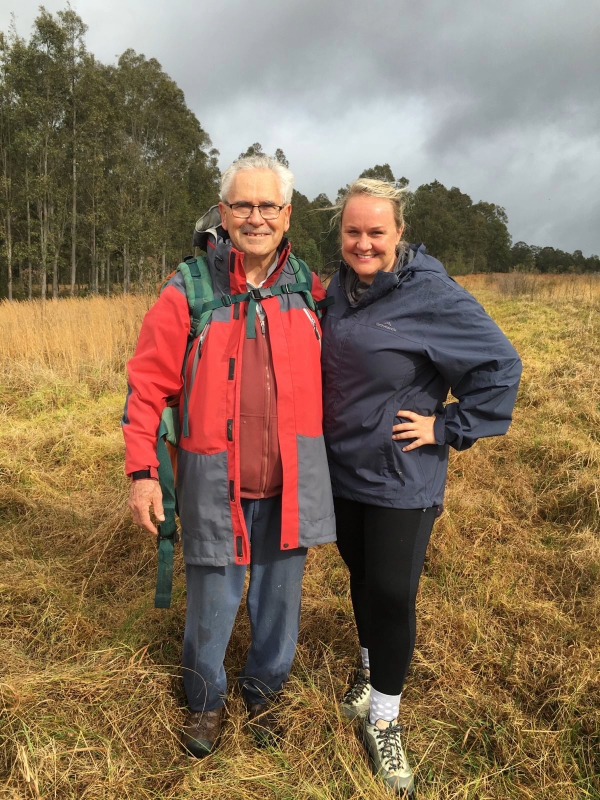
Lord Mayor Nuatali Nelmes and her father, former Deputy Lord Mayor Paul Scobie, exploring the Black Hill site in 2016.Lord Mayor Nuatali Nelmes and her father, former Deputy Lord Mayor Paul Scobie, exploring the Black Hill site in 2016.”I visited this site in 2016 with my father, a forthright environmentalist and former Councillor, and was amazed by the rich diversity of its flora and fauna.

“This land is the gem of the north-west, providing an essential link in a biodiversity corridor identified in both regional and NSW plans.

“I acknowledge the NSW Environment Minister Penny Sharpe and her support as we work with the NSW Government through the NSW Biodiversity Conservation Trust.

“The Conservation Agreement will allow us to preserve this area in perpetuity, securing resilient homes for internationally significant migratory species and protecting state significant ecosystems in one of the largest east coast estuaries.

“We also acknowledge the cultural significance of this area of land to the Awabakal and Worimi, people and will meaningfully partner with our Traditional Custodians through our Guraki Aboriginal Advisory Committee on ongoing planning and management activities at this site.”

The coastal freshwater wetland and associated woodland is one of only two land parcels containing remnant riparian native vegetation along the vast perimeter of Hexham Wetlands.

The site is rich with a diverse array of important flora and fauna populations and contains high conservation value habitat, including the Lower Hunter Spotted Gum-Ironbark Forest, which is classified as an endangered ecological community.

A number of threatened species are associated with the parcel of land, including the grey-headed flying-fox, black-neck stork and netted bottle brush.

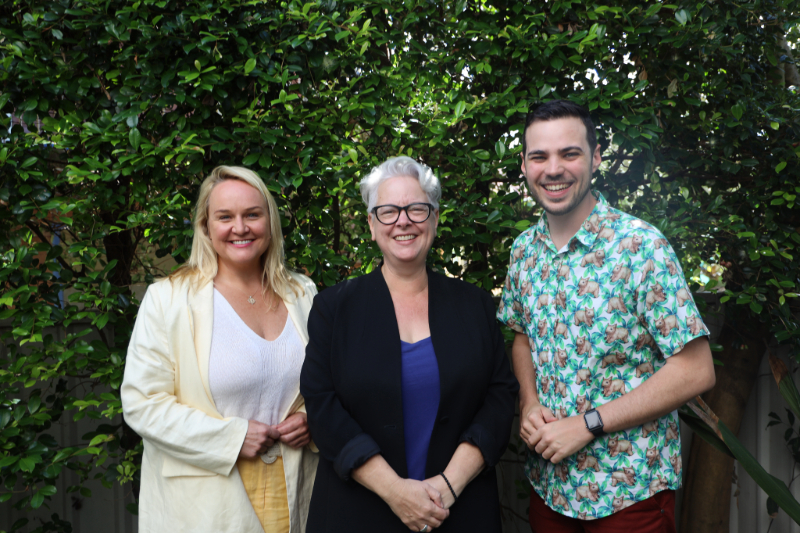
Lord Mayor Nuatali Nelmes, Minister Penny Sharpe and Deputy Lord Mayor Declan ClausenLord Mayor Nuatali Nelmes Minister Penny Sharpe and Deputy Lord Mayor Declan Clausen.NSW Environment Minister, Penny Sharpe, said it’s a fantastic result to see this area come under permanent protection.

“It has long-held significance to the Awabakal and Worimi people and has important ecological, cultural and social significance for Novocastrians and the Hunter community,” Minister Sharpe said.

“The conservation management actions City of Newcastle will take with the NSW Biodiversity Conservation Trust will preserve these wetland and woodland environments for the future. They leave a lasting legacy.”

Protecting the parcel of land aligns with three of the priorities from City of Newcastle’s Environment Strategy, including building a network of high-quality blue and green spaces to connect town centres and residential areas for enhanced liveability and biodiversity outcomes.

The value of the site has also been recognised and accommodated by Transport for NSW in its design of the adjacent extension of the M1 motorway.

Cr Nelmes said she wants to see that consideration extended to other forms of transport.

“The proposed alignment of a Lower Hunter Freight Corridor cuts across the northern boundary of the land parcel so we’re hoping this Conservation Agreement will be taken into consideration during the final design phase,” Cr Nelmes said.

Truly local bridge opens to traffic at Little Hartley

A new road bridge at the centre of the Great Western Highway upgrade at Little Hartley is now open to traffic.

The 70-metre-long bridge has been built by a large cohort of local people using locally sourced materials, including concrete from Lithgow and quarry materials from Oberon.

The bridge will carry motorists up and across a new section of the highway to the local road network extending west to Jenolan Caves.

Completion of the grade-separated interchange at Coxs River Road is a milestone for the $232 million jointly funded project to improve safety and efficiency.

The new two-span bridge is 15 metres wide with a shared path for pedestrians and cyclists so active commuters can also safely cross the highway.

In total, 530 jobs will be supported by this upgrade, with work now turning to completion of the 2.4-kilometre new section of dual-lane, separated Great Western Highway.

More than 30 per cent of the entire workforce on this upgrade since work started in March 2023 are local residents from Lithgow, Bathurst and Blue Mountains LGAs, and over 30 local businesses have been engaged.

As well as the concrete and gravel, 300 tonnes of steel was used to build the road bridge, which rests on 14 precast Super T girders, which are each 34 metres long and weigh 60 tonnes.

Once asphalting and sealing of the new road is complete, the site will be landscaped.

The Coxs River Road Upgrade is on track to be completed in 2025.

For further information visit Coxs River Road Upgrade on the Transport for NSW website.

Federal Infrastructure, Transport, Regional Development and Local Government Minister Catherine King said:

“Not only is this a remarkable piece of transport infrastructure, improving safety and efficiency at this intersection, but it is a triumph of local materials and labour.

“Having the newly constructed bridge open to traffic means motorists can start to experience the benefits of our major upgrade through this section of the Great Western Highway, with more positives to come once the whole project is complete.

“Our commitment to this project is demonstrated by the recent Federal Budget commitment of $116 million, as part of providing over $3.1 billion to NSW over the next 10 years for new and existing projects.”

Federal Regional Development, Local Government and Territories Minister Kristy McBain said:

“It was fantastic to visit the Coxs River Road Upgrade recently – which will make it easier for locals and tourists to get around, and keep our freight vehicles moving efficiently.

“That’s exactly what’s happening with this new bridge now open. It will improve road safety and unlock new economic opportunities in the Central West of NSW – a fast-growing part of the state.”

NSW Regional Transport and Roads Minister Jenny Aitchison said:

“Completion of the Coxs River Road bridge is just the start of improvements to the Great Western Highway at Little Hartley.

“The new bridge is vital for ensuring the preservation of local heritage buildings whilst improving safety and reducing congestion for local, tourist and freight traffic through the valley.

“The new pedestrian access will encourage more active transport and improve safety for the local community.”

Stephen Lawrence MLC said:

“It’s wonderful to see that this project has supported our regional economy, particularly here on the western side of the Blue Mountains through employment and the use of local business.

“Supporting local people, products and services is key to leaving a positive legacy beyond the impressive new infrastructure, once crews have finished the job and packed up and left.”

$13 million boost to protect softwood timber forests and supplies during bushfire season

The NSW Government has announced a $13 million forestry funding package to provide much needed protection of critical timber supplies in the Murray region in the lead up to the next bushfire season.

This package will build a better resilience into this important regional industry. The measures will deliver fire prevention, detection and response works that have been developed following consultation with forestry industry groups and government agencies.

The NSW Government has a plan for developing regional NSW and a plan for delivering more housing. Protecting softwood forests and production is critical to delivering on both of those plans.

Minister for Agriculture Tara Moriarty made the funding announcement in the Murraguldrie State Forest, 60km from Wagga Wagga, with Independent Member for Wagga Wagga, Dr Joe McGirr and representatives of the NSW timber industry.

Feedback from industry highlighted three key focus areas to ensure the forestry sector is better prepared for the next bushfire season and the package delivers on these as follows:

  • Prevent bushfires occurring or spreading by constructing new and maintaining established strategic fire trails and asset protection zones.
  • Build rapid response capability and suppress fires and prevent their spread such as towers, remote sensing and camera technology to detect fires early.
  • Improve tactical and operational response with additional fire tankers, equipment and infrastructure.

Today’s funding announcement puts the region in a much better position to focus on these preparedness measures.

During the 2019/2020 Black Summer bushfires, it is estimated up to 65,000 hectares of softwood plantation were affected across NSW representing around a quarter of the softwood resource state-wide.

Softwood plantation forestry in southern NSW injects some $3 billion in economic value annually and provides more than 11,000 jobs.

Minister for Agriculture Tara Moriarty said:

“The clearest message we have received from forestry industry representatives in the region is that all effort needs to be put into protecting the forests from bushfires. This package demonstrates how the Government is responding – get the job done and protect our forests and communities.

“The NSW Government has made it clear we are focused on expanding plantation assets, and we are boosting protection of the existing and future plantation resources.

“I want to thank the Forest Industries Advisory Council, the Softwoods Working Group, the Australian Forest Products Association, Forestry Corporation and other NSW agencies and industry representatives for their input and efforts in this important area.”

Member for Wagga Wagga Dr Joe McGirr said:

“Sadly, the horrific memories of the Black Summer fires are still fresh in local memories and now is the time to do all we can to reduce the risk of a repeat.

“Our softwoods industries are crucial to the future of the entire region, and especially to the Snowy Valleys, so I applaud government and industry measures to prevent bushfires in the first place, and to improve response capabilities when fires do start.

“Thousands of jobs and many millions of dollars in economic activity depend on secure, stable softwoods supplies and I congratulate industry groups and the government for this important investment in protecting the industry’s future.”

Chairman of the Softwood Working Group Peter Crowe said:

“The Softwoods Working Group (SWG) commends the minister for well targeted funding for essential projects which will significantly enhance fire protection for the valuable plantation in the NSW Murray.

“The SWG and its members look forward aiding the Minister and the department on the most valuables infrastructure investments for communities, industry and the region broadly.”

New targets will help to rebalance Sydney’s housing growth

Detailed analysis reveals the extent of the rebalancing of new homes across Greater Sydney as a result of the housing targets released by the Minns Labor Government earlier this week.

The rebalancing follows more than a decade of unfair distribution of new homes that saw Western Sydney being forced to accept the overwhelming proportion of new homes, many delivered without the necessary supporting infrastructure.

Homes that are already in the system, those already planned, approved and under construction, cannot be changed without tearing up existing development applications and building contracts.

With a housing crisis, now is not the time to stop building.

The NSW Government has significantly rebalanced the targets with the distribution of new homes.

The number of new homes has been developed from our planning reforms, the Transport Oriented Development and Low and Midrise Housing programs and are included in the targets.

Of the new homes in the targets, 53% are in Eastern Sydney LGAs including Ku-Ring-Gai and Northern Beaches. This compares to 34% of homes already in the pipeline to be delivered.

Comparatively, Western Sydney LGAs such as Penrith and Hawkesbury Council will have a target of 18% for new homes, as compared to 25% of homes already in the system.

Similarly, Central Sydney LGAs including Parramatta and Canterbury-Bankstown that make up 41% of homes already in the pipeline, account for 29% of the new home targets set by the NSW Government.

This rebalancing of new homes is part of the Government’s plan to deliver homes close to existing infrastructure and jobs, building even better communities in NSW.

Minister for Planning and Public Space Paul Scully said:

“Our new housing targets rebalance the location of new homes across Sydney.

“Of the projected homes between now and 2029, more than half are in Eastern Sydney LGAs while less than a fifth are in Western Sydney LGAs.

“Homes that are already planned in the western suburbs will continue to be built while other parts of Sydney will be doing their part to confront the housing crisis.

“For too long we’ve been building infrastructure in Sydney’s east and putting housing in the Sydney’s west.

“It’s not fair and it’s not working for communities or for taxpayers.

“Rebalancing housing is part of our plan to build better homes and better communities for NSW with homes better connected to transport and jobs.”

 Housing targetsHomes in the systemAdditional homes to meet targets
Eastern Sydney LGAs107,10041%58,29034%48,81053%
Central Sydney LGAs97,20037%70,67041%26,53029%
Western Sydney LGAs59,10022%42,41025%16,69018%
Total263,400171,37092,030

Young people in custody learning vital farming skills

Young people in custody are being given the opportunity to learn skills to help them transition back to the community and into jobs on the land, thanks to a partnership between Youth Justice NSW and the Department of Education.

Focusing on skills for the bush, training programs in sheep shearing and fence construction are being run in Youth Justice Centres and are proving popular with young people there.

A shearing program was rolled out at Riverina Youth Justice Centre in Wagga Wagga this week, providing hands-on training for young people who might be interested in the profession post release.

Funded by the NSW Department of Education and delivered by the TAFE NSW Primary Industries Centre, the program includes a range of skills including preparing a handpiece for shearing, penning sheep, undertaking basic shearing and crutching, and carrying out wool pressing.

Meanwhile, fencing accredited training was run at Cobham Youth Justice Centre by Emergency Australia over 3 days this week, teaching young people how to install, maintain and repair farm fencing.

Young people have access to a range of skills and accreditation opportunities in Youth Justice Centres, with trades ranging from bricklaying, mechanics and panelling to hairdressing and barista training.

Minister for Youth Justice Jihad Dib said:

“Everyone deserves another chance and one of the many ways we support young people while they are in a Youth Justice Centre is to give them real life skills that are useful in their future, not only in jobs but in everyday life.

“We are providing training in areas where there is high demand in regional New South Wales such as shearing and fence construction, making sure our young people have the best chance of finding a job.

“Whether it’s hospitality, barista, barber training and mechanics or horticulture and traffic control, the trade qualifications being rolled out across the 6 Youth Justice Centres in NSW are varied and provide a range of opportunities for young people to learn important skills.”

Minister for Skills and Training Steve Whan said:

“Regardless of what their history is, every young person deserves to be set up for success and given equitable opportunities to pursue a career.

“This is a fantastic program and another example of how the Department of Education and TAFE NSW provides students with the in-demand skills to get a job and make an immediate impact in the workplace.

“Empowering these young people with the skills and confidence to find meaningful work will help them make a positive contribution to the community and the agriculture industry.”

NSW powers ahead with biggest energy storage tender

NSW has opened the largest energy storage tender in NSW history, seeking new long-duration storage projects to boost electricity reliability and keep the lights on in NSW.

These projects will help ensure a steady and reliable supply of energy around the clock. They will play a significant role in the NSW Government’s transition to renewable energy, which will deliver reliable and affordable power to households and businesses at the same time as driving down emissions to meet our net zero targets.

Long-duration storage projects can bid for financial support under the new NSW Electricity Infrastructure Roadmap Tender 5 which is now open. This tender offers support for up to 1 gigawatt of projects, which can each release energy into the NSW grid for at least 8 hours.

The energy stored within 1 gigawatt of 8-hour long-duration storage is equivalent to the daily energy consumption of around 505,000 households.

This tender will take NSW closer to its target of 2 gigawatts of new long-duration storage by 2030.

Long-duration storage serves an important role as it allows renewable energy such as solar and wind to be stored and then released on demand when needed. Projects could include pumped hydro, batteries, compressed air storage and other technologies.

This is the fifth tender under the NSW Electricity Infrastructure Roadmap, and the third for long-duration storage. It is open to projects connecting to new planned infrastructure in Renewable Energy Zones with Access Schemes, or existing infrastructure state-wide.

Renewable Energy Zones are the power plants of the future. They group generation and storage projects in areas where there is plenty of renewable resources, and connect them to transition lines to pump the electricity around NSW.

The NSW Government is also announcing that a second Renewable Energy Zone is open for business. The new NSW Electricity Infrastructure Roadmap Tender 5 is accepting applications for the right to connect projects in the South West Renewable Energy Zone, around Hay.

Companies can apply for access rights, which allow them to progress their connection to the electricity grid.

Projects will compete for an initial 3.98 gigawatts of Access Rights, which unlocks the ability to generate enough electricity to power more than 1.9 million households.

They will be assessed on their contribution towards and engagement with communities, and those awarded rights will pay fees to fund community benefit and employment programs in the region.

The South West Renewable Energy Zone is expected to receive up to $2.8 billion in private investment by 2030. At its peak, it is expected to support more than 2,000 construction jobs in the region.

AEMO Services is conducting the long-duration storage and South West Access Rights tenders, as the state’s independent Consumer Trustee.

Projects can register on the AEMO Services website.

Minister for Climate Change and Energy Penny Sharpe said:

“Opening this tender for long duration storage projects and access to a second Renewable Energy Zone are milestones in the Electricity Infrastructure Roadmap.

“They will deliver projects that ensure NSW has enough renewable energy generation and storage when coal-fired power stations retire. They also give certainty to investors and communities.

“Long-duration storage is a key part of our future energy system, ensuring we have power when we need it.

“The opening of the second access rights process will ensure the right combination of projects can connect to the grid in a way that delivers for NSW electricity consumers and host communities.

“It shows the NSW Government is delivering the transition to a renewable energy system that will allow households and businesses to access affordable, reliable and clean energy to bring down bills and greenhouse gas emissions.”

Development assessment timeframes for social and affordable housing to be halved under Labor

The NSW Government has changed the way affordable and social housing development assessments are processed delivering faster approvals and more homes for those who need it most.

Under a new state-led rezoning pathway, the Government will accelerate rezoning proposals from the State’s housing agencies including Homes NSW (NSW Land and Housing Corporation and Aboriginal Housing Office) and Landcom.

A newly dedicated team within the Department of Planning, Housing and Infrastructure (DPHI) will manage the applications from concept review to lodgement, exhibition and final assessment.

As wait-times for social and affordable housing grow, greater responsibility is placed on councils and planners to move projects through the planning system. In the meantime, people are doing it tough. Under this new pathway these timeframes are set to halved.

Establishing an accelerated pathway for rezoning for the Government’s housing delivery agencies allows councils to focus on the assessment of local development applications.

These are the latest changes the Government is making to streamline the planning system, all aimed at expediting the delivery of more homes to the people of NSW.

This Government has already taken significant steps to improve and expand social and affordable housing services by introducing:

  • A new bonus Floor Space Ratio (FSR) on new developments of up to 30 per cent and a height bonus of up to 30 per cent where a proposal includes a minimum of 15 per cent of the gross floor area (GFA) as affordable housing.
  • Changes to self-assessment powers for certain social, affordable and public housing providers to ensure more homes can be built faster.
  • A requirement for affordable housing to be delivered at all TOD locations.

For more information on the pathway visit here.

Minister for Planning and Public Spaces Paul Scully said:

“This newly created team will prioritise social and affordable housing by streamlining the application process to help deliver critical housing for people in need for years to come.

“The former Government left us with a planning system that made the delivery of social and affordable housing, prolonged and complicated, these changes are just the latest step in rectifying this.

“All applications using this pathway will still need to meet eligibility criteria including their alignment to the State and Commonwealth housing commitments.”

Minister for Housing Rose Jackson said:

“We have been clear – all options are on the table to address the housing crisis. A key area for reform is our planning rules. This government is dedicated to exploring new ways to increase housing supply and enhance existing systems.

“One of those improvements is the new social and affordable housing planning pathway which will help our agencies get the job done faster.

“This is another important step in rebuilding the housing system in NSW. We need to expedite the delivery of more social and affordable homes and not have applications held up in unwieldly and complicated planning rules that don’t deliver homes for people in need.”

Have your say on NSW heritage: Nominate a Blue Plaque

Nominations are now open for a fresh round of Blue Plaques to celebrate the people, groups and events which have contributed to the rich heritage of NSW.

The Minns Labor Government is inviting everyone from individuals and families to schools and community organisations to submit a nomination.

Whether it’s an unsung hero, group or landmark event, now is the time to put them forward for recognition in this popular Heritage NSW program. More than a dozen recipients will be chosen from these submissions.

The Minns Labor Government is committed to protecting, preserving and modernising NSW heritage, and ensuring it reflects our diverse community.

This round of blue plaques will celebrate the diversity of our community, with nominations falling into themes including Aboriginal and Torres Strait Islander, environment and sustainability, sport, social justice and advocacy, war-time stories, the elderly, disability, LGBTQIA+ and more.

Nominating for a blue plaque is easy and can be done online. To be eligible, they must:

  • relate to a person, people or event that has made a lasting impact on a community in NSW or NSW as a whole
  • be appropriate, sensitive and engaging to a wide audience
  • relate to a person or people who passed away more than 20 years ago, or an event which occurred more than 20 years ago
  • have a location in NSW for the blue plaque that is publicly accessible and has a direct connection to the person, people, or event.

Heritage NSW and independent historians will evaluate nominations based on the eligibility criteria.

For the first time, the NSW Government is announcing a People’s Choice Blue Plaque. Heritage NSW has shortlisted favourite nominations from past rounds and launched a public vote to decide the inaugural People’s Choice Blue Plaque.

The nominations people can vote for are:

  • Abdul Wade (Abdul Wahid Khan) – an Afghan immigrant who pioneered camel transportation in Australia’s outback.
  • Coralia Stavropoulos (Sister Kaliniki) – Australia’s first ordained Greek Orthodox nun who dedicated her life to supporting Greek immigrants in Australia.
  • Malcolm Cole – Dancer, teacher, and LGBTQIA+ activist who championed social change and Indigenous rights.
  • Marie Beuzville Byles – The first practising female solicitor in NSW who paved the way for women in law.
  • Mother John Baptist De Lacy – A pioneering Irish nun who laid the foundation for healthcare and health education in colonial Sydney.
  • The Resch brothers – German migrants who brewed their way from outback NSW to creating beverage empires.
  • Ruby Payne-Scott – A trailblazer in radio astronomy and advocate for women in science.
  • The creation of Weet-Bix – The Australian breakfast staple.

To date, close to 50 blue plaques have been announced in cities and towns right across NSW, to honour noteworthy individuals and moments that have contributed to our rich cultural heritage.

They include activists, authors, artists, architects, pioneers, philanthropists, groups including Bondi Surf Bathers Life Saving Club and events such as the Soldiers’ Riots.

Nominate or cast a vote.

Nominations close Sunday 30 June, 2024.

Minister for Heritage Penny Sharpe:

“Everyone is invited to get involved in preserving and celebrating the diverse history of NSW, ensuring the stories of those who have shaped our state are honoured and remembered.

“I want everyone to share interesting, quirky or lesser-known stories of the people, groups and events which have made NSW what it is today.

“The Minns Labor Government values the diversity of our community and history, and we look forward to it being recognised in this round of Blue Plaques.

“The People’s Choice category is an exciting way for everyone to get involved, even if they don’t have a specific nomination in mind.”