Demountables replaced with permanent classrooms in major school upgrade for Western Sydney community

The Minns Labor Government is continuing work to ensure families and children across Western Sydney have access to quality public education infrastructure, with a major upgrade for one of the area’s most overcrowded schools commencing today.

Premier Chris Minns and Deputy Premier Prue Car are turning the sod for the long overdue upgrade of Girraween Public School, where three-quarters of the school’s classrooms are in demountables after years of neglect and broken promises from the former Liberal National government.

The school was promised an upgrade in 2017 after enrolments soared to three times the capacity of its permanent buildings, but the Liberals and Nationals failed to deliver any progress. As a consequence, students continued to learn in temporary demountable classrooms that now make up 76% of the school’s teaching spaces. 

This upgrade will see 38 demountable classrooms on the site replaced with new, fit for purpose permanent classrooms as the Minns Labor Government continues to deliver on their plan to end the former government’s reliance on temporary classrooms.

Further works at the school will include:

  • An extended and refurbished school hall
  • Extensions to the covered outdoor learning area and the library
  • A refurbished school carpark with improved access
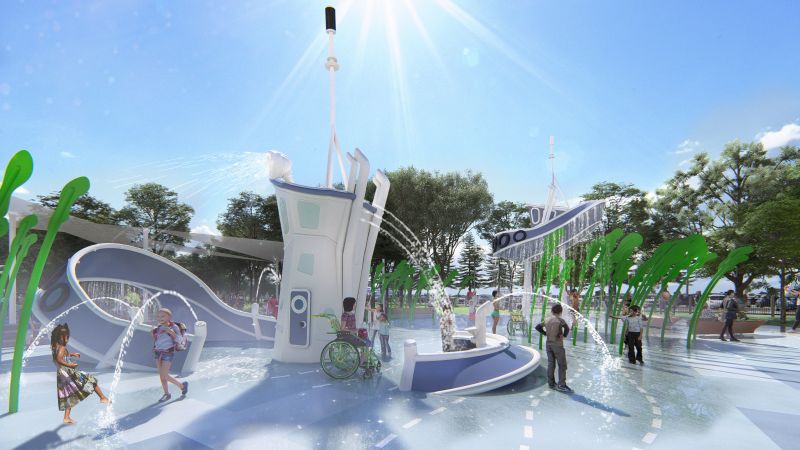
  • New and upgraded amenities, and new landscaping and play areas

To minimise the impact of construction on the school community the upgrade will be delivered in two stages, with students and staff expected to begin learning in the new fit-for-purpose classrooms by day one, term one, 2026. All upgrade works, including the removal of demountables, are due to be complete later in the same year.

This project is part of the Minns Labor Government record $3.6 billion investment in new and upgraded schools across Western Sydney, as the Government continues work to ensure families in growing communities have access to a high quality, free public education.

Chris Minns, Premier of New South Wales said:

“For years this school community has had to rely on temporary classrooms that aren’t fit for purpose, as promises of an upgrade were left unfulfilled by the former government.

“We are making targeted investments to ensure, no matter the post code, families in New South Wales have access to a quality, free, public education.

“This upgrade is long overdue, and we know there is still work to be done to ensure growing communities have the infrastructure they need but I’m thrilled that we’ve reached this milestone.”

Deputy Premier Prue Car, Minister for Education and Early Learning and Minister for Western Sydney, said:

“The Minns Labor Government is committed to ensuring public school students and staff across NSW have access to the high quality school facilities they need and deserve.

“We are rebuilding public education in NSW after 12 years of neglect and broken promises by the former Liberal National Government, who committed to upgrade Girraween Public School in 2017 but did nothing to progress it.

“Students and staff at Girraween Public School were left to teach and learn in ageing demountables that became a permanent fixture under the Liberals and Nationals.

“It took the election of a Labor government for this much-needed upgrade to finally be delivered.

“These new facilities will provide the modern learning tools to help develop students’ skills and set them up for academic success, and I look forward to seeing them complete in 2026.”

Member for Prospect Hugh McDermott said:

“I am extremely proud the NSW Government is helping to deliver upgraded facilities where they are needed most.

“We know that well designed schools and classrooms can have far-reaching benefits for both staff and student performance, recruitment and retention.

“Western Sydney is growing at a rapid rate and these new facilities will future-proof Girraween Public School as a modern, flexible and comprehensive public school offering for families in this community for generations to come.”

Girraween Public School Principal Jodi Warner said:

“This school holds a special place in our community’s hearts, and I am thankful the NSW Government is helping to deliver the upgraded facilities our students and staff need and deserve.

“These new facilities will provide a modern learning environment for students in our community now and into the future.

“I look forward to seeing construction take shape, and I cannot wait to see the finished product in the not-too-distant future.”

Official opening of Gadigal Eye Clinic

Critical eye assessments can now be provided to patients living in regional and remote areas as a result of new technology which has been installed at Sydney Eye Hospital.

The new retinal cameras enable specialists at the newly opened Gadigal Eye Clinic to conduct eye checks at Moree without the need of an on-site specialist, potentially benefitting thousands of people. Work to expand the network to Tamworth is underway.

The Clinic, based at Sydney Eye Hospital, has already made a significant difference to the eye health of Aboriginal and Torres Strait Islander people all over NSW.

More than 90,000 patients have already been seen for corneal, retinal and general eye treatment since the clinic, originally known as the Bicentennial Eye Clinic, was set up in 2014.

The retinal cameras will be easily used by GPs and nurses in the outreach centres, making it possible for the team based at the Sydney clinic to diagnose and provide a treatment plan for eye issues detected in a rural or regionally based patient.

Access to this service will support Aboriginal people, no matter where they live, to have the same access to services, without needing to leave their community. They can have peace of mind knowing their ongoing care is provided in partnership with local healthcare providers. This virtual service will begin in 2025.

Patients treated in person at the Macquarie Street clinic will have a welcoming, culturally safe space that includes artwork by Aboriginal artist and Yuin man, Billy Reynolds. The hospital grounds have also been transformed with guardian stones and Australian native plants.

Fundraising by the Sydney Eye Hospital Foundation has helped raise $200,000 towards creating this welcoming and safe environment.

Minister for Health, Ryan Park:

“We know that Aboriginal people are three times more likely to suffer from visual impairments than non-Aboriginal Australians. They are also four times more likely to have diabetic eye disease and 12 times more likely to have a blinding cataract.

“This clinic will address these statistics, acting as a hub for in-person as well as virtual care services for eye patients throughout rural and regional NSW.

“The Gadigal clinic will provide world-class care in an environment that prioritises the needs and comfort of the clients – by doing so, we can provide the best patient-centred and holistic healthcare.

“I’m really proud Sydney Eye Hospital are embracing virtual care, as it goes a long way to ensuring all communities have the very best standards of healthcare, whether they are in rural, regional, remote or large metropolitan areas.”

Minister for Aboriginal Affairs and TreatyDavid Harris:

“It’s estimated 35 per cent of Aboriginal adults have never had an eye examination and when a condition or disease is diagnosed, they are waiting longer for surgery accounting for 11 per cent of the health gap.

“According to National Eye Health report, 94 per cent of vision impairment or blindness experienced by Aboriginal and Torres Strait Islander peoples is preventable or treatable.

“Closing the gap to improve health outcomes for Aboriginal people and to do so in a culturally safe and appropriate way is a top priority of the Minns Labor Government and the Gadigal Eye Clinic is a perfect example of this.”

Member for Sydney, Alex Greenwich:

“People in the city can take for granted how lucky we are to have so many medical specialists so accessible compared to remote and regional areas. The Gadigal Eye Clinic not only bridges that gap through technology allowing teams based at the Sydney clinic to diagnose and provide a treatment plan for eye issues, it also helps to close the gap of the poor eye health, impairment and blindness currently disproportionately experienced by Aboriginal and Torres Strait Islander peoples.”

Jennie Barry, General Manager, Sydney/Sydney Eye Hospital:

“The clinic will help us Close The Gap by reducing barriers to accessing eye care – particularly for Aboriginal and Torres Strait Islander patients in rural and remote locations – and improving coordination of care between different providers.

“The new technology will enable local teams based in regional and rural NSW to be able to call on the specialist expertise of both Sydney/Sydney Eye and Prince of Wales Hospital.”

Improving access to complex menopause care on the Central Coast

Women who experience severe or complex menopause symptoms will benefit from enhanced support, with the opening of Central Coast Local Health District’s (CCLHD) new Menopause Service.

The CCLHD Menopause Service is part of NSW Health’s extensive menopause network, which includes four menopause hubs and multiple referral sites throughout the State.

As a part of this network, the Central Coast-based service is designed to assist women whose menopause symptoms have not responded to previous treatments, or who face additional complications from other medical conditions.

CCLHD’s Menopause Service is linked to Northern Sydney Local Health District’s Menopause Hub based at Royal North Shore Hospital, which means women can access a comprehensive approach to managing severe menopausal symptoms through a multi-disciplinary team of medical specialists, nursing and allied health professionals, physiotherapy, dietetics, social work and clinical psychologists.

General practitioners, specialists, and nurse practitioners can refer eligible women for advanced care. Women are also able to self-refer for an initial appointment. GP referral is required for subsequent appointments and referral to the specialised Royal North Shore Menopause Hub. Referrals to the service can be made by emailing CCLHD-Menopause-Service@health.nsw.gov.au

For more information about the CCLHD Menopause Service and referral criteria, contact 4356 9300.

More information about NSW Health’s menopause services can be found here: https://www.health.nsw.gov.au/women/Pages/menopause.aspx

Minister for Regional Health, Ryan Park:

“Up to one in four women experience severe and debilitating menopause symptoms, which is why services like this one are so important.

“The opening of the CCLHD menopause service will improve access to care for women needing support for severe or complex menopause symptoms on the Central Coast.”

Minister for the Central Coast, David Harris:

“I’m pleased to see this service is now available on the Central Coast for local women experiencing severe or complex menopause symptoms.

“To have access to this specialised care right here on the Coast has the potential to be life-changing for many women in our community and is a welcome addition to the Central Coast Local Health District’s service offer.”

Minister for Women, Jodie Harrison:

“Women have identified menopause as a top health issue and managing it can be complex.

“The opening of a new Menopause Service in the Central Coast ensures regional women experiencing menopause symptoms who need specialised care and support can get it when they need it, including referrals to a Menopause Hub.”

Member for Gosford, Liesl Tesch:

“Where was this service when I needed it three years ago!? I know I was unprepared to deal with the symptoms of menopause when they arrived and it would have been great to be able to access a team of experts in our own community.

“It’s great to know that women on the Coast can now access these very important comprehensive services and we can self-refer for an initial appointment.”

Member for the Entrance, David Mehan:

“The opening of the CCLHD Menopause Service is an important step in advancing women’s health on the Central Coast.

“Offering specialised services for menopause ensures that women in our community receive the necessary support, education, treatment and care should they require it.”

CCLHD Menopause Coordinator Kelly Armstrong:

“Our nurse and physiotherapist-led service will work in partnership with the patient’s GP, to improve their quality of life and symptom management through menopause.

“We know for many women symptoms can range in severity and type. Women with severe and complex menopause symptoms often need specialised care from a multi-disciplinary team.  With the support of the Royal North Shore Menopause Hub, I’m thrilled we can now provide this life-changing service for women.”

Amplifying protection for the live music scene

Live music venues in NSW will gain extra protection against threats to their survival under new measures introduced by the Minns Labor Government.

As part of the second tranche of Vibrancy Reforms, which passed Parliament on Thursday, the Minister for Music and the Night-time Economy is empowered to intervene if a significant music venue is at risk of closing its doors.

These are world-first legislative protections designed to ensure the health of the NSW live music scene and prevent closures that took away venues like the Annandale Hotel and The Basement and threatened the survival of venues like the Eltham Hotel.

The first ever census of live music in NSW, the State of the Scene report issued by Sound NSW in June, found there were 795 live venues across the state, with 55 considered “dedicated live music venues”.

A framework will allow venues to opt-in to a range of supports that can be deployed if a significant venue’s survival is under threat for reasons that can include noise complaints, vexatious neighbours or hostile landlords.

A significant live music venue is defined as one which hosts live, predominantly original, music as the key function of its business and is essential to the touring and live, local music scene in NSW.

The Minister will be able to deploy co-ordinated support from Sound NSW, the 24 Hour Commissioner, the Hospitality Concierge and the Business Bureau as a response to threatened venues that require assistance. 

The Vibrancy Reforms legislation also provides for the Minister to request mediation between a venue and another party to resolve a matter before it progresses further. At that point, a venue may agree that the public and its music fans be alerted that it is under threat.

The first tranche of the Minns Labor Government’s made it impossible for a single neighbour noise complaint to shut down a pub or licensed venue.

It also increased incentives for live music and live performance, with two hours extended trading and an 80% reduction in liquor licence fees for licensed venues offering live music.

The second tranche of reforms, which passed Parliament with unanimous support, has torn up baffling restrictions on licensed venues that include “no entertainment” clauses or dictate what genre of music or even how many musicians can play.

Property buyers will in future be notified they are moving into an existing entertainment zone to protect the intent of Special Entertainment Precincts and reduce the friction between venues and their neighbours.

Minister for Music and the Night-time Economy John Graham said:

“The music-loving community has been forced to say Rest In Peace too many times to the foundational live venues that were the incubators of Australian music. We are not going to sit by and watch another Annandale Hotel unplug the music and dismantle the stage.

“In a cost of living crisis, we need a strong local music scene where people can enjoy live music without shelling out the hundreds of dollars it can cost to see the big touring international acts.

“Protecting our time-honoured venues is also about supporting the night-time economy. The NSW music census found live music provides 25,000 jobs and contributes $5.5 billion in economic output to NSW. We want to amplify that contribution to the economy.

“A state significant music venues framework is part of the rebalance, and it’s long overdue.”

GIRDER LIFTS FOR NORTHERN INTERCHANGE AS PART OF M1 MOTORWAY EXTENSION TO RAYMOND TERRACE

The M1 Pacific Motorway extension to Raymond Terrace has reached a significant milestone with the successful lifting of the first girders at the northern interchange on the Heatherbrae Bypass.

Motorists will see the interchange come to life after the lifting of eight bridge girders onto the northern interchange on Thursday 24 and Friday 25 October.

The overbridge at the northern interchange will serve as the main direct access off the M1 Pacific Motorway, to the Pacific Highway and the townships of Heatherbrae and Raymond Terrace.

When completed, the interchange will provide southbound motorists the option to continue into Heatherbrae using the local road network or take the new motorway across Windeyers Creek bypassing Heatherbrae.

The work to build the overbridge includes geotechnical investigations, relocation of utilities, drainage, earthworks, bridge substructure and superstructure, and pavement works.

The team has already lifted 62 of the 827 bridge girders into place across the project, with more than 70 per cent of the Heatherbrae Bypass workforce sourced from the Hunter Region, including 38 apprentices and 12 trainees.

The extension is expected to be open to traffic in mid-2028.

For more information and to sign up for regular updates on the progress of the M1 extension visit nswroads.work/m12rtportal.

Federal Minister for Infrastructure, Transport, Regional Development and Local Government Catherine King:

“This is an exciting step forward for the M1 Motorway extension to Raymond Terrace project.

“Once complete, this project, together with the Coffs Harbour bypass, will provide the remaining major upgrades to complete a free-flowing route between Sydney and Brisbane with no traffic lights.

“The Australian and NSW Governments are proud to be working together to deliver the ‘missing link’ and strengthening our road network across the nation.”

NSW Minister for Regional Transport and Roads Jenny Aitchison:

“This is great news for the 48,000 motorists from across NSW who travel on the notorious bottleneck on the Pacific Highway at Hexham.

“Combined with the Hexham Straight Widening project, this will significantly improve journeys for local motorists, visitors and the freight industry.

“The Australian and NSW Governments are delivering legacy infrastructure which will cater to the needs of our great state in the decades ahead.”

Federal Member for Paterson Meryl Swanson:

“This is a vital missing link that I have pushed the Federal Government to support since 2016 and has been accelerated under the Albanese and Minns Governments.

“The M1 extension to Raymond Terrace will transform travel in this region by removing up to 25,000 vehicles a day away from key congestion areas, saving motorists around nine minutes off their trip.”

NSW Member for Port Stephens Kate Washington:

“It’s great to see the progress being made on the M1 Pacific Highway extension to Raymond Terrace.

“Once completed, this project will be a huge time saver for locals and visitors traveling in and around Port Stephens.

“The Heatherbrae Bypass will reduce traffic on our local roads, making them safer for everyone.”

Additional humanitarian assistance to Lebanon

Australia will provide a further $10 million in humanitarian assistance to conflict-affected civilians in Lebanon.

Around 800,000 people have been displaced in Lebanon by the conflict between Israel and Hizballah. Emergency shelters have been overwhelmed and humanitarian workers killed.

Australia’s humanitarian assistance will be delivered through United Nations partners to address immediate and emerging needs, including access to food, shelter, healthcare and other critical services.

This will support international efforts, including through the International Conference in Support of Lebanon’s People and Sovereignty, convened in Paris overnight.

Since 7 October 2023, we have committed $94.5 million in humanitarian assistance to support civilians impacted by conflicts in Gaza and Lebanon and to respond to the refugee crisis in the region worsened by those conflicts.

Australia has been clear in its call for ceasefires in both Lebanon and in Gaza. We continue to call for all parties to uphold international law and protect civilians and humanitarian workers.

We continue to advise Australians not to travel to Lebanon. Australians in Lebanon should leave. Australians in Lebanon can register on DFAT’s Crisis Portal or by calling the Australian Government’s 24-hour Consular Emergency Centre on +61 2 6261 3305.

Minister for Foreign Affairs, Senator the Hon Penny Wong:

“The conflict in Lebanon is taking a heavy toll on civilians, including women and children, with around 800,000 people having now been displaced.

“Australia and our partners continue to press for ceasefires in Lebanon and in Gaza. This additional contribution will help those in urgent need, through access to food, shelter and healthcare.”

Minister for International Development and The Pacific, the Hon Pat Conroy MP:

“Civilians and humanitarian workers must be protected, and humanitarian personnel must be able to access all individuals in need of assistance.”

“Australia’s humanitarian funding will provide critical services for people displaced or affected by these conflicts and help protect the most vulnerable.”

Pacific Policing Initiative Steps Up at CHOGM 2024

Prime Minister Anthony Albanese has today joined other Pacific leaders to mark the first deployment of the new Pacific Police Support Group, part of the Pacific Policing Initiative (PPI), backed by Australia and endorsed by Pacific Island Forum leaders in August 2024.
 
More than 40 police officers from 11 Pacific countries are part of this deployment, providing security support for Samoa’s hosting of the Commonwealth Heads of Government Meeting.  The deployment includes officers from Pacific partners trained at the PPI’s Pinkenba training hub in Brisbane.
 
The Pacific Police Support Group is a new multi-country police capability ready to respond to emergencies or assist during major events, at the request of a Pacific Island Forum Government.
 
Australia has committed approximately $400 million over five years to ensure the Pacific Policing Initiative delivers on the agreement by leaders that the security of the Pacific is the shared responsibility of the Pacific family.
 
The PPI is a Pacific-led initiative designed to strengthen policing capacity and coordination in the region. The PPI has three pillars – regional police training Centres of Excellence, the Pacific Police Support Group and a Pacific Policing Development and Coordination Hub, based in Brisbane.
 
In marking this first deployment, Prime Minister Albanese confirmed that Australia will support the establishment of four regional Centres of Excellence under the PPI. The Centres of Excellence will be purpose-built to train police from across the region in a range of specialist capabilities.
 
Prime Minister Anthony Albanese:
 
“Samoa is the first Pacific island country to host CHOGM. Australia is proud to join our Pacific family to provide police and security support for Samoa as host.
 
“Two months since the Pacific Policing Initiative was endorsed by Pacific leaders, we are seeing it deliver for the region at CHOGM 2024.
 
“The Pacific Policing Initiative will play an important role in promoting regional security across the Pacific region.
 
This is about Pacific security, delivered by the Pacific, in support of Pacific sovereignty.”

Appeal to locate elderly man missing from Lake Macquarie 

Police are appealing for public assistance as they continue to search for a missing elderly man in the Lake Macquarie area.

George Linz, aged 98, was last seen on Silverdale Parade, Jewells, about 10.30am yesterday (Friday 25 October 2024).

When George couldn’t be located, officers from Lake Macquarie Police District were notified and commenced inquiries.

Police hold concerns for George’s welfare due to his age and as he has limited mobility.

George is described as being of Caucasian appearance, about 180cm tall, of slim build, and with grey hair.

He was last seen wearing an apricot-coloured jumper, grey trackpants and dark-coloured sneakers.

Anyone with information on George’s whereabouts is urged to contact Lake Macquarie Police District or Crime Stoppers on 1800 333 000.