
Mental health trainees offer safe space for Far West youth

A training program in Western NSW is helping to break down barriers and ensure Aboriginal communities have better access to mental health support on Country.

A training program in Western NSW is helping to break down barriers and ensure Aboriginal communities have better access to mental health support on Country.

Communities in Nyngan, Warren and Condobolin, Coonamble and Gulargambone are benefiting from better access to culturally safe and informed mental health services following the graduation of 20 trainees from the Marathon Health Aboriginal Wellness Worker traineeship program.

It comes a year after Marathon Health received $1 million in funding from the NSW Government’s Regional Aboriginal Partnerships Program to roll out the program and help graduates like proud Wiradjuri woman, Shaana Daley, deliver culturally safe outreach support to western communities.

Trainees such as Ms Daley are employed by Marathon Health during their studies and receive on-the-job experience helping young people aged 12-25 years in Western NSW improve their mental health literacy, increase help-seeking behaviours, and receive basic health assessments and referrals to appropriate services.

The traineeship program is about removing barriers to education and employment and assists students with accommodation, travel costs, meal allowances and support during their studies.

Ms Daley, who recently completed her Certificate IV in Mental Health at the Warren Youth Centre and Community Hub, is grateful for the opportunity to deliver the kind of mental health support she would have liked to receive while growing up.

She is among a total of 29 participants in the Aboriginal Wellness Worker traineeship program, including:

  • 13 graduates in the first cohort, who graduated with a Certificate IV Mental Health.
  • Seven graduates in the second cohort, who graduated with a Certificate III in Primary Health.
  • Nine students in cohort three, who are currently undertaking their Certificate III Community Services

Through Marathon Health’s Youth Outreach Project, graduates like Ms Daley will begin servicing additional communities in Bourke, Brewarrina, Lightning Ridge, Walgett and Collarenebri later in the year.

The program is supported by Western NSW Primary Health Network.

Minister for Regional and Western NSW, Tara Moriarty said:

“The NSW Government is committed to boosting mental health outcomes in Western NSW, and I am pleased to share that we have extended the Aboriginal Wellness Worker traineeship program to now facilitate a third cohort of trainees who will graduate with a Certificate III in Community Services.

“The thing I love about this program is that it is working towards addressing an immediate healthcare need in Far West communities while also giving trainees hands-on experience and on-the-job training while they complete their studies.”

“It means that by the time our trainees graduate, they already have some great experience under their belt to support and help youth in their local communities to help ensure they are aware of what mental health support services are there when, or if, they need them.”

Minister for Aboriginal Affairs, David Harris said:

“The NSW Government’s commitment to achieving its Closing the Gap priorities emphasises the need to address mental health for Aboriginal people, and the Aboriginal Wellness Worker Program will ensure that Aboriginal communities have access to mental health support from professionals with firsthand knowledge of local issues.

“Closing the Gap is about empowering local Aboriginal communities to drive shared decision-making and self-determination. We know there are better outcomes when Aboriginal organisations and people design, lead and implement Closing the Gap initiatives, which this program is a wonderful example of.

“With 20 First Nations trainees now certified and more to come, this achievement signifies a strengthening of the First Nations workforce in 10 communities across Western NSW and promises better outcomes for Aboriginal and Torres Strait Islander people.

“The theme of NAIDOC Week 2024, ‘Keep the Fire Burning! Blak, Loud and Proud,’ celebrates Indigenous identity and empowers First Nations people to stand tall in their heritage and support each other –  Graduates like Wiradjuri woman Shaana Daley exemplify this year’s theme, and I look forward to seeing what she does in her community.”

Marathon Health Program Team Lead, Brendan Cubby, said:

“It is really encouraging that many of our learners are seeing opportunities for themselves and their families that just weren’t possible before taking part in this program,” Mr Cubby said.

“The program is breaking down barriers and opening up wider pathways for people from remote communities”.

Shaana Daley – Cohort 1 graduate– Certificate IV Mental Health:

“Growing up, we didn’t have a lot of support where mental health was concerned,” Ms Daley said.

“Mental health is very important, especially for our youth. They need to have that support.

“I can already see the benefits of just being there for them, for the kids to have someone they can talk to and open up to – especially our Aboriginal kids. This is something that has been needed for a very long time, and if I can help even one kid, that’s enough for me.”

Stevie Carr – Cohort 2 graduate– Certificate III Aboriginal and/or Torres Strait Islander Primary Health Care:

“The youth outreach program has not only given the chance to further my career but also allowed me to better support my community,” Stevie said.

“I am very grateful to have been given the opportunity to learn and further my knowledge of my people and how important it is to ensure meaningful community engagement when it comes to our health and education.”

Lacey Boney – Cohort 3 trainee – Cert III Community Services:

“I believe that having qualifications in community service can have a significant impact” Ms Boney said.

“By acquiring these skills, I feel that I can contribute by creating culturally safe environments that are welcoming and provide a sense of belonging and overall well-being for community members.”
New contract for RFS aerial fleet building home-grown talent

The NSW Government is providing certainty for the state’s aerial bush firefighting capacity, with a new 10-year aviation contract signed by the NSW Rural Fire Service (RFS) that will boost local jobs and home-grown skills.

Coulson Aviation Australia, which has managed the majority of RFS aircraft for the past five years, has been awarded the contract to oversee the management, operation and maintenance of the entire RFS fleet for the next decade.

The fleet includes 11 aircraft ­- a 737 large air tanker, two Cessna Citations, six Bell-412 helicopters, a Chinook helicopter, and a Beechcraft Super King Air.

Under the new contract, the aircraft will be overseen by primarily Australian crews, in a shift that bolsters the local workforce and makes NSW more self-sufficient as bush fire seasons typically grow longer and more intense.

Global demand for trained air service crews is high as many travel between hemispheres to fight fires which are becoming more challenging to control.

Building local fleet and aviation teams will minimise the need for aviation support from the company’s international personnel as the bush fire seasons in the northern and southern hemispheres increasingly overlap.

The new contract will also help develop the next generation of aviation personnel in NSW, with an expansion of the apprenticeship program attached to the RFS fleet.  Providing training for local crews in advanced firefighting techniques will also ensure the community is better protected.

At least two mechanical apprentices will be part of an aviation team at any given time, providing an opportunity for them to learn from the industry’s best and develop their skills handling firefighting aircraft.

During the 2022-23 bush fire season, RFS aircraft undertook more than 340 taskings and rescued 113 people. The RFS’s 737 ‘Marie Bashir’ was dispatched on 41 occasions to help battle 26 bush fires, dropping more than 600,000 litres of retardant.

The fleet is also used to support other emergency services, such as the NSW State Emergency Service for rescues during floods, when they are not being used for firefighting duties.

The new Chinook helicopter added to the NSW fleet last year will soon be able to hold its full capacity of 11,000 litres of water or retardant to fight fires this upcoming bush fire season, once the new water tanker is installed as part of the new contract announced today.

Minister for Emergency Services Jihad Dib said:

“The RFS is at the forefront of aerial firefighting innovation and response, with its fleet playing a pivotal role in firefighting efforts not just here in NSW, but right across Australia.”

“We are now looking to the future and working on making our local fleet and aviation teams even more self-sufficient, with fire seasons expected to become more challenging as the climate changes. Meanwhile, the RFS aviation teams will continue to support other emergency response efforts, such as flood rescue and reconnaissance.”

“It is important that we continue to grow the skills and experience of the local workforce, and the expansion of apprenticeships with the aviation crew will help build the next generation of firefighting aviation personnel.”

Commissioner of the RFS Rob Rogers said:

“The RFS aviation fleet has progressively grown in recent years to better respond and support firefighting and emergency operations across NSW, interstate and internationally.”

“In support of ground crews, aviation assets are a vital tool to help stop or slow a fire’s run and protect lives and property.

“The RFS has found a reliable and high-performing partner in Coulson Aviation, and we look forward to working with them as our aerial capability continues to expand.”

Coulson Group CEO Wayne Coulson said:

“We are extremely pleased to have been chosen as the sole aviation supplier to operate the NSW RFS-owned fleet of firefighting and emergency services aircraft.

“Coulson Aviation Australia has been the leading supplier of Large Air Tankers and Very Large Heli-Tankers to the Australian Government for the past decade and it’s an honour to have been selected again, to continue to run the world class RFS fleet.”

Construction officially starts on the new level four Eurobodalla Regional Hospital

The Minns Labor Government is delivering on its commitment to build a new $330 million level four Eurobodalla Regional Hospital, with construction now underway which will transform the delivery of healthcare for communities across the NSW south coast.

The new world class hospital will provide additional and expanded health services than what is currently available at both the Moruya and Batemans Bay hospitals combined.

This is in contrast to years of delays and broken promises by the former government.

The new $330 million Eurobodalla Regional Hospital includes:

  • An emergency department with a larger capacity than the current combined emergency services of Moruya and Batemans Bay hospitals
  • An eight bed Intensive Care Unit (ICU) / Close Observation Unit (COU). This will be the first intensive care service available in the Eurobodalla region
  • Increased access for chemotherapy treatments and renal dialysis
  • Surgical and operating theatres and a day stay surgical unit
  • Expanded medical imaging, including a new Magnetic Resonance Imaging (MRI) service
  • Ambulatory care for community outpatient services
  • Paediatric and maternity services, and a special care nursery
  • Mental health beds for short term admissions
  • Enhanced education and training facilities, including a simulation laboratory

The start of construction follows the recent approval of the State Significant Development Application and the appointment of Multiplex as the builder for the new hospital.

The new hospital is expected to be completed in 2027.

Community members and local businesses interested in working on the new Eurobodalla Regional Hospital are encouraged to attend an employment information session with Multiplex later this month.

Further details regarding this will be made available on the project website: https://www.eurobodallahs.health.nsw.gov.au

This is all part of the Minns Labor Government’s plan to build better communities following a $3.4 billion investment in 2024-2025 to upgrade hospitals and health facilities across the State – delivering the essential services the people of NSW rely on no matter where they live in the state.

For the latest news and information about the $330 million project visit: eurobodallahs.health.nsw.gov.au

Premier of New South Wales Chris Minns said:

“For years the local community led by Dr Michael Holland MP fought for a level four hospital in the Eurobodalla and we’re incredibly proud to be delivering this .”

“As the South Coast continues to grow, this new hospital will play a critical role in the NSW Government’s plan to rebuild essential services and health care in the region.

“No matter where you live in NSW you should have access to world class healthcare and services.”

Minister for Regional Health Ryan Park said:

“Our health system faces significant challenges after more than a decade of neglect from the Liberal and National Government, and our $330 million investment in critical health infrastructure in Eurobodalla will make a monumental difference to the community there for generations to come.”

“We’re delivering on our promise to provide better healthcare for the people of Eurobodalla, and we’ll ensure these services support the growing communities so that patients can be treated closer to home and, in many instances, won’t have to travel for critical care.”

“I’ve said many times, your postcode shouldn’t define the healthcare you receive, and this new hospital will provide the community with access to a range of expanded and enhanced health services including the Eurobodalla Shire’s first intensive care and paediatric unit as well as a significantly larger emergency department and the first public MRI machine for the Eurobodalla community.”

Parliamentary Secretary for Regional Health Dr Michael Holland said:

“Central level 4 critical care emergency services to treat heart attacks, stroke and sepsis cases will avoid in many instances having to transfer patients to another hospital or to Canberra.”

“This means that patients who may have been previously transferred out of the region for their care, may be able to be treated at Eurobodalla rather than being transferred out of the area. This is good news for patients, their families and our clinical staff.”

COMMUNITY INVITED TO SHARE FEEDBACK ON PROPOSED ALTERNATIVE CONSTRUCTION OPTIONS TO BUILD VIADUCT AS PART OF M1 PACIFIC MOTORWAY EXTENSION

Community members are being invited to have their say on proposed alternative construction options to build the new 2.6-kilometre viaduct over the Hunter River as part of the M1 Pacific Motorway extension to Raymond Terrace.

The option approved in the Environmental Impact Statement (EIS) involved using small rock jetties and large barges in the Hunter River, which necessitates dredging.

The barges would be used to transport and allow piling rigs, cranes and concrete pumps to work over water while secondary barges would support construction and help supply materials, removing spoil and piling activities. 

The alternative option being considered involves using a temporary rock platform in the Hunter River. 

The rock platform would be utilised in two separate stages – starting with a platform up to 180-metres constructed from the western side of the river.

Once work is complete on this side, the rock material would be removed and relocated to the eastern side of the river to allow crews to complete the viaduct construction. 

Following completion, the rock platform would be removed. This alternative option reduces construction duration and therefore the duration on impact on the Hunter River.

Transport for NSW Regional Director North Anna Zycki said Transport for NSW and the project team want to speak with community members and hear their feedback about the options. 

“We know the community has concerns about impacts to the Hunter River and potential flood impacts on their properties, which is why we want to sit down with residents to hear from them and speak to them individually about this part of the project,” Ms Zycki said. 

Transport for NSW is committed to ensuring the best possible outcomes for our communities when building state shaping infrastructure such as the M1 Pacific Motorway extension to Raymond Terrace.

There will also be an opportunity for the community to speak with the project team, with five drop-in sessions scheduled for later this month. 

The community drop-in sessions will provide a chance for the community to meet members of the project team and get answers to their questions relating to flood management measures during construction.

The project team will have flood specialists, environmental and construction personnel on hand to provide more information and answer any questions from community members.

Community drop-in session details:  
•    Millers Forest Popular Hall: 105 Scotch Creek Road, Millers Forest – Wednesday 24 July from 6pm to 9pm and Thursday 25 July from 10am to 1pm 
•    Raymond Terrace Senior Citizens Hall: 17E Irrawang St, Raymond Terrace – Thursday 25 July from 6pm to 9pm and Friday 26 July from 1pm to 4pm 
•    John Holland Gamuda site compound: Aurizon Road, Tarro – Saturday 27 July from 10am to 2pm

The project team will also be sending letters and contacting all potentially impacted property owners over the coming weeks to discuss how the alternative construction option may impact their property and potential mitigation measures that may be available to them at their property.

The M1 extension includes upgrades to the surrounding network, such as the Hexham Straight Widening, and is funded by the Australian and NSW governments.

It will feature a 15-kilometre extension of the motorway, removing five sets of traffic lights and cutting nine minutes from travel times during peak periods. 

There will be new interchanges at Black Hill, Tarro, Tomago and Raymond Terrace; and a 2.6-kilometre viaduct over the Hunter River and floodplain, the Main North Rail Line, and the New England Highway.  

The M1 extension to Raymond Terrace is expected to be open to traffic in 2028. 

To have your say, visit https://caportal.com.au/tfnsw/m1rt/community-information-sessions.

GREENS CONDEMN SYDNEY UNIVERSITY’S NEW RESTRICTIONS ON CAMPUS PROTESTS

Greens Deputy Leader and Higher Education Spokesperson has responded to new campus protest rules imposed by Sydney University which include bans on camping, three days’ notice for any demonstration and requirements to obtain approval to use megaphones or even to attach banners to university buildings.

Breaches of the rules allow the Sydney University to dissolve protests, remove property, and direct students and staff to leave parts of campus.
 

Senator Mehreen Faruqi:

“Students and staff should not need permission to exercise their fundamental right to protest on their own campus.

“What we are seeing here is a despicable attempt by neoliberal, corporate university management to stifle student activism and shut down political expression.

“Staunch campus activism has changed the world. Universities campuses should always be political spaces where students and staff are encouraged to speak out on issues of social, racial and environmental justice.

“Sydney University students  campaign for Indigenous rights, an end to South African apartheid and the Vietnam War. They were on the right side of history then, and they are on the right side of history now with their protests for a free Palestine.

“Sydney University is trying to smother activism and these  rules are a shameful attempt to quash further protests against the genocide in Palestine. 

“Sydney University must dump these shameful anti-protest rules, which disturbingly seem to have been introduced without consultation or notice.”

720 SAFE PLACES FOR WOMEN A DROP IN A VERY LARGE OCEAN OF NEED

Labor is once again announcing something that isn’t new or adequate funding for frontline services. Meanwhile, Destroy the Joint report that at least 40 women have been killed by family and domestic violence this year.

Australian Greens leader in the Senate and spokesperson on women, Larissa Waters

“Labor’s announcement today is yet another re-hash of previously committed funding. The 19 projects that will be constructed will be done using $100 million in funding announced in the 2022-23 October Budget.

“The construction of 720 safe places is welcome and desperately needed, but will accommodate at most a mere three percent of women and children seeking housing. Moreover, waiting three years until 2027 for these facilities to be built is cold comfort to women and children being killed by family and domestic violence now.

“This government keeps making announcements, but there’s never any new or adequate funding for frontline services, which is what the women’s safety sector and this crisis of men’s violence demands.

“In 2022-23,73,287 people experiencing family and domestic violence presented to homelessness services. 720 safe places is a drop in a very large ocean of need – at most it could help three percent of people who need help – and they won’t provide anyone safety until 2027.

“With no new funding announced today for crisis accommodation or affordable housing, Labor is forcing women and children to remain in violent households, because there is nowhere for them to go.”

GREENS RESPOND TO APPOINTMENT OF ANTISEMITISM ENVOY

Australian Greens Deputy Leader and Antiracism spokesperson Senator Mehreen Faruqi has said that the Government needs to urgently implement the National anti-racism strategy and fully fund the Race Discrimination Commissioner to ensure all forms of racism are combated.
 

Senator Faruqi: 

“Combating Antisemitism, Islamophobia and all forms of racism is an important priority, but it seems like the Government is making policy up on the run.

“We already have a Race Discrimination Commissioner which is empowered to fight all forms of racism. 

“Labor is trying to reinvent the wheel instead of backing the solution they already have. The Government should adequately fund the Race Discrimination Commissioner to urgently complete and implement the national anti-racism strategy rather than meddling with its mandate by creating new positions that eat into its remit.

“You can see how little Labor has considered this approach by the fact that the Islamophobia Register wasn’t consulted and the anti Islamophobia envoy was hastily added on to the announcement without even a candidate. Muslims facing Islamophobia in this country should not be an afterthought.

“We need a united effort to defeat racism in this country, which is so pervasive and deep seated, especially against First Nations people. The best way to dismantle Antisemitism, Islamophobia or any other type of racism is by working in solidarity with groups facing hate and racism.

“Australia still hasn’t reckoned with the Christchurch mosque massacre where a man from this country with an extreme Islamophobic ideology killed 51 Muslims.

“If the Albanese Government was serious about tackling racism, they would drop their Trump style immigration policies, stop blaming international students and migrants for their own policy failures and end their own Islamophobic crusade against Senator Payman.”

50 Years of protecting Australia from dangerous nuclear proliferation

This month marks 50 years since the landmark establishment of the Australian Safeguards and Non-Proliferation Office (ASNO).

In July 1974, the Whitlam Labor Government showed global leadership by establishing what is now referred to as ASNO following Australia’s ratification of the Treaty on the Non-Proliferation of Nuclear Weapons (NPT).

ASNO was one of the first agencies of its kind dedicated to preventing nuclear war and stopping the spread of nuclear weapons.

The establishment of ASNO and Australia’s ratification of the NPT has demonstrated Australia’s commitment to nuclear non-proliferation to the international community and helped bolster global efforts towards a world free of nuclear weapons.

Over the past 50 years, ASNO been implementing the highest standards of nuclear safeguards to help prevent the misuse of dangerous nuclear material and to stop the spread of weapons of mass destruction.

ASNO has also been central to strengthening the international nuclear non-proliferation regime, leading Australia’s efforts to implement the Comprehensive Nuclear Test-Ban Treaty (CTBT). This includes hosting 21 stations as part of the international monitoring system, which is critical to detecting nuclear weapons tests, for example, in North Korea.

ASNO is now working with the International Atomic Energy Agency (IAEA) and AUKUS partners to develop a first-of-its-kind safeguard arrangement for Australia’s conventionally armed nuclear-powered submarine program that sets the highest non-proliferation standard.

ASNO will continue to work to strengthen global non-proliferation verification standards and support regional partners implement their non-proliferation commitments.

Minister for Foreign Affairs, Senator the Hon Penny Wong:

“Australia has a proud history of advocating for non-proliferation and disarmament – and the Albanese Government is continuing this legacy.

“Given that it is nuclear weapons that most risk catastrophe, we must work harder to achieve a world free of nuclear weapons.

“We will continue to work with others to strengthen the NPT and urge progress on a Fissile Material Cut-Off Treaty.”

Giles the “drone” has deliberately misled Parliament

An FOI request released today clearly shows Immigration Miniter Andrew Giles deliberately misled the Parliament.

Minister Giles received clear written advice from Home Affairs that drones were not used to monitor immigration detention detainees at large in the community just hours before he made the false claim on television that they were.

In a Sky News interview on 30 May, Minister Giles said:

“There is a quarter of a billion dollars that we’ve invested in supporting our law enforcement agencies to enforce, and that’s enabled things like using drones to keep track of these people we know.”

Five days later, Minister Giles made the embarrassing confession in the Parliament that drones were not being used to monitor detainees and he blamed Home Affairs staff for the mistake.

He told the Parliament during Question Time on 3 June:

“Last week, in an interview on Sky News, I did state that Operation AEGIS was using drones. I relied on information provided by my department at the time, which has since been clarified.”

The FOI shows that Minister Giles received written advice from his department that contains no mention of drones being used to monitor detainees.

The FOI, published on the Right to Know website, requested all documents from Home Affairs that Minister Giles relied upon when he made the incorrect claim that drones were being used to monitor detainees.

In response, Home Affairs provided an email sent by Associate Secretary Emma Cassar at 9:39am on 30 May, just before Giles’ Sky interview at 11:15am, that said:

“Quick points on case monitoring in the community: – Drone footage over accommodation – to ascertain a) property risks, b) proximity to other properties/community/risk settings (eg: licenced venues).”

Click here to read the full email from Home Affairs to Giles.

Click here to read the full FOI request correspondence.

Shadow Minister for Immigration and Citizenship Dan Tehan said today’s FOI revelation heaped more embarrassment on a Minister who had demonstrated he was not up to the job.

“What is clear from this FOI is that Andrew Giles has deliberately misled the Parliament,” Mr Tehan said.

“One read of the very short and very clear advice from his department and it is obvious that drones were not being used to monitor detainees at large in the community.

“What this FOI proves is that Minister Giles was throwing the department under the bus when he said he was provided advice that required clarification. The advice was very clear and required no clarification. Minister Giles just got it wrong.

“It is even more unbelievable that it took Minister Giles five days to correct his mistake when the advice from his department was written in black and white, suggesting Minister Giles was again hiding from accountability and hoping to avoid responsibility.

“Minister Giles has a track record of dodging responsibility. He refuses to front the media when things go wrong, and this is not the first time he has thrown his department under the bus.

“But it’s the coverup that gets you, and Minister Giles has been caught deliberately misleading the Parliament by blaming Home Affairs staff for his own incompetence.

“Andrew Giles should do the honourable thing and apologise to his department and then resign.

“It has passed time for the Prime Minister to sack this incompetent minister.

“It is now beyond a joke that Giles is still in his job and still making mistakes.

“It just shows how weak the Prime Minister is that he will not sack his factional ally.”

New program to enhance inclusive tourism offering

City of Newcastle is inviting businesses to participate in a program designed to grow Newcastle’s position as an inclusive tourism destination and its share of the $6.8 billion accessible tourism market.

Expressions of interest are now open for businesses to participate in the free program, with 20 to be selected based on their relevance to the visitor economy.

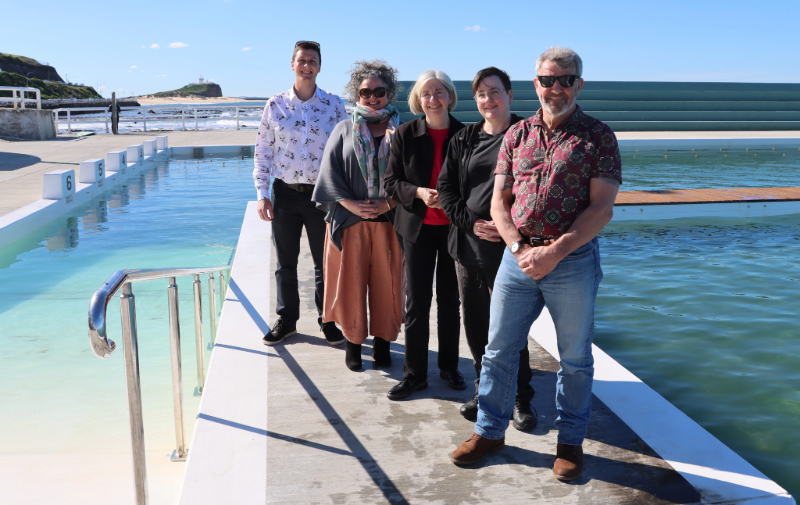
Newcastle Tourism Industry Group Chairman Dominic May, City of Newcastle Destination & Economy Manager Georgia Lazzari, Councillor Margaret Wood, Newcastle Business Improvement Association representative Lucy Glover and City of Newcastle's Access and Inclusion Advisory Committee Co-Chair Andrew Vodic.Newcastle Tourism Industry Group Chairman Dominic May, City of Newcastle Destination & Economy Manager Georgia Lazzari, Councillor Margaret Wood, Newcastle Business Improvement Association representative Lucy Glover and City of Newcastle’s Access and Inclusion Advisory Committee Co-Chair Andrew Vodic.Those businesses will receive practical advice on how to improve their accessibility for tourists with a broad range of needs, including mobility and vision, sensory, intellectual and neurological disabilities.

Lord Mayor Nuatali Nelmes said improving the accessibility of Newcastle is an ongoing priority.

“Access and inclusion are key priorities for City of Newcastle and we want the millions of Australians who have a disability to look to our city as the place to visit for a holiday,” Cr Nelmes said.

“Enhancing our inclusive tourism offering will not just attract more visitors and tap into new markets, it will also make our city a better place to live work and play for locals.”

City of Newcastle has appointed The Visitor Inclusion Group, a specialist consulting firm in the field of accessible and inclusive tourism, to develop the framework, which will help local operators better understand the requirements of visitors with a disability.

Councillor Margaret Wood, co-chair of City of Newcastle’s Access and Inclusion Advisory Committee said accessible tourism is the fastest growing travel sector in Australia.

“The Australian Bureau of Statistics states that in 2022 around 5.5 million Australians were living with a disability,” Cr Wood said.

“Australian travellers with accessibility needs spent $6.8 billion on domestic travel in the 2022/23 financial year.

“This project aims to encourage improvement and inclusion in the accessible tourism sector, helping local business to find ways to be an inclusive destination for everyone.

“Together, we can make our city an accessible and inclusive destination for all.”

Newcastle Tourism Industry Group Chairman Dominic May encouraged Newcastle tourism operators to get on board.

“This initiative will help to make Newcastle accessible to all visitors and provide a much needed boost to local businesses,” Mr May said.

“It’s important for all of our tourism providers to do everything we can to be part of the growing accessible tourism market.”

Expressions of interest close at 5pm on 22 July.

To submit an EOI visit: www.visitnewcastle.com.au/industry-resources/expressionofinterest

Improving the accessibility of Newcastle is a key part of City of Newcastle’s Destination Management Plan and Disability Inclusion Action Plan.