New road a game-changer for Central Coast Wetlands – Pioneer Dairy with additional $473,000 investment

The Minns Labor Government is delivering better communities and building the infrastructure that matters with a new flood resistant road set to unlock the full potential of the Central Coast Wetlands – Pioneer Dairy and boost visitation to this gem.

Funded through a $472,535 Crown Lands grant, the road will connect to a Council public road, providing safe, reliable access to the 155-hectare reserve and boosting opportunities for nature-based tourism and community events.

This latest investment builds on the Minns Labor Government’s strong record at the site, including $570,000 for a sealed internal access road and $100,000 for weed management and other improvements over the past two years.

Together, these projects have strengthened access, protected sensitive ecosystems, and supported the long-term sustainability of the reserve, bringing the total Minns Labor Government support for the reserve to more than $1.14 million.

Situated on the south bank of the Wyong River next to Tuggerah Nature Reserve, the Central Coast Wetlands – Pioneer Dairy is a hub for birdwatchers, runners, walkers, golfers, and nature lovers, while also holding deep cultural significance for the Darkinjung people.

The new road will open up long-awaited opportunities for community markets, festivals, weddings, educational programs, and eco-tourism – ensuring this iconic Crown reserve can be enjoyed by all, rain or shine.

The Crown Reserves Improvement Fund helps deliver these community benefits, boosting local economies, protecting cultural heritage, and supporting recreation across NSW.

Minister for Lands and Property Steve Kamper said:

“The Minns Labor Government is focused on building better communities and investments in infrastructure like this can really make all the difference between surviving and thriving for regional communities.

“This new food-resilient road will enable the reserve to host larger-scale and evening events. It will increase community engagement and foster long term financial – and environmental – sustainability for Central Coast Wetlands – Pioneer Dairy.” 

Minister for the Central Coast and Member for Wyong David Harris said:

“This further grant funding to build a second access road to Central Coast Wetlands – Pioneer Diary will open up this special place to the community and unlock the reserve’s unrealised economic, cultural and sporting

potential, while safeguarding this pristine environment.

“The flood-resistant road is literally a pathway to supporting tourism and local jobs while protecting sensitive habitats for native plants and animals, and areas of cultural and heritage significance to local and Aboriginal communities.”

Central Coast Wetlands – Pioneer Dairy Crown land chair Jed Field said: 

“This is game-changing. A flood-proof access road is the crucial piece of infrastructure that has been missing since the reserve was established in 2001.

“It will really unlock the potential of the Central Coast Wetlands – Pioneer Dairy, by opening it up for broader community use as well as for the protection of the coastal environment.”

Minns Government to deliver thousands of homes near the Bays Metro Station, while retaining our working harbour

The Minns Labor Government is today unveiling a game-changing new precinct at Bays West – delivering up to 8,500 well-located homes, including a minimum of 10 per cent affordable and essential worker homes – directly above the new Bays West Metro Station currently under construction.

The landmark transformation will convert underutilised government-owned port land on the Harbour into Sydney’s newest suburb, while retaining important deep-water port facilities to support Sydney’s working harbour.

Located just minutes from the Sydney CBD and connected to a world-class metro, ferry, walking and cycling links, the Bays West precinct will rebalance housing growth towards well-serviced inner-city locations and help tackle the state’s housing crisis.

Affordable housing will be embedded from the outset, including dedicated homes for essential workers such as nurses, teachers, paramedics, firefighters and police so they can live closer to the communities they serve.

The precinct will combine new housing with public open space, opening public access to the waterfront for the first time in more than 100 years.

Night-time entertainment and creative industries will be anchored by the revitalisation of the historic White Bay Power Station as a cultural and community destination, connected to the harbour across a new expansive public forecourt.

Planning of the area will prioritise connectivity, including active transport links to neighbouring communities such as Rozelle, Balmain and Glebe, improved pedestrian access to the waterfront, and connections to the CBD, including an active transport link across the Glebe Island Bridge.

The Government will lead a master planning process that will include an international design competition to guide development across the precinct, ensuring homes, essential infrastructure, jobs, public spaces and transport links are delivered together.

It will be led by a new delivery agency to be established over the coming weeks, which will report to Minister Kamper who already has oversight of major precinct renewal projects including at Blackwattle Bay and Barangaroo. Once established, the publicly owned land in the precinct will be transferred to the new agency.

This is the first new suburb that has been built in inner Sydney in decades, it will see homes built alongside the Bays West Metro Station ensuring young people, families and downsizers are only minutes away from the CBD. As part of the transformation of the Bays West precinct, bulk port operations – including cement, gypsum and sugar handling – will cease on Glebe Island by no later than 2030.

The Government will work closely with industry to minimise impacts and ensure the continuity of supply. This includes a commitment of $270 million to improve road connections around the port at Port Kembla and to investigate increased rail freight capacity.

Working harbour operations across the precinct will be consolidated, mostly into White Bay, ensuring the precinct will continue to provide critical services for the harbour, including boat maintenance and marine construction and as a base for tug boats and for emergency services.

A new staging area will be established in White Bay, securing the future of the New Year’s Eve fireworks, Vivid and other major events for decades to come.

The cruise terminal will be retained in its current location, meaning tourists arriving in Sydney will be welcomed by the new precinct, with new shore-power facilities currently being installed that will reduce noise and emissions. The Sydney Heritage Fleet will also be offered new premises in White Bay.

Deep-water berths will be retained to preserve Sydney Harbour’s strategic operational capability, and the removal of the existing 1970s industrial silos, currently used as a billboard, as well as to store cement and sugar, will unlock new opportunities for public space and future housing.

By unlocking Bays West, the Minns Labor Government is delivering new homes in the right places — close to opportunity, transport and public space — while preserving Sydney Harbour as both a working and living harbour.

This builds on the additional capacity for more than 620,000 homes that is being created by the Minns Labor Government’s 68 state-led rezonings, Transport Oriented Development areas, Low and Mid-rise Housing Policy and Housing Delivery Authority.

Premier of New South Wales Chris Minns said:

“Right above a new metro station and minutes from the CBD, we’re delivering thousands of homes where people actually need them – close to work, close to services and close to transport.

“Importantly, this precinct will include affordable and essential worker housing from day one, so nurses, teachers, paramedics and police can live closer to the communities they serve.

“We understand that not everyone will welcome change, but cities don’t stand still. If Sydney is going to remain a place young people and families can afford to live in, we have to use well-located land better and plan for the future.”

Treasurer Daniel Mookhey said:

“Bays West is about putting publicly owned land to work for the people of New South Wales — delivering thousands of new homes while keeping this strategic harbour site in public hands for generations to come.

“By transforming underutilised industrial land into a vibrant housing and jobs precinct, we are boosting housing supply close to the CBD while strengthening the state’s long-term economic capacity.”

Minister for Transport, the Arts, Music and the Night Time Economy John Graham said:

“The new Bays West Metro Station will unlock this precinct for thousands of future residents, and with the White Bay Power Station at its heart it will also become one of the most exciting cultural destinations in Sydney.

“This plan strikes the right balance of building thousands of well-located homes with world-class transport, whilst maintaining a functioning working harbour.

“With the metro, ferries, walking and cycling – this will be one of the best-connected communities anywhere in Australia.”

Minister for Planning and Public Spaces Paul Scully said:

“This is city-shaping renewal – delivering thousands of new homes alongside open space, jobs, culture and waterfront access.

“The master planning process will coordinate delivery and guide a good mix of homes and jobs, so the transition of the new precinct is smooth for industry and future residents. Importantly alongside the renewal of Glebe Island, we’re also investing $270 million in transport infrastructure to accommodate additional activity and support more jobs at Port Kembla port.”

Minister for Lands and Property Steve Kamper said:

“This is exactly the kind of development Sydney needs, well-designed homes in a central location, close to public transport, jobs, entertainment and essential services.

“If we want Sydney to stay liveable and affordable, we need to be bold about using underutilised government-owned land to deliver homes for the future.”

Minister for Housing and Homelessness Rose Jackson said:

“We want Sydney to remain a city where nurses, teachers, hospitality workers and young families can afford to live.

“That’s why affordable and essential worker housing will be built into this precinct from the beginning, not treated as an afterthought.

“This is about opening Sydney Harbour to more people and giving the next generation a fair chance to live close to opportunity.”

State-wide fight against potholes: Half a million fixed under Minns Labor Government, more than 106,500 filled in seven months across regional NSW

The Minns Labor Government is taking the fight to potholes across New South Wales, with more than 106,500 potholes repaired on roads in regional NSW this financial year.

The repair blitz highlights the Government’s focus on getting the basics right – putting road maintenance and safety first, particularly in the wake of persistent and severe weather events.

Since March 2023, the Minns Government has filled more than 500,000 potholes, lifting the share of pothole-free state-managed roads across regional NSW to 82 per cent – a notable increase to conditions after 12 years of neglect under the previous government.

From local main streets to nationally significant corridors, the fight is on to make journeys smoother, safer and more reliable for regional communities.

Across regional NSW, crews are on the ground every day, and they’re fixing defects early before small problems become bigger, costlier failures.

The workforce includes some of the 71 new apprentices and trainees recently deployed by Transport for NSW, now getting to work supporting frontline maintenance and fixing roads across the state.

But we aren’t stopping here.

Work is supported by $155 million in accelerated funding, boosting the regional road maintenance budget to $1.25 billion this year.

Since July 2025, more than 1400 small but important uplift projects have been delivered across regional state-managed roads – including intersection improvements, shoulder sealing, drainage upgrades, localised repaving and targeted safety treatment.

The Minns Government is working hard to ensure people feel the difference: fewer bumps, safer verges, clearer markings, stronger surfaces.

Minister for Roads, Jenny Aitchison said:

“Under our watch, we have filled more than half a million potholes across NSW, and 106,500 across regional NSW in the past seven months.

“This is the biggest crackdown on potholes we’ve seen in decades – and that’s because the Minns Labor Government backs the bush!

“The job is by no means done, but it is a hell of a lot more than the Liberals and Nationals ever delivered. 

“We’ve repaired more than 106,500 potholes across regional NSW in the past seven months – because people want safer, smoother roads they can rely on.

“But we aren’t stopping there. Half a million in three years is a major milestone but our fight against potholes is ongoing – and we will be working hard to repair and resurface as many as we can.

“This work is not glamorous – but it’s the basics that matter. You can’t build a new tunnel every day, but you can use resources wisely to keep roads safe and reliable—and that’s exactly what we’re doing.”

Minister for Regional NSW, Tara Moriarty said:

“Strong regions rely on strong connections, and that starts with the basics.

“Repairing more than half a million potholes is practical delivery communities can see and feel.

“This is the work that matters to people every single day.”

Member for Bega, Dr Michael Holland said:

“Here, on the Far South Coast, our roads are our lifelines. They connect families to school and work and each other, they support freight movements and underpin our vital tourism industry.

“After years of severe weather and heavy use, road maintenance has needed sustained attention. The repair of more than 106,500 potholes across regional NSW in just seven months demonstrates a clear focus on getting the fundamentals right.

“In our region, smoother and safer roads mean fewer accidents, less damage to vehicles and greater confidence for locals and visitors.

“This is about practical delivery – investing in maintenance, supporting local jobs, and ensuring our road network remains reliable and resilient. This is the everyday work that keeps our communities moving and it’s work that makes a big difference.”

Boosting opportunities for women-owned businesses in NSW

The Minns Labor Government is backing women-led businesses in our state with the launch of Australia’s first database to showcase women-owned businesses making it easier for women to connect and explore new business opportunities.

The NSW Government has invested over $190,000 for Entrepreneurial & Small Businesswomen Australia (EBSWA) to support the development of the Women-Owned Enterprises Australia Supplier Network, a hub for women-led businesses of all sizes to increase their visibility.

The Supplier Network will then match women-owned enterprises on the database with commercial businesses or NSW Government tenders under $3 million.

The goal is to have 3,000 women on the database in three years to increase visibility and opportunities for their businesses.

Women are currently under-represented in small business, often due to a lack of access to finance and formal networks when compared to men.

The 2021 Census shows approximately 34 per cent of NSW small business owners are women. In comparison, 66 per cent of the state’s small business owners are men. Increasing the proportion of small businesses owned by women supports economic growth and social progress.

To support women in seizing the opportunities, EBSWA has also been funded to run industry-specific procurement-readiness workshops to address existing knowledge barriers and a small business summit to help women connect and learn from each other.

This is part of the NSW Government’s wider effort to improve women’s economic opportunity and advance gender equality. This includes membership to the WEConnect global women-owned business network so verified women-led businesses can be connected to New South Wales buyers, reaching new markets and customers. 

Other work we are doing includes, partnering with organisations in the Supporting Women in Business Grants and Investing in Women Grants.

More information and access to the Women-Owned Enterprise Australia Supplier Network hub is available here: https://www.esbwa.com.au/

Minister for Women Jodie Harrison said:

“The Minns Government is working hard to empower women to dream big, start up and run their own businesses. Many women have fantastic business ideas, and just need a bit of a boost to turn them into something more.

“This new hub is a great way to connect women-owned and led businesses with NSW government tenders, so that we can use our buying power to really boost women’s opportunity.

“It’s not only good for women, but also great for our economy by increasing the diversity of suppliers.”

Minister for Small Business Janelle Saffin said:

“Small businesses are the engine room of the NSW economy, but for too long, many talented women entrepreneurs have been operating under the radar.

“By investing in this database, we are shining a light on women-led enterprises and ensuring they are front and centre when it comes to major contracts and tenders.

“This initiative will open new doors for thousands of women in business – giving them the visibility, connections and confidence they need to grow and compete.”

Founder and CEO EBSWA Amanda Rose said:

“ESBWA is funded through a range of sources across government, corporate and project-based partnerships. Women Owned Enterprises (WOE) operates as a dedicated brand of ESBWA and the NSW Government is currently supporting the Women Owned Enterprises project in New South Wales.

“The core goal of ESBWA is to represent and advocate for women in business and entrepreneurship across Australia, ensuring women are visible, influential and economically powerful within policy, industry and enterprise.

“This is not just an announcement, it is the establishment of infrastructure. For the first time in Australia, there is a coordinated mechanism to identify, verify, prepare and actively connect women-owned enterprises into procurement supply chains.”

Kamilaroi Highway set for major rehabilitation to boost safety and resilience

A vital stretch of the Kamilaroi Highway west of Burren Junction is set for significant rehabilitation, with the Minns Labor Government delivering long-term improvements to one of north-west NSW’s most important road corridors.

From Tuesday 3 March, work will begin on a full rehabilitation of a three-kilometre section between Walgett and Cryon, near the Goangra–Beanbri intersection, where the pavement has continued to deteriorate despite routine and heavy patching.

Rather than temporary fixes, crews will carry out a full pavement rehabilitation to rebuild and restore the road surface, improving ride quality and strengthening the highway for the long term.

The Kamilaroi Highway is a major east–west freight and community link across north-western NSW, connecting regional towns and agricultural industries and supporting local travel.

Work is expected to take around four months to complete, weather permitting. To keep workers and motorists safe, single-lane closures and temporary traffic lights will be in place during construction, with work carried out between be 6am to 6pm on weekdays andevery second weekend.

Motorists are advised to drive to the conditions, follow traffic control directions and allow up to five minutes of extra travel time.

Transport for NSW will continue to provide updates as work progresses.

NSW Minister for Roads, Jenny Aitchison:

“This rehabilitation work is about delivering long-term solutions for communities who depend on this highway day in, day out.

“The Kamilaroi Highway is a lifeline for freight, farming and families across north-west NSW — and this upgrade will make it stronger, safer and more reliable.

“We know this section has been impacted by flooding and repeated damage. Rather than continuing with temporary fixes, we’re rebuilding it properly so it can better withstand the conditions and serve the community for the long haul.”

Member for Barwon, Roy Butler:

“Anyone who travels this stretch knows it has needed more than patching for some time.

“This rehabilitation work will make a real difference to safety and comfort for local drivers and heavy vehicles alike.

“It’s important we continue investing in practical upgrades that keep regional roads serviceable and reliable.”

Walk-in mental health hub now open for kids in Orange

Families in Orange and Bathurst now have access to free, walk-in mental health and wellbeing support for their children at the Medicare Mental Health Kids Hub.

Kids Hubs provide free mental health and wellbeing services for children aged 0-12 and their families, carers and kin. These services support children who may be experiencing mild to moderate developmental, emotional, social or behavioural challenges.

There is no need for a diagnosis or referral to access services or support at a Kids Hub.

Labor is firmly committed to universal, free healthcare where everyone can get the mental health care they need. Medicare Mental Health Kids Hubs take pressure off families by saving time and money, while putting mental health support close by.

The Orange site is one of four being rolled out across NSW as part of a $35.8 million joint investment of $17.9 million from each of the Australian and NSW Governments to support children’s mental health.

Mental health clinicians, allied health professionals, care navigators at the service will tailor care to the needs of each child and family who visits.

The Orange Medicare Mental Health Kids Hub at 60-62 McNamara Street is open from 8.30 am to 5 pm Monday to Friday.

Minister Rose Jackson:

“The Orange Kids Hub is giving mums and dads an accessible, safe and trusted space to get care for their child when facing mental health challenges.

“You don’t need a referral, an appointment, or even your credit card – it’s free, specialised mental health support for kids in New South Wales.

“It’s a great example of how the Minns and Albanese Labor Governments are working together to improve access to mental health care, with four Medicare Mental Health Kids Hubs opening across the state.”

Assistant Minister McBride:

“The Albanese Labor Government is putting mental health at the heart of Medicare and quality care in the heart of our regional communities like Orange and Bathurst.

“We know that early intervention is best and the new Kids Hub is providing a safe and welcoming place for children and their parents, carers and kin.

“Local access to free mental health information and clinical services together with the support of multidisciplinary teams will make sure kids in our regions thrive.”

Chris Minns gives up on NSW?

Premier Chris Minns has given up on the people of NSW after admitting today he doesn’t have a long-term plan to lead NSW. 
 
When asked about his vision for NSW after the opening of Sydney Metro West in 2032, the Premier revealed the only thing on his mind was not being Premier saying: “Well, I won’t be here, at least in this role…”  
 
This revelation confirms much of the speculation about the Premier’s plans to resign part way through the next term with an anonymous source telling the Sydney Morning Herald: “they would expect Minns to stand down early into the next term of parliament.” 
 
It’s now clear why the Minns Labor Government has no long-term vision or plan for future infrastructure, like new Metros, because Chris Minns won’t be in the job for much longer. 
 
The question voters deserve answered is which member of Minns’ incompetent team will lead Labor when he pulls the pin? 
 
Will it be Yasmin Catley, who has overseen an explosion in gangland violence or Ryan Park, who has overseen a deadly fungal cluster in a NSW hospital, will it be Jo Haylen, who resigned in disgrace over the misuse of her Ministerial driver, or will it be someone handpicked by faceless union bosses? 
 
NSW deserves to know who they are voting for at the next election if Chris Minns doesn’t intend to serve a full term. 
 
While the Premier has made his future clear the future of NSW under Labor is mired in uncertainty.  
 
I’m committed to the long term and will lead a team that backs families, strengthens communities and plans for the future. 

Appeal to locate woman missing from Cardiff

Police are appealing for public assistance to locate a womam missing from the state’s north.

Melissa Grimmond, aged 40, was last seen in Macquarie Road, Cardiff, about 3.30pm yesterday (Monday 2 March 2026).

When she was unable to be located or contacted, officers attached to Lake Macquarie Police District were notified at 9am today (Tuesday 3 March 2026) and commenced inquiries into her whereabouts.

Family and police hold concerns for Melissa’s welfare.

Melissa is described as being of Caucasian appearance, about 160cm-165cm tall, of medium build, with blonde hair and brown eyes.

She is known to frequent the Kingsford, Maroubra and Randwick areas.

Anyone with information on her whereabouts is asked to contact Belmont Police Station or Crime Stoppers on 1800 333 000.

Newcastle Croc Secured

Crocodiles don’t belong in NSW, and with the cold weather coming, she wouldn’t have lasted long out there.

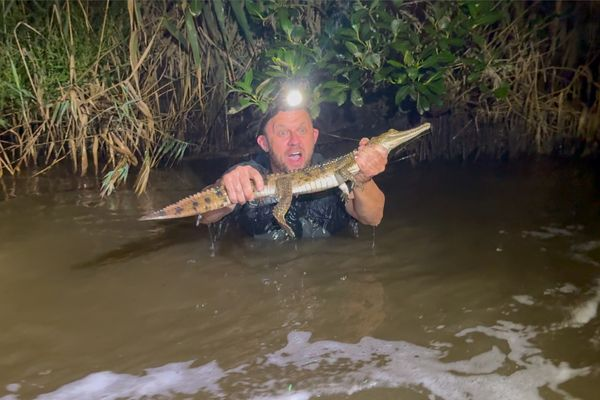
When a Crocodile was spotted in Ironbark Creek, NSW our team headed straight to Newcastle to track her down. Two days, muddy water and a whole lot of searching later, a flicker of eye shine in the torch beam.

Billy Collett launched from the boat and the team moved in. Heart-pounding moments later, the croc was safely secured.

We’re tired, but ultimately happy that this little croc is safe, healthy and no longer in an environment it simply wouldn’t have survived in.”

Loose Crocodile Caught After Two Day Search

“We spent two days searching in tough conditions and at one point we thought we might have lost it. When Brandon picked up the eye shine with the torch, we knew it was our moment. I jumped straight in. Our priority was making sure the community was safe and that the crocodile was secured properly and humanely.” – Billy Collett, Park Manager
What began as reports from members of the public quickly escalated into a high-stakes, multi-day search operation led by Park Manager Billy Collett.

The crocodile had been spotted in murky water beneath a popular walking track, prompting immediate action to ensure community safety and the welfare of the animal.

A Challenging Two Days on the Water
For over 48 hours, the team navigated low visibility, difficult terrain and multiple capture attempts. At one stage, hopes of locating the crocodile were fading. Until late Sunday night, the breakthrough moment finally came.

Zookeeper Brandon Gifford spotted the tell-tale eye shine of the crocodile in the beam of his torch, nearly three kilometres upstream from the original sighting. Within seconds, Billy Collett leapt from the boat into the creek to secure the animal, while zookeeper Logan Graff expertly manoeuvred the vessel into position to maintain stability during the capture.

The operation was completed safely and humanely, with no injuries to the team or the crocodile.

Dramatic footage of Billy’s leap and the moment the crocodile was secured has now been released for the first time.

Health Check and Next Steps

Following the capture, the crocodile was transported to the Australian Reptile Park on the Central Coast, where it underwent a full veterinary assessment. Our veterinary team has given the animal a clean bill of health.

Billy Collett, who has worked with crocodiles for more than 20 years, described the operation as one of the more challenging captures of his career.

Keeper Brandon Gifford said spotting the crocodile was a huge relief for the team.

“After nearly 48 hours on the water, when I saw that eye shine in the torch beam, I knew we had one shot at getting it right. Everyone stayed calm and worked as a team. It was an incredible moment to see it secured safely.”
The team says they are exhausted but relieved.

“We’re tired, but ultimately happy that this little croc is safe, healthy and no longer in an environment it simply wouldn’t have survived in.”
Not Native to NSW
The animal has been identified as a juvenile freshwater crocodile, a species native to northern Australia. Freshwater crocodiles are typically found in rivers, billabongs and wetlands across Queensland, the Northern Territory and Western Australia, not New South Wales.

The species would not survive the colder winter conditions in NSW waterways, making the rescue critical for the animal’s welfare.

Although there were reports of two additional crocodiles over the weekend, no further confirmed sightings have been recorded since Sunday night.

A Reminder to the Community

The Australian Reptile Park reminds the public to report unusual wildlife sightings to authorities and never approach wild animals.

Crocodiles are not native to New South Wales waterways, and the illegal movement or release of wildlife can have serious consequences for both public safety and animal welfare. Responsible ownership and prompt reporting are critical to protecting Australia’s unique wildlife and ecosystems.

The Park is now working closely with relevant authorities to ensure the crocodile is placed in a suitable permanent home.

ASIO watch list for people who attend Khamenei memorial services

Anyone who attends memorial services at mosques in Sydney and Melbournehonouring the so-called “martyrdom” of Iran’s former supreme leader, Ayatollah Ali Khamenei, should be placed on an ASIO watch list.

Family First National Director Lyle Shelton said it was shocking that Muslim leaders would be encouraging their followers to venerate a man who just machine gunned 30,000 civilisations and has sponsored global Islamic terrorism for decades.

“These events in support of one of the bloodiest butchers of this century are deeply offensive to the many victims of the Iranian regime and to the Iranian diaspora in Australia who fled that tyranny,” Mr Shelton said.

“Any Australian citizen who turns up to this should be put on the ASIO watch list. Anyone on a visa who attends should be deported,” Mr Shelton said.

“The Imams organising this and events like it should be asked to explain why this does not amount to support for terrorism.

“He funded the Islamic terrorists who raped, murdered and kidnapped innocent civilians on October 7.

“He inspired the Muslim mob at the “gas the Jews” protest at the Opera House, two years of pro-Hamas protests on our streets, the Harbour Bridge march where his image was carried by supporters, Bondi and the recent Town Hall protest.

“Too many Australian Muslims have learned nothing from Bondi,” Mr Shelton said.

“Where are the ‘moderate’ Muslim leaders calling this out?

“How are we supposed to believe Islam is a religion of peace? Clearly it is not.

“The event advertised for Arncliffe in Sydney says there will be a reading of the Koran at the service honouring Khamenei. That’s akin to reading the Bible at a memorial in honour of Hitler.”

NSW Premier Chris Minns was right to describe the mourning of the Ayatollah as “atrocious”. By any objective measure, the Iranian regime has a long record of repression, violence and brutality against its own people and the wider region.

Australia has formally listed the Islamic Revolutionary Guard Corps (IRGC) as a terrorist organisation and last year the Albanese Government expelled Iran’s ambassador following findings that Iranian operatives were linked to anti-Semitic incidents in Sydney and Melbourne.

“In that context, public events in Australia praising or mourning the leader of such a regime amount to support for Islamic terrorism,” Mr Shelton said.

Family First agreed with Executive Council of Australian Jewry co-CEO Alex Ryvchin’s call for any mosques honouring Khamenei to be subject to criminal investigations for links to the IRGC.